


Pickup


Return
🎁 First time with TakeCars? Use code WELCOME3 at checkout for 3% off your rental! ☀️

Car rental in Georgia is, in practice, the fastest way to see the country properly in a week — the wine villages of Kakheti, the hairpin bends of the Georgian Military Highway, the frescoes of Gelati and the beaches of Adjara. Mini-buses don't connect these dots, taxis into the mountains get expensive on every bend, and tour transfers tie you to someone else's timetable.
Most of our visitors are independent European travellers — UK, German, Polish, Czech, Italian, French and Israeli passport holders, plus a steady stream of Wizz Air arrivals through Kutaisi. Couples, friends and families who book their own flights and want to cover as much of the Caucasus as possible in 5–10 days. The vast majority pick up at the airport and drop off at the airport.
A couple from Manchester met our host by flight number last May. Contract signed on the bonnet, five minutes, and they were on the road to Kazbegi. The queue at the global chains' desks was still waiting for the shuttle.
Around 1,000 cars sit with our local hosts country-wide — roughly 90% in Tbilisi, the rest in Batumi and Kutaisi, often delivered from the capital by a driver who heads back the same day. The Georgian rental market is mature and competitive: you can find a Prius for next to nothing, a Mustang convertible for a long weekend, or a Subaru Forester ready for the mountains.
Rental prices in Georgia
Georgia is still one of the most affordable destinations in the region. In low season, the baseline is from $22 a day for a recent hybrid like a Ford Fusion 2020 or a Toyota Prius, which works out to roughly $170–180 for a week with airport delivery at most local hosts. A Toyota Camry 2016 sits around $28 a day, a Jeep Compass 2019 around $29, and an older Ford Escape from $24.
In high season, especially July and August, prices shift up: the same economy cars climb to $35–45 a day, and demand for SUVs and convertibles peaks in Batumi. The premium tier is real — Mini Cooper, Mustang Cabriolet and Mercedes AMG land in the $200–600 a day range, with the occasional Porsche 911 and rare cars like the Lamborghini Urus.
Mid-July last year the cheapest car left across our entire Tbilisi fleet was a Hyundai i30 automatic at $52 a day. Gone by Friday lunchtime. Book 4–6 weeks ahead in summer or you'll only see premium.
The minimum hire is one day, but real value kicks in from five days — the per-day rate at local hosts drops noticeably. Prices in Georgia are easier on the wallet than in Western Europe, but not free: for a decent car in decent condition you still pay sensible money.
A natural starting point by location is car hire in Tbilisi: that's where the main fleet, best choice and most competitive prices live.
Most tourists in Georgia start their trip here
Which car to choose
If you want one practical pick, it's a Subaru Forester or a Toyota Prius — both are local classics. The Forester rules in the mountains: full-time AWD, decent ground clearance, and an enormous local fleet. Some hosts run up to 70 identical Foresters, with the spare-parts economy built around the model. The Prius is the city and motorway car: hybrid, cheap to fuel, forgiving in Tbilisi and Batumi traffic.
Stick to petrol. Diesel quality in Georgia is unstable, and even diesel-car owners are reluctant to send them on long mountain trips. Japanese cars (Prius, Corolla, Fit) take 95-octane petrol only: anything lower triggers a dashboard error and the trip turns into a service call.
Heading into the mountains? Take a Forester or a Crosstrek. Clearance and real AWD matter more than any 4×4 sticker on the back of a crossover.
Part of the economy fleet is imported from Japan and converted to left-hand drive. You can spot them by the wing mirror still on the right wing. For city and motorway runs they're fine, and car rental in Kutaisi is often built on this kind of fleet.
A guest filled a Toyota Prius with 92-octane near Gori last summer. Three hours later it was on a flatbed back to Tbilisi. The host now puts a "95 only" sticker on every fuel cap.
Economy cars don't always look new — that's normal here. What matters is that the car runs reliably, not how it looks in the showroom.

Volkswagen Jetta in Georgia
We found a Volkswagen Jetta through the TakeCars.com website. We made a reservation and paid a deposit. When we flew into Kutaisi, we had to wait four hours for the car to be delivered to the airport, even though I had specified our arrival time and reserved the car for that time. When the car was delivered, the rental agent immediately pointed out that the insurance wasn’t comprehensive, and if any scratches or defects were found when we returned the car, we would be billed for repainting those parts. That’s a brief summary, without going into detail. However, for an additional fee of 500 lari, the insurance becomes comprehensive. Keep this in mind. The car didn’t let us down at all, although the service interval light started flashing after 100 km, the blind spots occasionally malfunctioned, and the brake pads started squeaking by the time we had to return the car—even though we’d only driven 700 km. That was for the entire rental period. Overall, we were satisfied with the car. Thank you.
Mazda 6 in Georgia
everything went well.
Subaru Outback in Georgia
I booked the car a few weeks in advance, and the day before they told me that the car was not available and said there was only this one, I was not ready to change it when I was going to the airport) they gave me a car from 2018, but it had body and interior damage. Maybe all cars for rent in Georgia are in such a state, I don't know. All in all, we were met, we traveled around Georgia, the car was returned, no accidents).
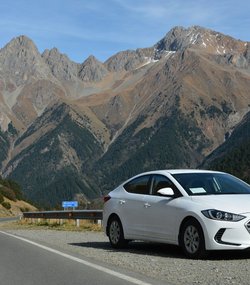
Hyundai Elantra in Georgia
Everything went great. The landlord was on call 24/7. Even with a delayed flight, responded late at night. The car is in normal condition, relative to its age.
Subaru Forester in Georgia
No problem!
Toyota Prius in Georgia
Everything was great. I wanted the Car to be delivered at Bakuriyani and within few hours of time Mr. Giorgi deliver the car from Tbilisi to Bakuriyani. Car was cleaned and in very good condition. Most importunely the communication was great and he was always available thru what's app and calls. on my last day in Tbilisi he helped me with city parking tickets. as I wasn't able to download the parking application to my mobile phone. Over all it was a great experience. I would highly recommend this company for Car Rental In Georgia. Thank you Giorgi...

Nissan X-Terra in Georgia
Everything went well.
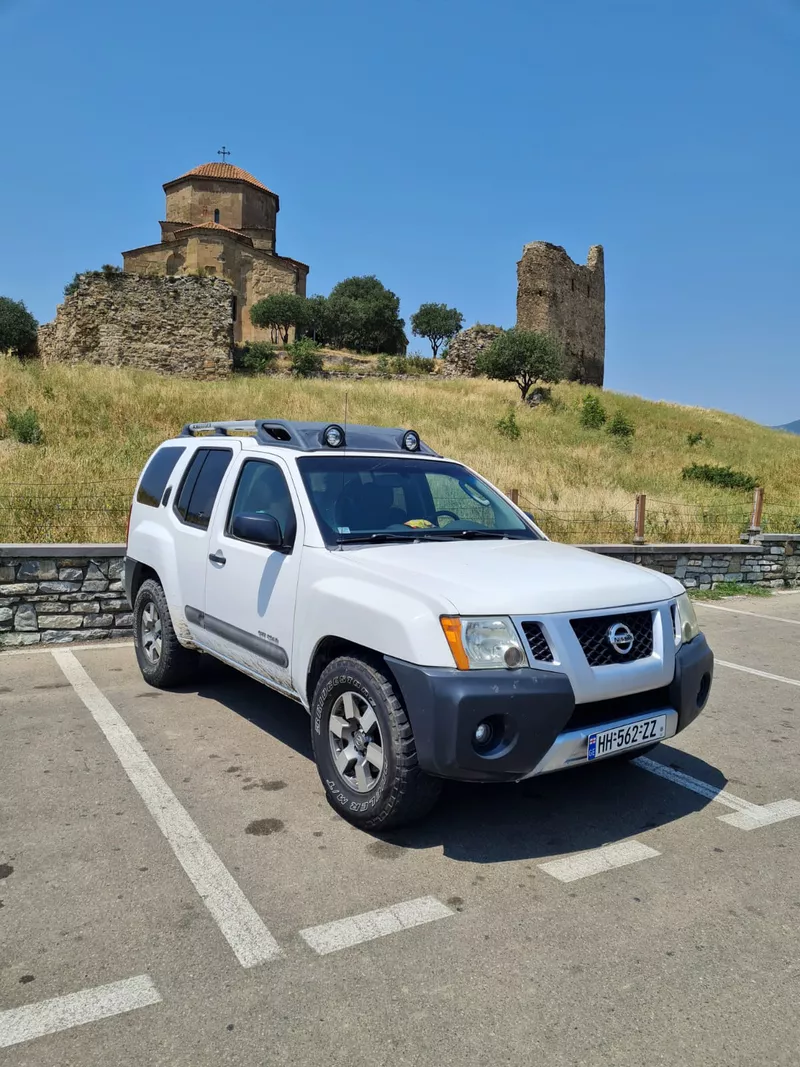
Toyota Prius in Georgia
Thanks, all is well. We took and returned it without any problems.

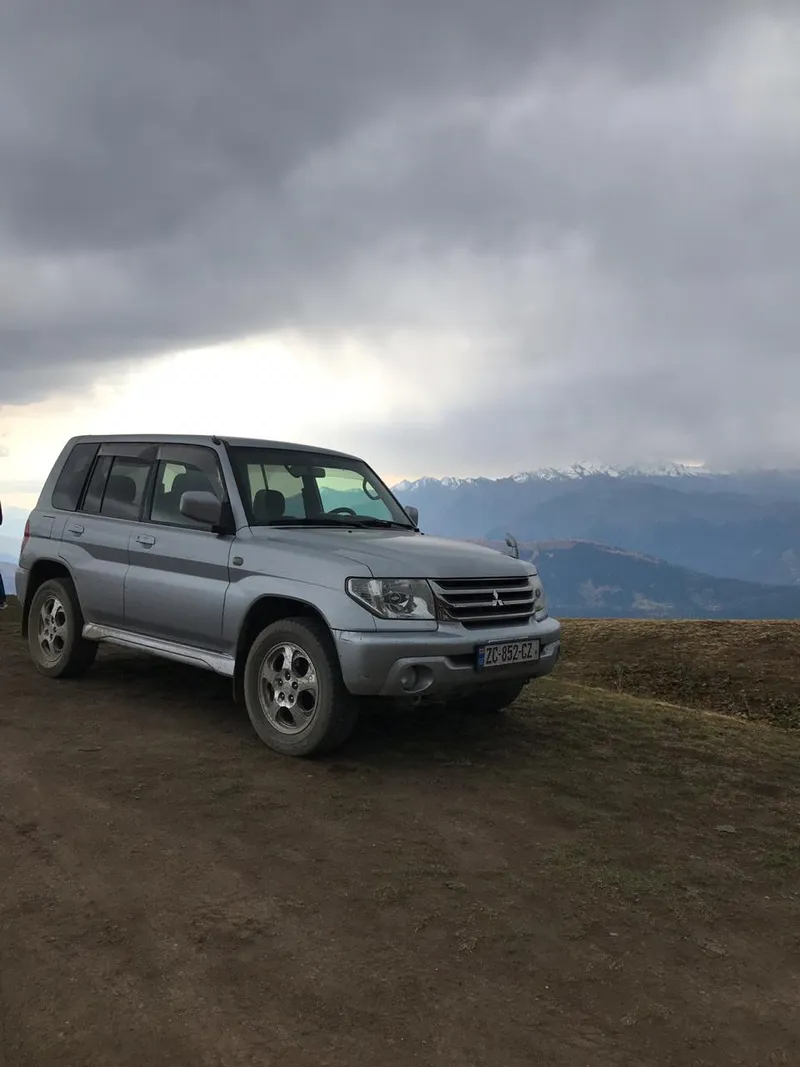
Mitsubishi Pajero Io in Georgia
Having rented a car, I was satisfied, the car was in good condition, the execution of the contract and the return of the car was easy and not forced, the people with whom I had to conduct business were polite and friendly. The only thing is that it would not be bad to introduce a memo for your clients, in which it will be written about the peculiarities of traffic rules in Georgia, that there are cameras everywhere, what the police especially pay attention to, where you can drive out and where not, at least a little, it would help exclude fines, otherwise we had to pay for those violations that are few in which countries are violations - the Congress in the wrong place, near the Tbilisi Sea. There was a fork and there were no signs.
Subaru Forester in Georgia
Everything was perfect! Car was clean and in a good state, the car was at our apartment in time and return was extremely easy!
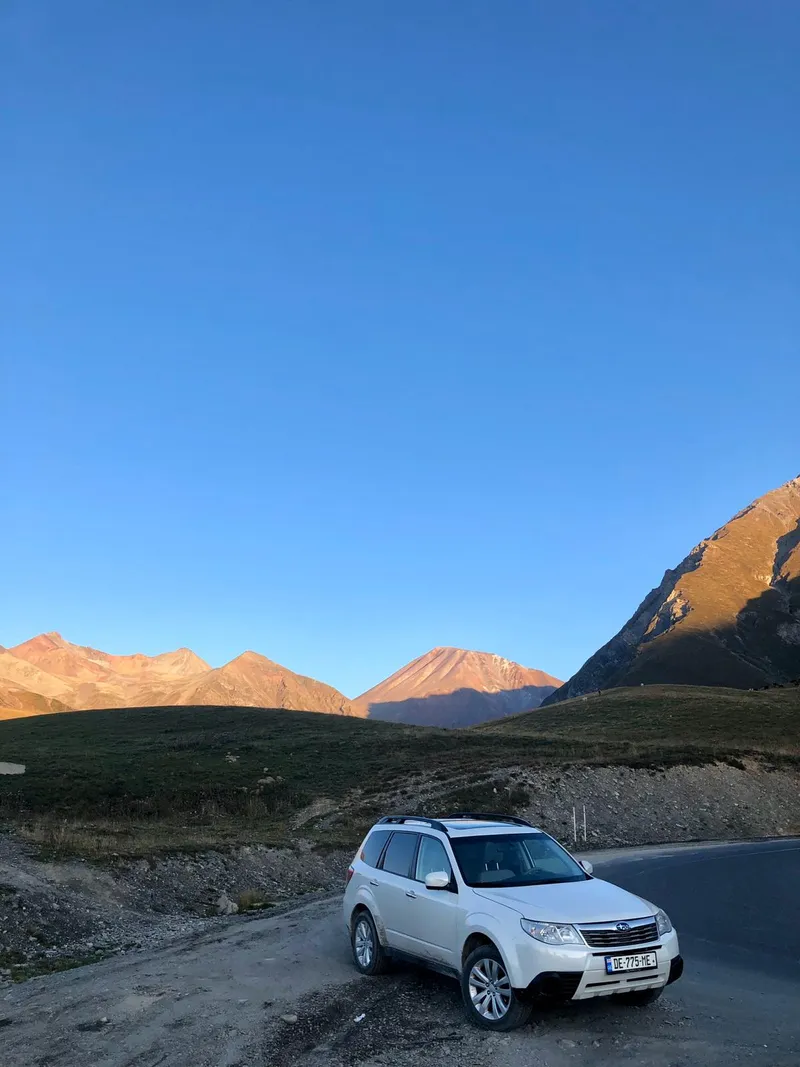
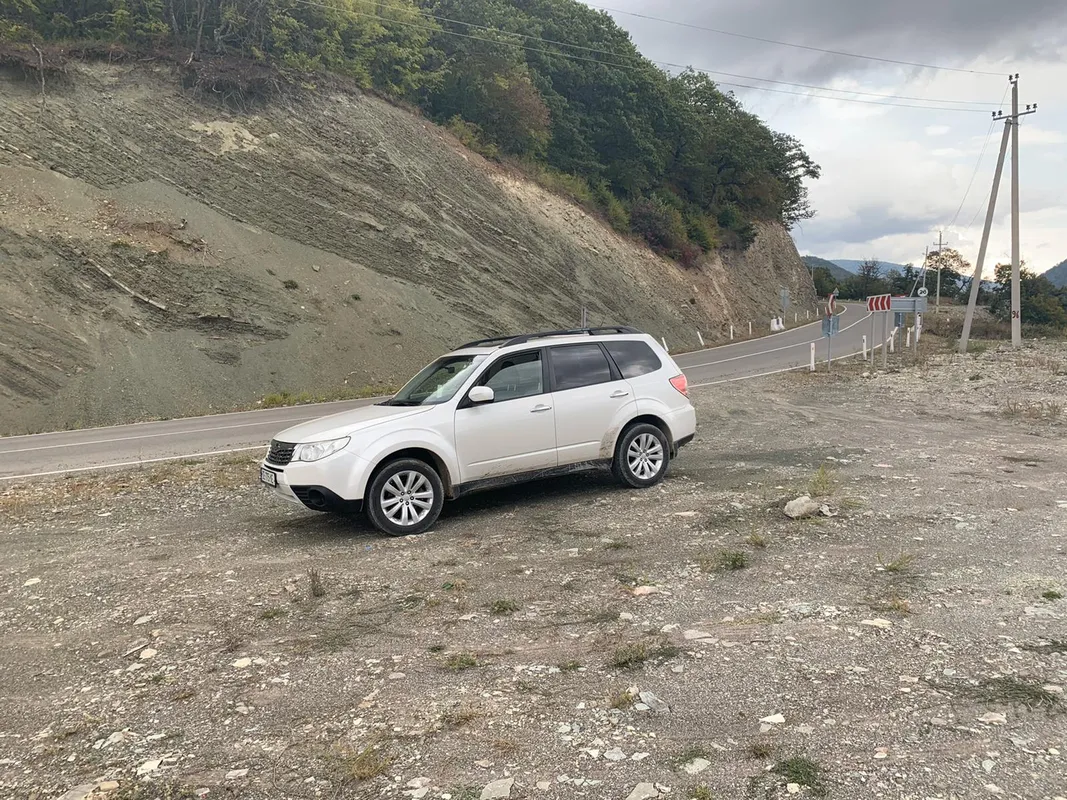

Subaru Forester in Georgia
A very good car rental company in Georgia (Tbilisi). Booking online is very convenient, signed a contract on pickup quickly. The office is in the center of Tbilisi. The car fully matched the given photograph, was fully functional, had nice and clean interior. A nice bonus - all parkings in the city were already prepaid! When we come to Georgia, we will definitely take the car only from these guys! Thank you very much! Denis St. Petersburg.
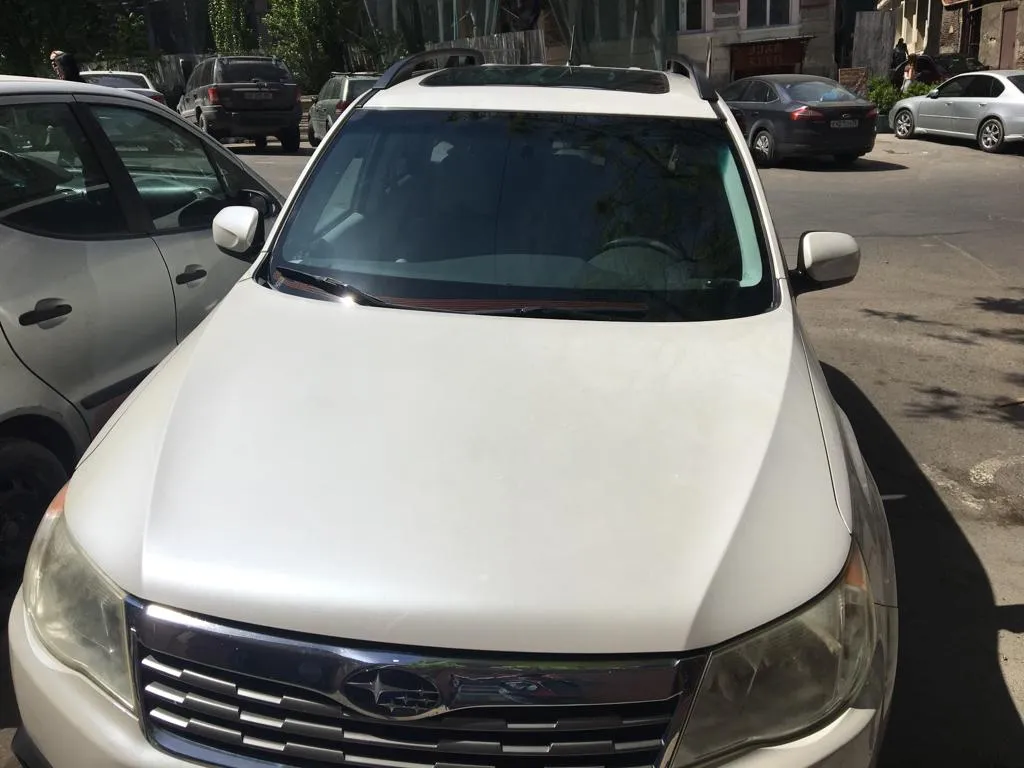
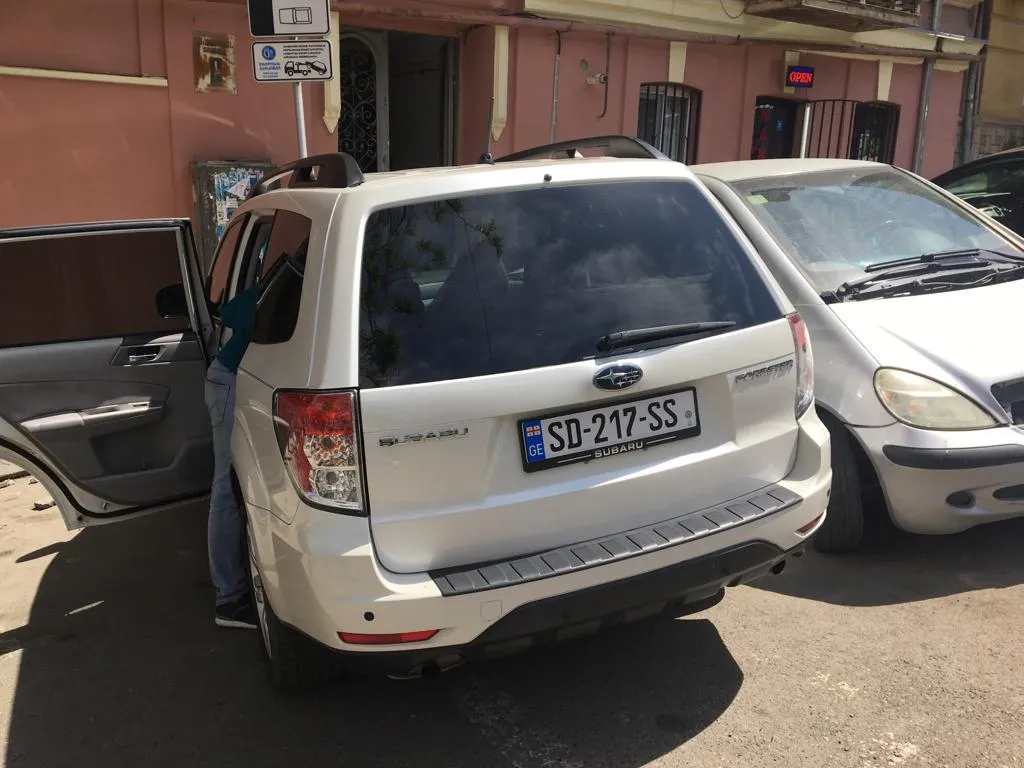

Subaru Forester in Georgia
Drove Subaru Forester, the car delivered clean and on time. The owner of the car provided free GPS and a child seat. In general, I drove 700 kilometers, the car did not disappoint me neither in the Kazbek mountains nor in Sighnagi. On pickup the owner of the car did not ask for a deposit)) this was a big plus for me. In general, I do recommend it!
Mercedes-Benz A-Class in Georgia
All ok ,i write no problem。
Take Cars in Georgia
Georgia gives us one of the densest networks of local hosts in the region — small, often family-run fleets where every customer counts, and a free upgrade to the next class is still a normal gesture rather than a once-a-year marketing trick.

-
Real reviews on the actual car
Each listing shows feedback from previous renters of that specific vehicle, not just the company average.
-
Free upgrade when your class is sold out
If the car you booked is taken, local Georgian hosts often hand over the next class up at no extra charge.
-
Direct chat with the host before booking
Message your host on the platform to confirm delivery time, child seats, roof boxes and anything else in writing — well before you pay.
Documents and insurance
EU and UK licences are accepted without an IDP — the licence just needs to be in Latin script. Drivers with a non-Latin-script licence should bring an IDP. Minimum age 21, one year on the licence.
Travel medical insurance is mandatory. Georgia introduced the rule on 1 January 2026 and it's in force: minimum cover 30,000 GEL (~$11,000). Buy the policy before you fly; without it, border guards can turn you back.
Third-party liability is included. Basic CDW covers most bodywork but not the windscreen, tyres or underbody. Super CDW adds glass and underbody — the most common claims on mountain roads. Tyres are excluded by almost every insurer in Georgia.
Deposit
A Georgian peculiarity: many economy cars come with no deposit at all. When a deposit is required, it's typically 600–900 GEL (~$220–330) in cash on collection, refunded in full on return.
A couple took the basic CDW in March, then clipped a stone on the Batumi road. Windscreen wasn't covered. The repair cost almost as much as the rental.
If anything happens to the car, even a small scratch, call the host immediately — without that call no insurance will pay out, no matter the package.
Car hire in Batumi is often handed over with no deposit: the car is delivered from a host in Tbilisi and collected at the end of the trip.
Most international Visa and Mastercard cards work in Georgia for ATM withdrawals — the balance after prepayment is paid in cash, in USD or GEL.
Routes and mountain roads
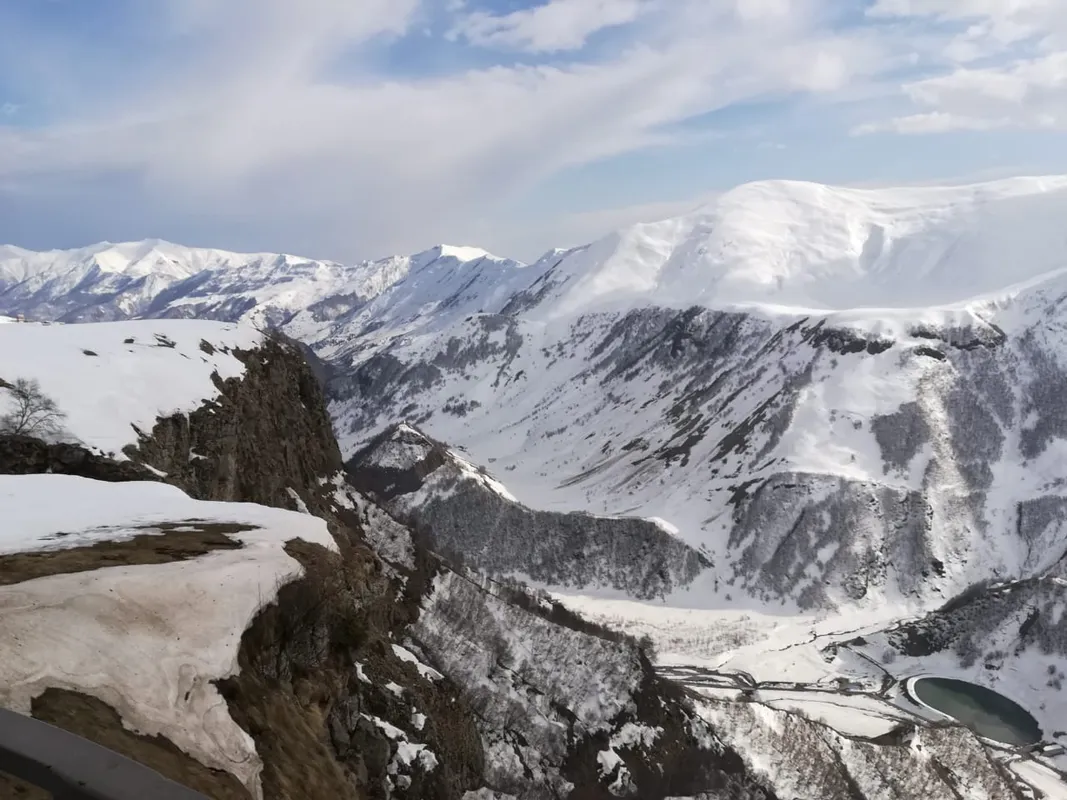
Around 80% of Georgia's postcard places are reachable in a saloon or a crossover. The Georgian Military Highway up to Kazbegi is fine in a saloon in any weather short of heavy snow. Kakheti, Borjomi and the Adjarian coast are standard tarmac drives.
Since 2024–25, Svaneti has changed: Mestia–Ushguli handles a saloon, and the Zagaro Pass to Lentekhi is now sealed. Tusheti and the Abano Pass are a different world: most hosts ban rentals on these routes, fit GPS trackers and can recall a car remotely. Shatili, Trusso and Juta belong in the same group — take a local Mitsubishi Delica share with a driver instead.
Winter in the mountains
From 1 December to 1 March winter tyres are mandatory on mountain roads. Hosts swap them in advance; if you book in March for Gudauri, Bakuriani or Kazbegi, confirm tyres at booking. Snow chains are often needed for Svaneti.
A guest followed Google Maps off the Lentekhi road last September and ended up parked at a sheep farm overnight. Pulled out at six in the morning with a tractor.
If the tracker shows a client has gone onto a banned route, we call and ask them to turn back. Insurance doesn't apply there and recovery costs are on the driver.
On any mountain road, switch on dipped headlights and use the horn before blind bends. Locals do it, and it isn't superstition.
Outside the cities at night, expect cows, donkeys and sheep on the road, especially in Kakheti — keep your distance and your speed sensible.
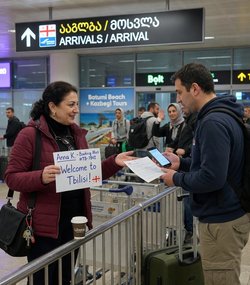
Airport waits, car swaps, free upgrades
What goes wrong and how to prevent it.
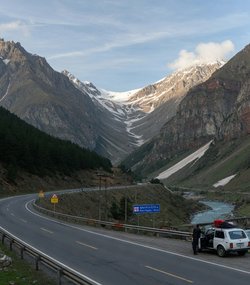
Top routes renters actually drove.
and When to Pick Each One
Real stats, honest reviews, and practical tips from verified renters.
Rules, fines and borders
Speed limits are 50 km/h in town, 90 on rural roads and 110 on the Tbilisi–Batumi motorway. Cameras trigger from +10 km/h over the limit. The average speed or parking fine is about 50 GEL (~$18) — the main thing is to avoid being towed.
The drink-drive limit is 0.3‰, stricter than most of Europe. A glass of wine in Kakheti is already over. The fine is about 700 GEL (~$255) plus possible disqualification. There are no tolls or motorway vignettes in Georgia.
Parking
Tbilisi parking is mostly paid and settled through an app; your host sets it up or pays on your behalf via a code. In summer, central Tbilisi and the Old Town have very few free spots.
Borders
You can drive a Georgian rental into Turkey (via Sarpi), Armenia and Azerbaijan with a notarised authorisation from the host (2–3 working days). Tbilisi car rental with a cross-border option should be booked well ahead to leave time for the paperwork.
A guest from Tashkent tried to tip a traffic cop near Avlabari station last summer. The cop laughed and pointed to the bank terminal across the street.
Cash never changes hands with the police in Georgia — every fine is paid through a bank or a terminal. That's part of the country's reform reputation, and trying to settle on the spot only makes things worse.
A one-way Tbilisi–Batumi rental usually costs around $110 (300 GEL): the driver delivers the car and heads straight back to the capital.
Parking in central Tbilisi and the Old Town is the headache of summer. If your host has a paid parking subscription, ask for the access code when you collect the car.
Rates in Georgia vary throughout the year depending on the season and the rental length in days.
- January
- February
- March
- April
- May
- June
- July
- August
- September
- October
- November
- December
- Jan
- Feb
- Mar
- Apr
- May
- Jun
- Jul
- Aug
- Sep
- Oct
- Nov
- Dec
 How expensive is renting a car in Georgia: average daily rates for a one-week car rental, across all car classes. Delivery across Georgia not included.
Frequently asked questions
In the low season, an economy hybrid such as a Ford Fusion or Toyota Prius starts at around $22 per day. A Toyota Camry starts at about $28 and crossovers from $29. Prices rise by 30–50% in July and August, with even larger increases for premium cars. Renting from a local supplier for a week is usually better value than paying the daily rate for several separate days.
Yes. Some economy cars in Georgia, most commonly the Toyota Prius, can be rented without a deposit. When a deposit is required, it is usually 600–900 GEL, or around $220–330, paid in cash and refunded when you return the car.
EU and UK driving licences are accepted in Georgia for tourist stays without an IDP. The licence must be in Latin script — which most European licences are. Drivers whose licence is in non-Latin script should bring an IDP to be safe. Carry your passport with the licence.
Yes. Georgia introduced this requirement on 1 January 2026, and it is currently in force. Your policy must provide at least 30,000 GEL, around $11,000, of cover. Border officials may refuse entry if you do not have suitable insurance, so arrange a compliant policy before you travel.
Most international Visa and Mastercard cards can be used for the online prepayment, and ATMs are widely available. The remaining balance is usually paid in cash, in US dollars or Georgian lari, when you collect the car. Small fuel stations and family-run shops outside the cities may not accept cards, so keep some lari with you.
Usually not. The Georgian Military Highway to Kazbegi is suitable for a saloon, and the road from Mestia to Ushguli has also been suitable for ordinary cars since it was resurfaced in 2024–25. A 4×4 is advisable in winter and for tracks beyond Ushguli. Different restrictions apply to Tusheti, so check the route with your supplier.
Most suppliers do not allow it. Routes including the Abano Pass, Shatili, Trusso and Juta are commonly prohibited, so insurance will not apply and a GPS tracker may alert the supplier. A safer alternative is to hire a local Mitsubishi Delica with a driver from Omalo or Telavi.
Technically yes, with a notarised authorisation from the rental company (2–3 working days to issue). Not every host offers this option, so confirm at booking. Border queues can be long in peak summer, so allow extra time on the day of the crossing.
Turkey via the Sarpi crossing is the most common cross-border route from Georgia, and you will need a notarised letter from the supplier. Some suppliers also permit travel to Azerbaijan. Select the countries you plan to visit when booking, as the documents usually take two to three working days to prepare.
A large share of economy cars is imported second-hand from Japan — Toyota, Honda, Subaru. Some are formally converted to left-hand drive; you can spot them by the wing mirror still on the right wing. For city and motorway driving they're fine; on long trips you may notice some ergonomic quirks.
Yes. There are fewer hosts in Kutaisi than in Tbilisi, but cars are delivered from the capital straight to the terminal. If your route is Kutaisi — Borjomi — Tbilisi, pick up locally; for a Kakheti or Kazbegi tour, it can be cheaper to fly through Tbilisi instead.
Yes. Long-term rental is well established in Georgia, with monthly rates starting at around $400–700 depending on the car and season. It can be useful for a ski season in Gudauri, a long summer stay on the coast or an extended stay in Tbilisi. Most suppliers offer a further discount for rentals longer than one month.
The blood-alcohol limit is 0.3‰, which is stricter than in many European countries. Even a small amount of alcohol may put you over the limit. The penalty is around 700 GEL, about $255, and may include disqualification from driving. For wine tours in Kakheti, hire a driver or use a taxi.
Most suppliers prohibit off-road driving and travel on certain gravel tracks because the insurance does not apply there. Commonly prohibited routes include Tusheti via the Abano Pass, Shatili in Khevsureti, Trusso and Juta. Show your planned route to the supplier when you collect the car so they can identify restricted sections and suggest alternatives.
Basic Collision Damage Waiver covers most bodywork damage but usually excludes the windscreen, tyres and underbody. Super CDW adds cover for the glass and underbody, which are more vulnerable on Georgia's mountain roads. Tyres are rarely covered, even by upgraded policies, so check the exclusions before booking.