


Pickup


Return
🎁 Use code WELCOME3 during checkout to get a discount on your first booking with us. Enjoy! ☀️

Car hire in Bulgaria got a quiet upgrade on 1 January 2025, when the country joined the Schengen Area in full. The land borders with Greece and Romania no longer mean a passport check, and a single Schengen visa now covers all three countries. Everything inside works to European standards while staying noticeably cheaper than most of the EU — economy cars start around $17 a day in low season, and petrol sits at about $1.30 a litre.
A car turns Bulgaria into a surprisingly compact country. Black Sea in the morning, a Roman amphitheatre in Plovdiv at lunch, a mountain monastery by evening — the same loop by bus is slow and exhausting; by car it fits a relaxed week.
An Edinburgh couple last May picked their hatchback up at SOF Terminal 2, drove the A1 to Plovdiv before lunch, and were swimming off Sozopol by sunset. The shuttle queue at the global chains was still moving when they checked in.
We keep separate pages for each main base: car hire in Sofia for the mainland, the mountains and the run up to Rila; rent a car in Burgas for the southern coast and Nessebar; and car rental in Varna for Golden Sands, Balchik and the north.
Bulgaria is one of the most straightforward EU countries to hire in. Low deposits, simple paperwork, clear rules. The only real surprise tends to be the weather in the mountains in late autumn.
Documents and who can drive
For driving licences from the EU, the UK, the US, Canada, Australia and most other countries with Latin-script credentials, no International Driving Permit is needed in Bulgaria — the home licence is enough. Bulgaria itself is in full Schengen since 1 January 2025, which means a single Schengen visa covers Bulgaria, Greece, Romania and the rest of the Area without internal land checks. UK and other visa-exempt visitors use the standard 90 days in any 180; the new EU ETIAS authorisation, due in late 2026, will apply on top once it goes live.
From documents you really only need a passport, a driving licence with at least one year on it, and any bank card — credit or debit. The rest we explain at pickup.
The minimum age with most local operators is 21 with one year of driving experience; a few will hire from 20 with a small young-driver fee. Premium cars, large SUVs and minivans usually start at 25, sometimes with three years of experience required for off-roaders. The upper limit is around 70–75.
On most of our cars one year on the licence is enough. If the driver is under 23 the young-driver surcharge is a few dollars per day — nothing dramatic.
Most tourists in Bulgaria start their trip here
Prices, payment and deposits
Bulgaria is one of the cheapest EU countries for car hire. In low season (November–April) economy cars start at $17–27 a day; in peak summer (July–August) on the coast they rise to $27–50. Compact cars run $27–43, crossovers and SUVs $49–87, premium from $87. Booking two to three months ahead of peak summer for Burgas or Varna can save up to 30% — coastal supply runs out early.
Payment is flexible. All major Visa and Mastercard networks are accepted online for prepayment, including debit cards. Remaining balances and the deposit can be settled in cash. Both euros and Bulgarian leva are taken at the desk. The lev is fixed to the euro (1 BGN ≈ $0.55), so there are no awkward exchange-rate surprises when you plan a road trip.
Local Bulgarian operators usually take $200–500 as a deposit, often in cash. The big global chains tend to block $500–1,500 on a credit card in the driver's name. The difference is real.
A growing share of our cars come on a zero-deposit tariff, typically with full insurance bundled in. The amount and the payment method show up before booking, so there are no nasty surprises at the desk.
The motorway vignette for cars under 3.5 t is normally already on the car when you collect it. No app, no border kiosk — but worth a five-second check before you drive off.
In short: low deposits, flexible payment, hard currency stability via the BGN-EUR peg. The trip planning side of car hire here is unusually predictable.

Dacia Sandero in Bulgaria
I had a good time and everything went well, the car they gave us was a Peugeot 208 though
Skoda Rapid in Bulgaria
Everything's great, I'm happy with the car.

Volkswagen Polo in Bulgaria
Unfortunately, it wasn't a VW Polo. I had a Renault Clio. But it was still good. Sincerely
Volkswagen Golf Sportsvan in Bulgaria
everything went smoothly. Easy communication. We got a different car, but luckily our luggage fit.

Chevrolet Cruze in Bulgaria
Had a positive experience renting a Chevrolet Cruze in the summer of 24. The car is in good condition, for two weeks there were no complaints. Lived in Sozopol, went to Akvark Nessebar and other interesting places. Recommended.
Renault Clio 5 in Bulgaria
everything was OK, the car was good, only one suggestion: phone holder should be in the car or the option for renting one, either way it was OK. Best wishes

Volkswagen Touran in Bulgaria
the rental went well thanks! We had no problems with the car. Pick up and drop off were smooth.


Peugeot 208 in Bulgaria
Satisfied with the quality of the car

Volkswagen Touran in Bulgaria
The car was replaced by Turan. Yes, it turned out to be a little more spacious. But at the same time more expensive. Apart from this moment, there are no complaints. Thanks!

Toyota Corolla Sedan in Bulgaria
The rental process went very well. The car is very good, the service is excellent. Close to the airport. I was contacted by Viber, agreed on a meeting point, transfer to the rental car park and back to the airport. Thanks a lot. I will use it again next time.

Renault Symbol in Bulgaria
Everything was amazing! Many thanks! We will contact you next time :)

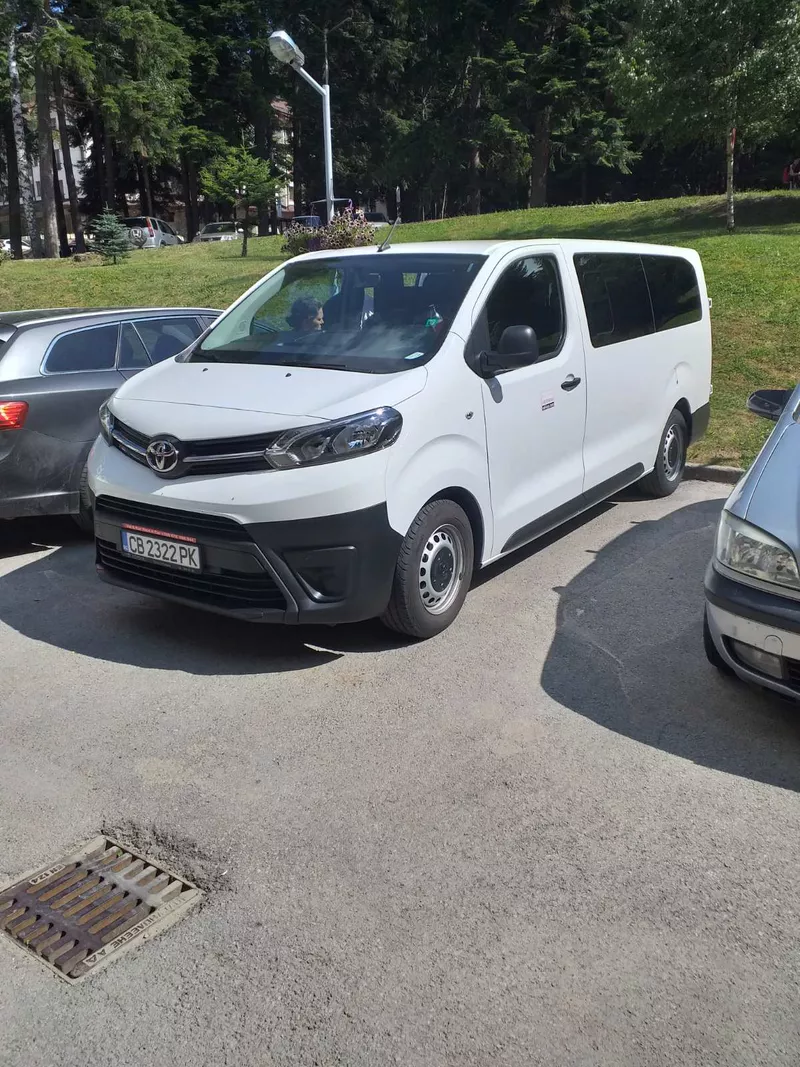
Toyota Proace Verso in Bulgaria
I'm happy to share my experiences. The overall process was running smoothly. The colleagues were waiting for us at the exit of the airport. The car was in perfect condition exactly as it was pre-established at the website. It was parking next to the terminal. I was informed about all of the aesthetic damages in advance. It was especially comfortable being able to pay by credit card. The return of the car and getting back the deposit was also running smoothly even at a different airport. I was fully satisfied with the service, the company is highly recommended! I'll use their service again when visiting Bulgaria! Best regards, László

Renault Clio 4 in Bulgaria
The website, the rental and the car were perfect! If you add more locations, you can reach the top, localcarhires.com is a great idea!
Take Cars in Bulgaria
Every supplier on this page sits under a direct contract with us: cars are vetted, each one carries real reviews from past renters, and you can see who you are hiring from before you book. If anything goes off-script, we sort it out for you.

-
Book the coast early
In July and August demand for Burgas and Varna doubles, and prices two to three weeks before pick-up can rise by 20–40%.
-
Film the car at pick-up and drop-off
A quick walkaround video — bumpers, wheels, windscreen, interior, fuel level — settles almost any later dispute about scratches.
-
Check the vignette is included
It almost always is on our cars, but a five-second confirmation at pick-up means no automatic fines from the motorway cameras.
Rules of the road
Speed limits are simple: 50 km/h in towns, 90 km/h outside built-up areas and 140 km/h on the A1 "Trakia" and A2 "Hemus" motorways — one of the highest limits in the EU. The 350 km from Sofia to Burgas on the A1 take roughly four hours.
On the A1 you can sit at 140 km/h, which is rare in Europe. Since 7 September 2025 there is average-speed enforcement on more than 22 stretches, so steady pace beats lead-foot bursts.
Vignette instead of tolls
For cars under 3.5 t there are no per-kilometre tolls in Bulgaria — only an electronic vignette. Prices from May 2025: weekend ≈ $5, week ≈ $8, month ≈ $17, year ≈ $53. The vignette is linked to the number plate; no sticker is involved. Driving without one carries a fine from $165, and the cameras pick everyone up.
The vignette is normally already on hire cars, which makes life easy: nothing to pay at the border or in an app, you just drive straight onto the motorway.
Alcohol, lights, seats
The legal blood-alcohol limit is 0.5‰ for experienced drivers and zero for anyone with under two years on the licence. Roadside checks are common, so most renters skip the drink-with-driving question altogether. Daytime running lights are required all year, day and night; modern hire cars switch them on automatically, but it is worth a glance before you pull away.
Children under 12 must travel in the back, in an appropriate child seat. We can add the seat to your booking — a few dollars per day, and saves a roadside argument with the patrol.
Speeding by 40 km/h or more carries a fine of up to $165, and the camera networks now cover most of the A1 and A2.
Seasons, parking, airports
Winter and shoulder
Winter tyres in Bulgaria follow a situational rule rather than fixed dates: not required on dry lowland roads, but required as soon as there is snow or ice. Suppliers fit them by default from November to March. Snow chains in the boot are compulsory from 1 November to 1 March, and they really are used in the mountains. Studded tyres are banned — worth knowing if you are driving your own car from elsewhere.
A guest collected a Skoda Fabia at SOF on 12 March last year, expected the Bansko road to be clear, hit a snow squall above Razlog. The default winter tyres were the reason the car got down without a chain.
Parking
Sofia's centre is split into Blue and Green zones — Blue $1/hour, Green $0.55. Payment is by app or SMS, in force 08:30–19:00 on weekdays and Saturday mornings. Most hotels include guest parking. Free spaces with the white 'P' sign exist, but within a kilometre of the centre they are rare — paid zones or hotel parking is usually easier.
In Burgas the central zone is about $1 per hour, with secure underground parking near the Sea Garden. On Sunny Beach and Golden Sands hotels usually include free parking for guests, and in high season the free roadside spots near popular beaches are taken before 9am.
Airports
Main airports: Sofia (SOF), Burgas (BOJ), Varna (VAR), Plovdiv (PDV). About Sofia: terminals 1 and 2 are not directly connected — there is a short free shuttle.
A couple flying Wizz from Luton booked a pickup at Sofia T1, then their flight diverted to T2 on arrival. A quick text rerouted the driver in three minutes; without the heads-up they'd have lost half an hour to the shuttle.
Plovdiv (PDV) has a small but growing summer schedule — useful if you're heading straight to the Rhodopes or the Old Town.
Rates in Bulgaria vary throughout the year depending on the season and the rental length in days.
- January
- February
- March
- April
- May
- June
- July
- August
- September
- October
- November
- December
- Jan
- Feb
- Mar
- Apr
- May
- Jun
- Jul
- Aug
- Sep
- Oct
- Nov
- Dec
 How expensive is renting a car in Bulgaria: average daily rates for a one-week car rental, across all car classes. Delivery across Bulgaria not included.
Frequently asked questions
Since 1 January 2025, there have been no routine border checks between Bulgaria, Greece and Romania, so you can usually cross into either country without stopping at the border. Most insurance policies extend across the EU automatically. Trips to Turkey, Serbia or North Macedonia still require written permission from the supplier and usually an extension to the insurance.
Yes. Most local Bulgarian operators, including those listed on TakeCars, accept a debit card, cash in euros or Bulgarian leva, or a bank transfer. Large international chains are more likely to require a credit card in the main driver's name. Use the ‘no credit card’ filter when booking to see suitable cars.
You can use most Visa and Mastercard credit or debit cards for the online prepayment. The remaining balance and deposit are usually paid by card or in cash at the rental desk. The Bulgarian lev has a fixed exchange rate against the euro, which makes conversion costs easier to estimate.
Economy cars cost around $17–27 per day in the low season from November to April, rising to $27–50 in July and August. Compact cars generally cost $27–43, crossovers and SUVs $49–87, and premium cars from $87. Bulgaria is one of the more affordable EU countries for car hire, and booking two to three months before a summer trip to the coast can save around 30%.
Local Bulgarian operators usually require a deposit of $200–500, often payable in cash. Large international chains may place a hold of $500–1,500 on a credit card in the main driver's name. The amount and accepted payment method are shown in each TakeCars listing before you book.
Yes. Some cars on TakeCars can be rented without a deposit, usually with full insurance included. Before booking, check whether the policy covers the glass, wheels and underbody. These parts are more vulnerable on mountain routes through Rila and the Rhodopes than on the flatter coastal roads.
Bulgaria uses an electronic vignette for cars weighing less than 3.5 tonnes. It covers motorways and major roads, so there are no distance-based tolls. Prices from May 2025 are approximately $5 for a weekend, $8 for a week, $17 for a month and $53 for a year. The vignette is normally included with our rental cars, but confirm this when you collect the car.
The usual limits are 50 km/h in towns, 90 km/h outside built-up areas and 140 km/h on the A1 and A2 motorways, one of the highest motorway limits in the EU. Average-speed enforcement has operated on more than 22 motorway sections since 7 September 2025. Exceeding the limit by 40 km/h or more may result in a fine of up to $165.
Yes, and there are no internal border checks any more — both countries entered full Schengen in 2025. Most of our insurance policies cover both countries automatically with no extra fee. Some suppliers add a small cross-border fee — it is always shown in the rental conditions before you book.
Third-party liability insurance is mandatory and always included. Basic Collision Damage Waiver usually excludes the glass, wheels, wheel rims, underbody, interior, keys, off-road damage, and accidents involving a driver over the legal alcohol limit of 0.5‰. Travel outside the Schengen Area may require an insurance extension. Super CDW or Full Insurance covers most of these exclusions; the exact terms are shown on each car page.
The requirement depends on road conditions rather than fixed dates. Winter tyres are mandatory when there is snow or ice on the road, and rental suppliers generally fit them from November to March. Studded tyres are prohibited. Snow chains must be carried in the car from 1 November to 1 March.
Sofia Airport (SOF) is best for the capital, the mountains, Rila and Plovdiv, and it has the largest rental fleet. Burgas Airport (BOJ) is convenient for the southern coast, including Nessebar, Sozopol and Sunny Beach. Varna Airport (VAR) is better for Golden Sands, Balchik and Albena. Sofia has two terminals connected by a short shuttle, so check which terminal your supplier will meet you at.
November to April is low season, with prices roughly 30–50% lower than July–August. Peak summer on the coast (Burgas, Varna) is the most expensive, driven by package-tour demand. April–June and September–October offer the best price-to-weather balance, especially for combined trips through Sofia, Plovdiv, Rila and the coast.
You do not need an International Driving Permit if your licence was issued in the EU, UK, US, Canada, Australia or another country that uses the Latin alphabet. Your national licence is sufficient. An IDP is recommended if your original licence is written in another script, and it must always be carried together with the original licence.
Call 112 immediately. It is the European emergency number, and operators can speak English. Do not move the car until the police arrive, even if the damage appears minor. Photograph the scene, exchange details with the other driver, and notify the rental supplier within 24 hours. A police report is essential; without it, the insurance will not cover the claim.