


Pickup


Return
🎁 Use code WELCOME3 during checkout to get a discount on your first booking with us. Enjoy! ☀️

Car rental in Thailand is less about a single excursion and more about how you live for the next few weeks. Most visitors come here for a longer stay — winter escape from November to March, two- or three-week holidays, road trips with friends across the islands. Without a car you'll see the beach next to your hotel and a couple of nearby markets, and that's it. Thailand is too big and too varied for that to be enough.
Remote workers, young couples, families with children, groups of friends on Phuket and Samui — that's the typical profile. People realise within a day or two that a car here is part of daily life, the same way an air conditioner is in the apartment. With a rental you can swim in three different bays in a day, stop at a mountain temple on the way, and still be back at your hotel for dinner.
A couple from Manchester landed at HKT in February, signed the contract on the bonnet at arrivals, and were on the west-coast road to Karon in under ten minutes. The shuttle for the big international desks was still loading.
TakeCars works in four key locations: car rental in Bangkok, Phuket car hire, hire a car on Samui, and rent a car in Pattaya. Each one comes with vetted local partners, transparent terms, deposit by cash or card, and delivery straight to the airport terminal. Most clients pick up at the airport and drop back at the same point a few weeks later — no extra logistics.
Prices and seasonality
Prices depend on two simple factors — the model and how long you rent for. Economy cars (Toyota Yaris, Honda City, Nissan Note, Mitsubishi Mirage) start from $21 a day in low season; in peak season (November–February) the same car runs $24–27. Crossovers and seven-seaters such as Toyota Veloz or Mitsubishi Pajero start from $57 in low season and rise to $71 at peak.
Rental length is the main lever for saving money. A car that costs $30 a day on a one-week booking comes out at around $21–22 over 25–30 days. Most clients book for three weeks or longer, and the whole pricing structure is built around long-term hire.
A week and a month are different rates. What costs $30 a day on a weekly booking becomes $21–22 over a long stay — that's just the standard long-stay discount.
Seasonality cuts the other way too. From 25 December to 25 January is super-peak: even partners with 2,500 cars in their fleet need 1–2 months of lead time on those dates, otherwise nothing is left. Low season runs May to October — humidity and the rains, but prices drop 30–40% and the country is almost empty along any route.
Last December a couple tried to book a Yaris on the 18th for Christmas week. Nothing free in Phuket, nothing in Bangkok, nothing in Pattaya. They ended up in a Pajero at twice the rate — and even that disappeared by the 22nd.
In practice: May to early November you can usually fly in and arrange a car on arrival. From mid-November onward, lock the booking in before you buy the flight.
Most tourists in Thailand start their trip here
Where to pick up the car
Most cars are picked up at the airport: Suvarnabhumi (BKK) and Don Mueang (DMK) in Bangkok, Phuket International (HKT), and Samui (USM, one of the most scenic terminals in the country).
Car rental in Bangkok — about 40 models in our fleet. Most people take the car to get out of town: inside the city the BTS Skytrain and Grab beat sitting in traffic. On the road to Pattaya, Hua Hin, or Kanchanaburi a car is essential.
Phuket car hire — around 35 cars. Here a car is everyday life: beaches are spread from Karon to Mai Khao, with almost no buses between them and the west-coast road is all curves. Hotel delivery is usually included.
A family on Phuket last March kept their Yaris Ativ for three weeks, used it like a second hotel room — beach in the morning, viewpoint at Promthep before sunset, late dinner in Kata. They drove maybe 800 km the whole stay and never paid for parking once.
Hire a car on Samui — 21 models. Toyota Yaris Ativ, Mitsubishi Attrage, and Honda Brio are the workhorses. In one day you can drive the ring road, stop at viewpoints, and be back on your beach for sunset.
Rent a car in Pattaya — your base for trips to Ko Chang, Rayong, and Jomtien Beach. Bangkok–Pattaya is the only toll motorway in this direction (~$1–2 per point).
A guest on Samui last August took our Honda Brio round the ring road in a single morning, stopped at the Big Buddha, then Lamai for lunch, and was swimming back at Chaweng by four. The whole loop ran on half a tank.
Pattaya pairs naturally with Rayong beaches and Khao Kheow for week-two day trips. For Ko Chang, leave the rental on the mainland and pick up a local scooter once you're off the ferry — partner contracts don't cover the rental car on the boat.

Toyota Yaris Ativ in Thailand
Everything went great! We picked up the car on time—it was the one we ordered and it was clean. A huge thank you to Joey for helping us book the ferry to Koh Samui. I’d be happy to recommend your service to my friends!
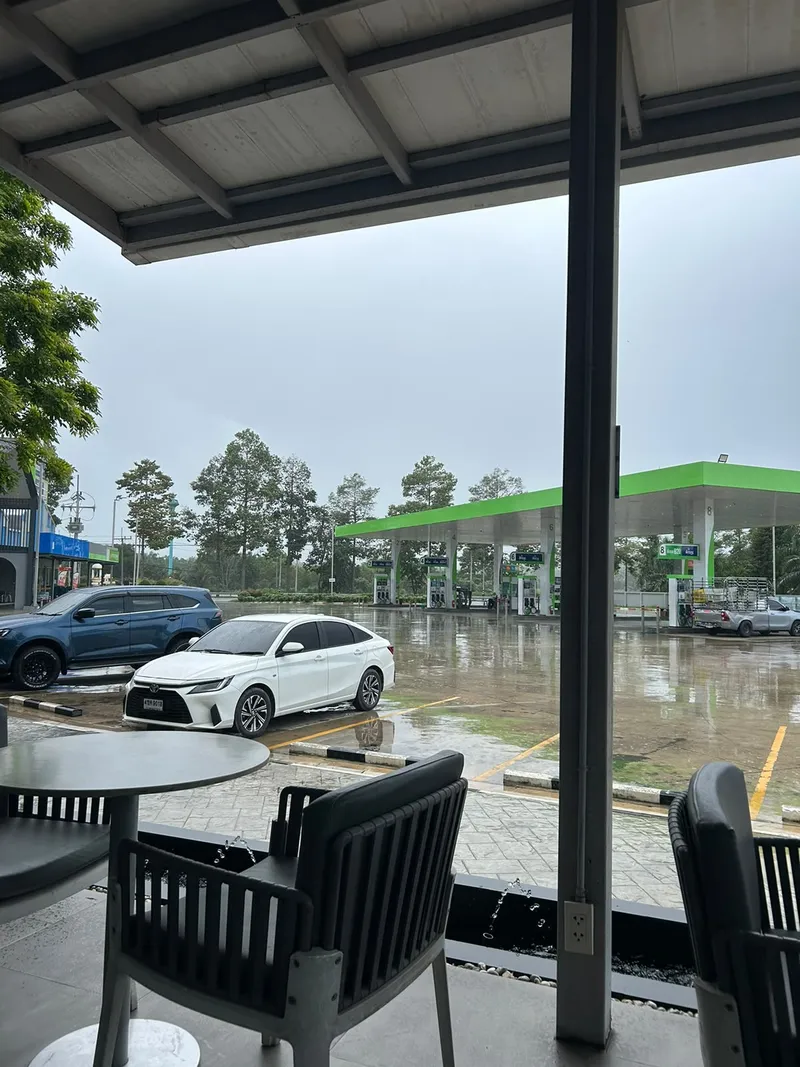

Toyota Yaris in Thailand
We took the car through the portal takecars.com. Great price for a car in excellent condition with full hull insurance, no deposit and no credit card. I paid 3% down payment online in Moscow, the rest I paid when I got the car at the airport. You can pay in cash, you can pay by card, just warn the guys in advance, they will take the payment termiral with them. We got the car with a full tank, which is very rare in this part of the world, maybe we are so lucky, but from Seychelles to Philippine it is the first time, usually they give you an empty tank and you drive on fumes to the nearest gas station and pray not to get up. The car was returned at Phuket International Airport, but our departure was in the airport of domestic flights and they kindly drove us to the right terminal. Great rental organization, I recommend it to everyone, great customer service!
Nissan Note in Thailand
It was great. The owner was great I ended up getting a replacement car.... They gave me a better one.
Toyota Yaris Ativ in Thailand
Everything was fine in principle. Only the air conditioner didn't quite cope with the heat. But other than that, it was fine. Got the car on arrival. Turned it in with no problems.
Nissan Note in Thailand
Everything went great Everything was very convenient, on time, and there were no problems with the car The girls in Bangkok are wonderful.
Toyota Yaris Ativ in Thailand
everything is great, loved the car, no Trouble, no problems, thanks)
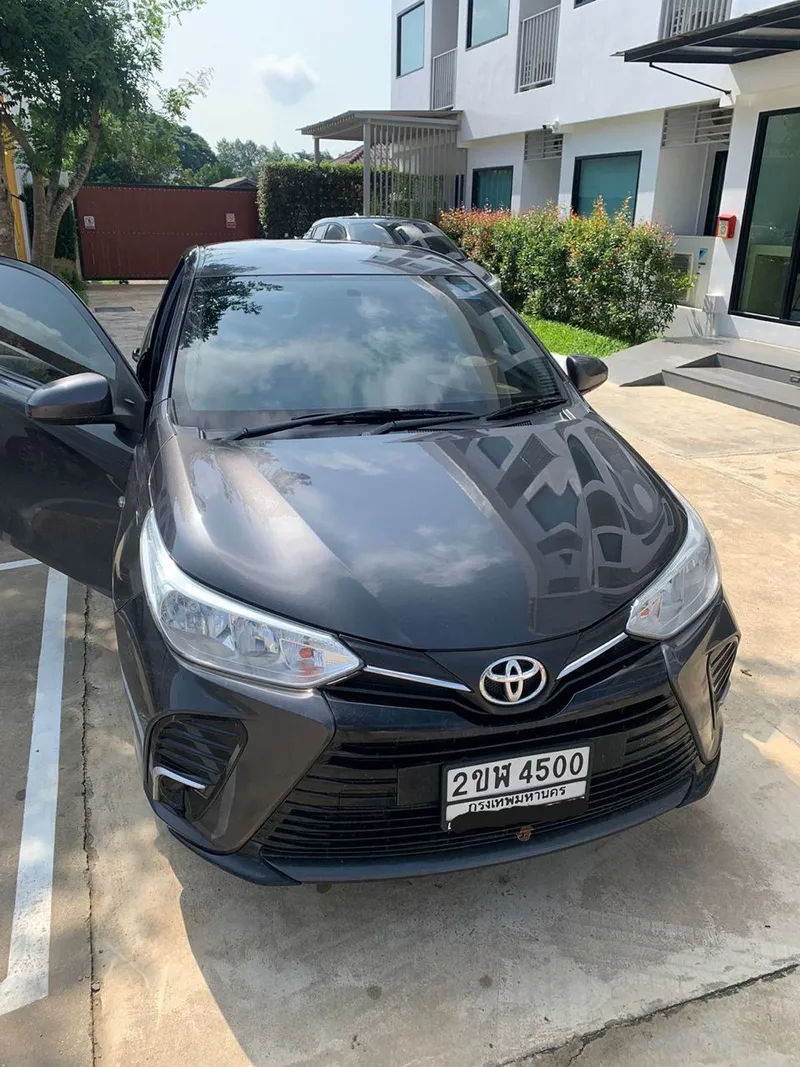

Nissan Note in Thailand
Everything's fine! Joey contacted me in advance and asked me to send a photo of my documents. He warned me that it was better to have an international license 👌🏻. He told me that I would be met at the airport with a sign. On the day of arrival I was sent a photo of the person who would meet me and the place of meeting. On arrival, the documents were drawn up, I paid the money for rent and deposit. The deposit was returned to me when I returned the car. Everything was smooth, efficient and no fuss! On the car: the car is clean, well-maintained, in good technical condition! They put a big bottle of water in the car (nice!). Thank you guys! ❤️🤗👍🏻
Toyota Yaris Ativ in Thailand
Thank you so much. Everything is super. The car is in excellent condition, tinted all around the excellent film (15% transmittance), at night you can see everything perfectly. Did not let me down. I received it at the airport on arrival in Phuket and handed it over at Phuket airport on departure. I liked everything. I will take more.
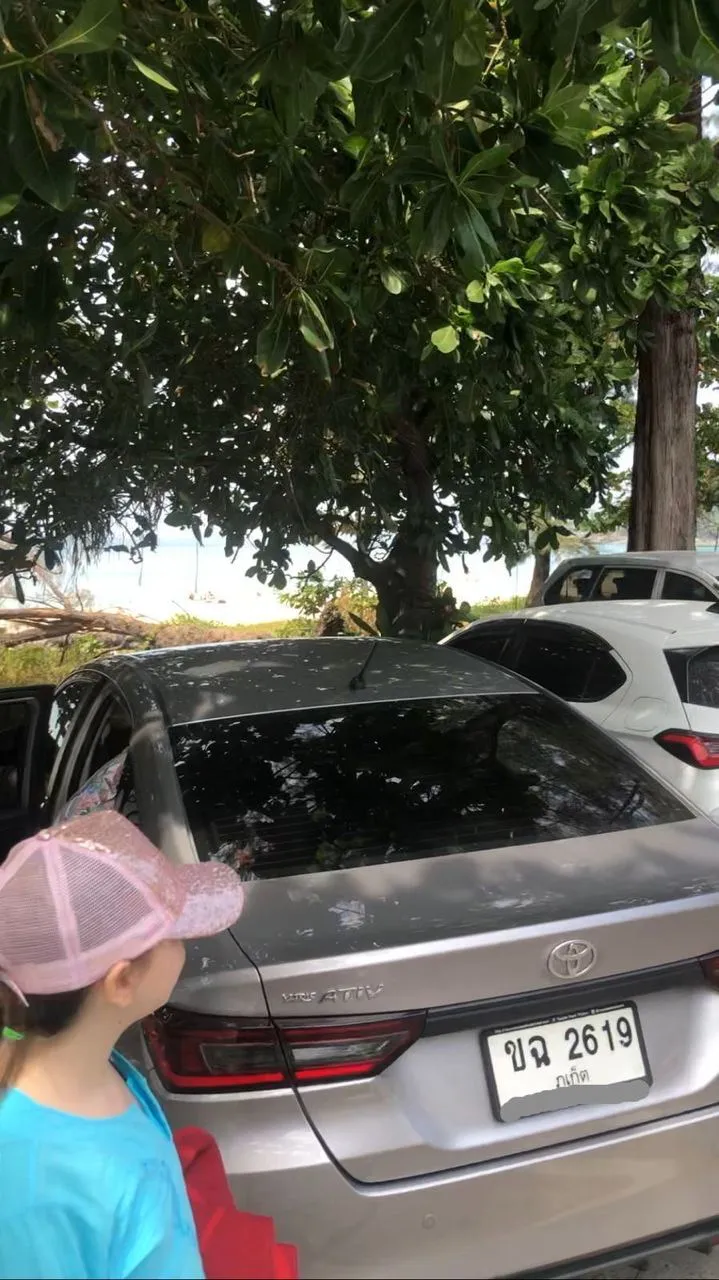

Nissan Note in Thailand
Everything went quickly and well, pick up and drop off no problems, car is serviceable.
Honda City in Thailand
Everything went great, received it quickly, handed it over quickly, no problems or complaints. The car did not let me down, it was simple, but you don't need another one for Phuket. I was surprised at how spacious the trunk is.... We wanted to go to the airport with the villa on a separate bus, checked and the luggage all fit in the car, in the end we went on it. Everything is great 👌

Toyota Yaris Ativ in Thailand
On receipt and return of the car everything was fine. But the car itself was not in the best technical condition, the problem was apparently in the gearbox or in the engine in general, the car did not accelerate well, and during a sharp gain of speed you could smell the smell of burning in the cabin. But it did not spoil our trip). I will give 5 out of 5 for the service and 3,5 for the technical condition of the car.

Hyundai H1 in Thailand
It was all perfect

Toyota Yaris Ativ in Thailand
It went fine. But it was a bit stressful at first to find a new car, as the client had renewed his car. And they charged 1000 baht for an incomplete tank, even though there was obviously not more than 500 missing

-
Deposit and payment method
With our partners in Thailand the deposit is $85–145, accepted in cash or as a hold on an international card.
-
Full Coverage Insurance (Super CDW)
$3–17 a day removes liability for damage and often eliminates the deposit altogether.
-
Airport or hotel delivery
In Bangkok delivery is usually paid (~$100 one way across town); on Phuket and Samui local partners often include it for free.
Money matters
Deposit
With our partners the deposit runs $85–145 depending on the car class. That's 2–3 times lower than the big international chains ($400–600 frozen on a credit card). Cash in baht or US dollars is fine, as is a hold on any international card.
Insurance
The price always includes Compulsory Third-Party Liability — civil liability with minimum medical cover required by Thai law. On top of that we recommend Full Coverage Insurance (Super CDW) — $3–17 a day. With it most partners drop the deposit: choose between $17 a day or $145 frozen on the card.
A couple from Amsterdam took the basic cover on a Phuket booking last April, clipped a kerb on the road down from Patong viewpoint, and lost half their deposit on a single bumper. Their second week they paid $14 a day for full cover and stopped flinching at every songthaew.
Payment on the spot
Thai operators love cash — here and now, no waiting for transfers. Cards work too: Visa and Mastercard are accepted across the country. For online prepayment our site handles the major European card networks, so the booking is settled before you fly.
Online prepayment means you arrive with everything sorted — the partner has your name, the car is ready, and the paperwork takes five minutes at the kerb.
In practice most clients split it: prepay the booking online, settle local extras (delivery, optional full cover) in cash on collection.
When something goes wrong
A car is a machine and sometimes it breaks down. With local partners issues are sorted fast: 24/7 hotline, tow truck within 1–4 hours in any tourist area, replacement same day.
A guest's battery died on the highway near Hua Hin last March. One call to the partner, twenty minutes later a mechanic was there with a new one — fitted on the verge, no extra charge.
Substitution and free upgrade
If the booked model isn't available, we hand over an upgrade at no charge. A client books a Honda Civic 1.8, and at the airport a Toyota Camry 2.5 pulls up — that kind of thing. The rule is simple: the customer never goes home with less car than they paid for.
Minor accidents
First rule: don't move the car until police (191) and insurance representatives arrive. With full cover there are no financial questions — repair, medical bills, third-party damage, all closed by the partner. The driver's job is to wait, photograph, and stay calm.
A traveller in Pattaya nudged a parked motorbike last October. Police arrived in fifteen minutes, the partner's coordinator on the phone in five. Full cover swallowed the lot — repair, the rider's clinic visit, even the petrol the traveller wasted idling on the kerb.
Cross-border restrictions
The rental can't cross an international border: Laos, Cambodia, and Malaysia are closed under all partner contracts. Inside Thailand, anywhere is fine — Bangkok to Krabi, Pattaya to Rayong, the long west-coast loop on Phuket. One-way drop-off costs extra (Bangkok to Phuket runs around $285).
Rates in Thailand vary throughout the year depending on the season and the rental length in days.
- January
- February
- March
- April
- May
- June
- July
- August
- September
- October
- November
- December
- Jan
- Feb
- Mar
- Apr
- May
- Jun
- Jul
- Aug
- Sep
- Oct
- Nov
- Dec
 How expensive is renting a car in Thailand: average daily rates for a one-week car rental, across all car classes. Delivery across Thailand not included.
Frequently asked questions
An economy car costs around $21–27 per day, depending on the season. Crossovers and seven-seat cars start at about $57 in the low season and $71 in the high season. Rentals of one month or more can be 30–40% cheaper per day. The period from 25 December to 25 January is the most expensive, so book one to two months ahead.
For travel from November to February, book one to two months in advance. For the busiest period from 25 December to 25 January, book even earlier, as cars may sell out before 20 December. From May to October, you can usually book closer to the travel date and prices are around 30–40% lower.
The deposit is usually $85–145, depending on the supplier and car category. You can generally pay it in cash in Thai baht or US dollars, or provide an international card for a temporary hold. Some partners waive the deposit if you buy Full Coverage.
You will need your passport, national driving licence, and a card or cash for the deposit. Bring an International Driving Permit as well, as it may be required by the police even if the rental supplier accepts a national licence written in the Latin alphabet.
Bring an International Driving Permit together with your national licence. Some rental partners may accept a national licence written in the Latin alphabet when handing over the car, but the police or insurer may still require an IDP. Arrange it in the country that issued your licence before travelling.
Compulsory third-party liability insurance with basic medical cover is included by law. Full Coverage, sometimes called Super CDW, is optional and costs around $3–17 per day. It may reduce your excess to zero and provide broader cover, but exclusions still apply, so read the policy terms before booking.
Do not move the car. Call the police on 191 and contact the rental partner using its 24-hour emergency number. Wait for the police and the insurers' representatives, and photograph the vehicles, damage and scene. If you have Full Coverage, the rental company will explain what costs, if any, remain your responsibility.
The left — like in the UK, Japan, and Australia. The wheel is on the right. It takes 1–2 days to adjust. For the first drives, pick quieter areas and avoid Bangkok rush hour. Experienced drivers usually adapt within a single evening.
Most of our partners in Thailand include unlimited mileage, particularly for airport and long-term rentals. This is useful for a multi-region road trip because you do not need to monitor every kilometre. A small number of budget local rates have a limit of 200 km per day, so check the listing before booking.
Yes, although a delivery or one-way fee may apply. Returning the car to another location in the same city, such as from a Bangkok airport to a hotel, is often free or costs $5–15. One-way rentals between cities are much more expensive; Bangkok to Phuket costs around $285. Most customers return the car to the original collection point.
No. Crossing an international border is forbidden under the contract with all our partners in Thailand. If your route includes another Southeast Asian country, drop the car at the border and arrange a new rental on the other side.
Our partners generally do not permit rental cars on ferries because the insurance does not cover the crossing. It is usually easier to arrange a separate rental after arriving on the island. On Koh Samui, cars can be delivered from Samui Airport.
A litre of 95-octane petrol costs around $1.50, or approximately 50–55 baht. Diesel is about $0.10 cheaper per litre. PTT, Bangchak, Shell and Esso stations are widely available, and attendants fill the car for you. Both cards and cash are accepted. Most suppliers use a full-to-full fuel policy.
Tourists can drive safely with appropriate care, but should adjust to left-hand traffic, a high number of motorbikes and sudden heavy rain. A car offers more protection than a motorbike. Drive defensively, allow extra time on your first day and avoid speeding or unfamiliar rural roads at night.
Yes. Our partners accept both credit and debit international cards, and most also accept cash for the deposit. That's a key difference from the big international chains, which usually only work with credit cards.