


Pickup


Return
🎁 Use code WELCOME3 during checkout to get a discount on your first booking with us. Enjoy! ☀️

Car rental in Mauritius is the most direct way to see the whole island, not just the sun lounger by your resort pool. Mauritius is compact — 65 by 45 kilometres — but packed: the seven-coloured earths of Chamarel, the Tamarin waterfalls, the Le Morne lagoon, the Pamplemousses Botanical Garden, the northern capes around Cap Malheureux, the beaches of Grand Baie. All of it is connected by free motorways M1, M2 and M3 — crossing the island takes about ninety minutes.
A couple from Manchester landed on a Friday in October. Five minutes at the kerb signing the contract on the bonnet, and they were on the M1 to Flic-en-Flac while the queue at the global-chain desks was still waiting on a shuttle.
Prices stay among the friendliest in the Indian Ocean. A small hatchback starts from $15 a day in low season, deposits with local partners begin at $200, and TakeCars partners offer no-deposit options too. The balance is paid in cash — US dollars or euros — at handover, and most international cards work for the online prepayment.
A family of four took the Picanto for ten days last May at $19/day. They paid the balance in euros at the kerb, signed once, and never saw a desk.
Mauritius is visa-free for most European passports up to 60 days. A valid passport and a pre-filled All-in-One form on safemauritius.govmu.org are enough. The entry stamp is given free at the airport — no embassy queues, no interviews.
Prices and timing
A small hatchback — Kia Picanto, Hyundai i10, Suzuki Swift, Toyota Yaris — costs $15–25 a day in low season and $25–40 in high. A compact saloon or estate runs $25–35. A crossover like a Suzuki Vitara sits at $40–70. Premium SUVs and larger, $70–150. The separate 4×4 category for mountain routes, $50–100 a day.
Take the automatic, even if you've driven for decades. Adapting to a right-hand-drive car on the left takes ten minutes on auto, and a week on a manual.
Low season runs May to October — southern winter, dry, sunny, 20–27 °C. Rentals are 20–40% cheaper than at peak. High season is November to February: the tropical summer, full beaches, resorts at capacity. January to March is the rainy season — outdoor trips are less comfortable, but prices hit the floor.
The sweet spots for booking are April–May and September–October. Warm, dry, no crowds, and prices haven't started climbing towards the New Year holidays yet.
Standard inclusions are TPL (third party liability), basic CDW (collision damage waiver), unlimited mileage and a spare tyre with warning triangle and jack. The short version on insurance: on left-hand traffic, take Full Coverage at least the first time round, especially on day one behind the wheel.

Suzuki Dzire in Mauritius
We had a rental car during our stay in Mauritius. Both the handover and the return went smoothly. No deposit was required. We can definitely recommend this company. Michal and Hanka, Czech Republic
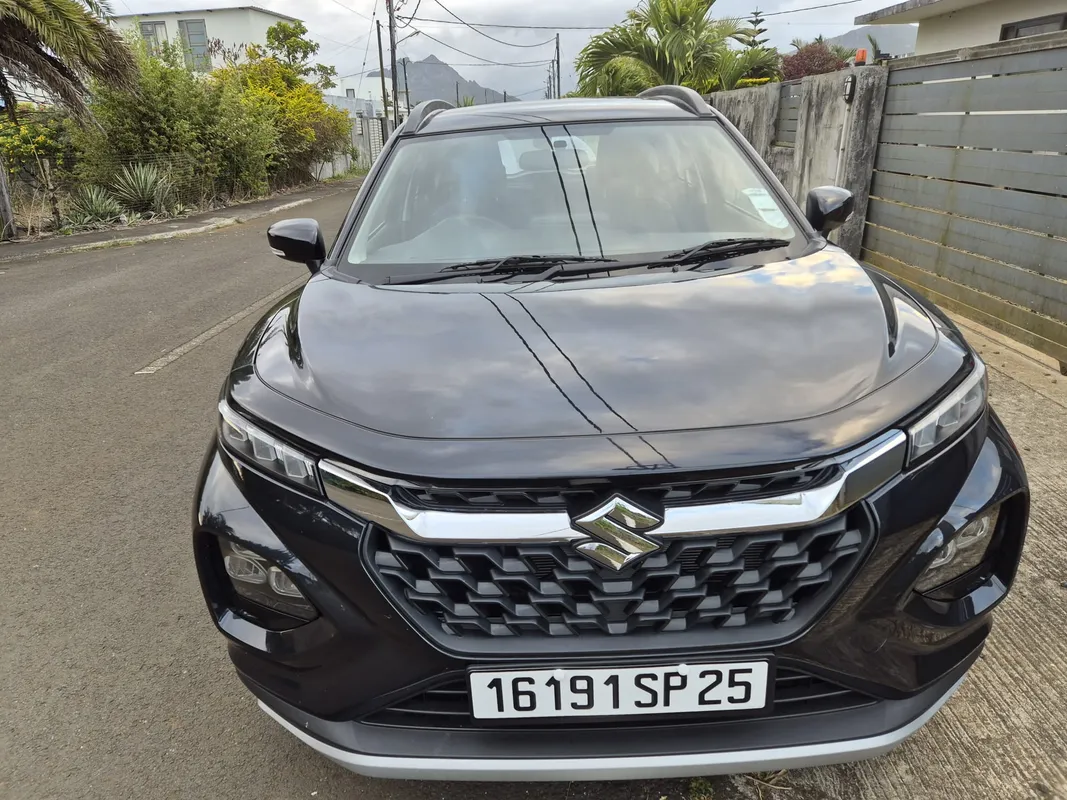
Suzuki Fronx in Mauritius
We hired a car from this company before we got to Mauritius. The price was very reasonable and competitive. The car was all arranged to be dropped off for when we arrived at an address we requested. They kept in contact with us, confirming drop off day, time and address, and even provided the car earlier. The customer service was outstanding. The car itself was as described, clean, tidy and very efficient. Pick-up from the airport was seamless, and we would 100% recommend this company. We will definitely be hiring a car from them again when we next return. Thank you so much for helping travelling around Mauritius easy.
Suzuki Swift in Mauritius
The car was perfect. It wasn't a Suzuki Swift but a Huyndai i10 Grand. Everything was good during the trip

Suzuki S-Presso in Mauritius
Everything was great! The car is maneuverable, economical. There were no claims to the technical condition! The owner is always in touch. Our flight was delayed for 2 hours, he was waiting for us. Surrendered at the airport without problems! Thank you very much! Everything is super!
Kia Picanto in Mauritius
I had an amazing experience renting a car from this company. From the delivery to the return, everything was absolutely perfect. The process was smooth, the car was in excellent condition, and the service was top-notch. I highly recommend them to anyone looking for a hassle-free car rental in Mauritius. Thank you for the great service!

Suzuki Swift in Mauritius
It went well.
Kia Picanto in Mauritius
Everything went great, thank you
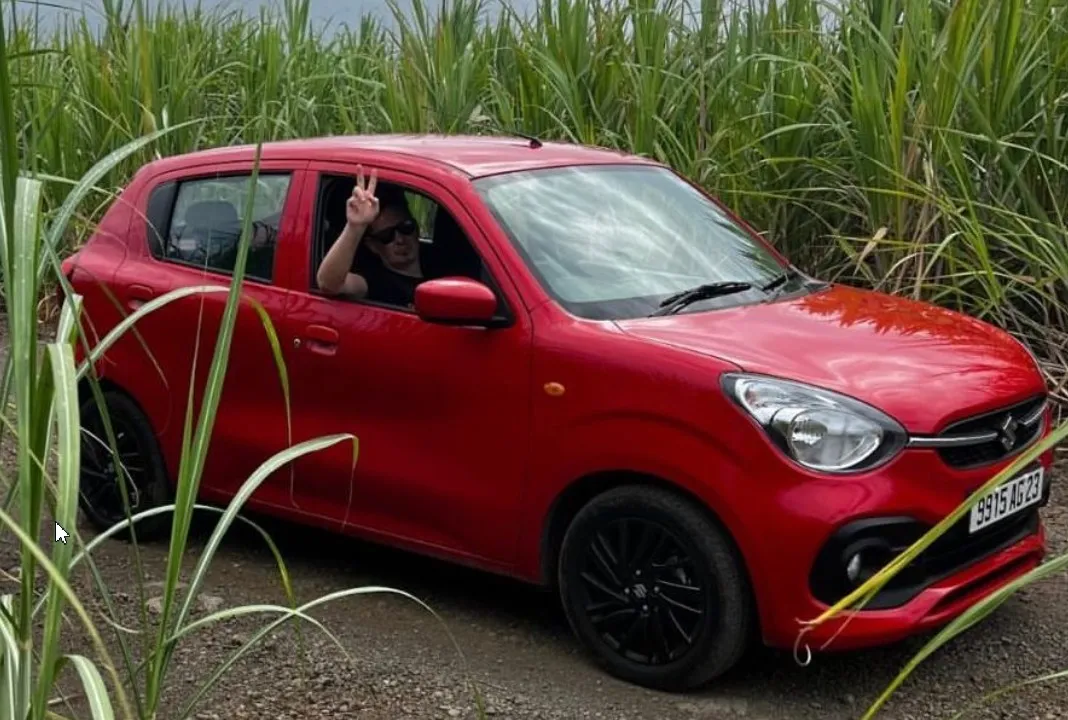
Suzuki Celerio in Mauritius
Everything is great, except that I scratched the disk and bumper and parted with 300 euros ))) but this is personally my fault. Otherwise everything was fine: met me at the airport, drove me to the place, signed the contract. I checked back at the airport, near the gate

Volkswagen Polo in Mauritius
We've enjoyed everything
Suzuki Swift in Mauritius
The rental was comfortable The representative met, explained everything, helped to refuel and explained everything in detail The representative was also in touch throughout the rental period (including warnings about cyclones and such). Car - good condition, clean. Due to the high mileage the gears shifted a little sharply (with a jerk), but not critical Upon receipt in the car there was a smell of beer (while, I repeat, the car was clean). But it quickly weathered out From the comments - when booking it was stated that additional payment on the spot can be made by bank card. It turned out to be impossible. But the representative of the company brought us to the nearest ATM, so we were able to pay without problems.
Suzuki Alto in Mauritius
everything went well


Suzuki Swift in Mauritius
The car was excellent had no problem with it even the guy that handed me the car was very nice. The prob was that i reserved a suzuki swift but got a toyota vitz but it was okay and very economic too

Nissan Micra in Mauritius
It was really nice and we loved the car. It was very neat and clean and was given to us in a very good condition

-
Real reviews on every car
We ask each guest for feedback after their rental, so when you choose, you see the rating of the exact car and the exact host you're booking from.
-
Transparent deposit and no fine print
The deposit amount, payment method and full price breakdown are visible before you book; nothing surprises you at the handover desk.
-
Free cancellation up to 7 days before pickup
Plans change, so you cancel from your account and receive a full refund without questions.
Driving rules
Left-hand traffic
Driving is on the left — a British legacy. On an automatic, adaptation takes 5 to 15 minutes. Roundabout rule: give way to the right, enter clockwise. At the busy circles in Port Louis and Grand Baie, repeat "keep left" for a couple of days. Compared with Thailand or Bali, Mauritian left-hand traffic is gentler: wider roads, clearer markings, calmer drivers.
A guest from Lyon spent three minutes practising in the Casela car park before pulling onto the M1. Day two he'd stopped thinking about which side at all.
Speed limits
Limits are modest: 40 km/h in towns, 80 on rural roads, 110 on the M2. Cameras trigger from +1 km/h above the limit — no European-style 5–10 km/h tolerance. The basic fine is around $20. Locals often drive well below the limit; follow the flow rather than the line on the speedo.
Alcohol, phones and the Road Traffic Act 2025
The blood alcohol limit is 0.02 ‰, effectively zero — a glass of wine at dinner is reason enough to call a taxi. A phone in your hand costs $62 even at a red light: only hands-free, Bluetooth and a holder are allowed. The Road Traffic Amendment Act 2025 has been in full force since 2026: PEDN camera fines flow to the rental partner and come off the deposit.
Phone in the holder, navigation set before you pull out, music on voice command. A guest who paid two $62 fines in three days on his last trip ran the same routes this April without a single ping.
If a PEDN notice does arrive, pay it quickly. The amount is usually small, but unpaid fines surface on your next visit to the island.
Fuel, parking and weather
Fuel and petrol stations
Petrol costs $1.20–1.40 per litre, diesel a touch less. Main networks: Total, Shell, Engen, Caltex. Most stations are NOT 24/7 — in rural areas they close for the night. Rule of thumb: start the day with a full tank.
A family bound for Le Morne sunset last September left Grand Baie on a quarter tank. The closest open pump after 19:00 was a 25-minute backtrack. They watched the sunset from the petrol queue instead.
Parking
Free parking at the beaches of Flic-en-Flac, Grand Baie, Belle Mare, Le Morne and Tamarin, and at hotels. Paid parking in central Port Louis runs $0.50–1 an hour, most conveniently at the Caudan Waterfront. Don't leave valuables in plain sight.
Seasons and weather
Dry season runs May to October — perfect driving conditions. Rainy season is January to March, with reduced visibility and a chance of brief flash floods in the highlands. Cyclone window is December to April: events are infrequent, but if one falls during your trip, follow local news. In the rainy season, move mountain trips — Black River Gorges, Pieter Both — to dry days. Mauritius is small; the weather changes quickly.
If there's an accident
Call 999 or 112, photograph both cars, the damage and the road markings, and don't move the car until the police arrive. A police report is mandatory — without it, no insurance pays. Notify your TakeCars partner within 24 hours; we help with communication.
Rates in Mauritius vary throughout the year depending on the season and the rental length in days.
- January
- February
- March
- April
- May
- June
- July
- August
- September
- October
- November
- December
- Jan
- Feb
- Mar
- Apr
- May
- Jun
- Jul
- Aug
- Sep
- Oct
- Nov
- Dec
 How expensive is renting a car in Mauritius: average daily rates for a one-week car rental, across all car classes. Delivery across Mauritius not included.
Frequently asked questions
The All-in-One form is a mandatory online arrival form available at safemauritius.govmu.org. Complete it in English before your flight using your passport, flight and accommodation details. You will receive a QR code for border control, and the airline may ask to see it before boarding. The form takes about 15–20 minutes to complete.
Most major international cards — Visa, Mastercard, American Express — are accepted both for online prepayment and at the rental desk. The balance can usually be paid in cash, in US dollars or euros, on handover. With local partners, debit cards and cash are also widely accepted, which keeps things flexible.
Yes. There are fewer no-deposit cars available, but you can find them using the ‘no deposit’ filter on the search page. These cars are offered by local partners that do not require a conventional security deposit. Another option is a small cash deposit of $100–200, compared with the $500–1,500 often required by international chains.
Local partners usually return a cash deposit immediately when you hand back the car, provided there is no damage. International chains generally release a card hold within 3–14 working days. Any camera fines, parking penalties or fuel charges may be deducted first because the rental company is responsible for identifying the driver.
A foreign licence is valid for only 4 weeks — that's the Mauritian rule. For shorter trips a standard European licence in Latin script is enough; no IDP is needed. If you plan to stay or work on the island for longer than a month, arrange the IDP before you fly — it's harder to get on Mauritius itself.
You need an International Driving Permit if you will drive for more than four weeks or if your national licence is not written in the Latin alphabet. Most European licences use Latin characters and are sufficient for a shorter visit. If you are uncertain, arrange an IDP in the country that issued your licence before travelling.
Some rental partners in Mauritius offer a short briefing or a 10-minute practice drive in the car park, particularly for visitors from countries that drive on the right. Accept the offer if it is available. If the supplier does not mention a briefing, ask whether you can take a short practice drive before leaving.
The minimum age is usually 21, with at least one year of driving experience. Drivers under 25 may pay a young-driver fee of $5–15 per day. Premium cars, 4×4s and minibuses generally require a minimum age of 25 and three years of experience. Most partners set the upper age limit at 77, and may request a medical certificate from older drivers.
Even Full Coverage usually excludes damage to the interior, lost keys, driving off-road outside permitted tracks, salt and sand damage from beaches, and traffic offences. The policy becomes invalid if the driver is over the permitted alcohol limit or uses prohibited mountain tracks. Before visiting Le Morne or Black River Gorges, check the exact exclusions with your rental partner.
No. Rodrigues and Réunion are separate islands that can be reached only by air, and rental cars cannot be taken there by ferry. If you plan to visit either island, arrange a separate rental after you arrive. On the main island of Mauritius, popular driving destinations include Chamarel, Le Morne, Grand Baie and Black River Gorges.
PEDN stands for Photographic Enforcement Device Notice — a fine from a road camera or laser radar. Mauritian law requires the rental partner to identify the driver: the camera reads the plate, the fine goes to the partner, and the partner bills you. The amount is usually deducted from your deposit, with a small admin fee of 20 to 50 dollars.
Yes, in the city centre — 0.50 to 1 dollars per hour, paid at booths or at meters. The most convenient option is the underground car park at Caudan Waterfront or by the central market. Narrow streets and rush-hour congestion make it sensible to leave the car on the outskirts and walk in for 10 to 15 minutes.
Not all of them. Most rural fuel stations close at night. Some stations on the M1 and M2 motorways have extended opening hours, and Port Louis has a few 24-hour stations, but elsewhere it is best to refuel during the day. Start longer journeys with a full tank and do not wait until the fuel warning light comes on.
Call 999 for emergency services or 112 for the general emergency line. Do not move the car until the police arrive unless it is blocking traffic. Photograph the vehicles, damage, number plates and road markings. Obtain a police report, as the insurer may reject a claim without one, and notify your TakeCars partner within 24 hours.
A scooter can be convenient for short trips near the beach and costs around $12–25 per day. For exploring the whole island, a car is safer and more practical, particularly if you are unfamiliar with left-hand traffic or encounter frequent rain showers. A scooter can complement a car for local journeys, but is unlikely to replace one for a longer itinerary.