


Pickup


Return
🎁 Use code WELCOME3 during checkout to get a discount on your first booking with us. Enjoy! ☀️

Renting a car in Hungary combines an easy city break in Budapest with proper road-trip routes: Lake Balaton, the wine regions of Eger and Tokaj, the puszta plains of Hortobágy, or across the border into Austria. Prices sit noticeably below Western Europe — economy cars from $15 a day, and a compact like a Skoda Fabia or VW Polo around $25–35.
A British couple last May took a Polo for five days, drove Budapest–Balaton–Eger–Tokaj, and still came in under what one weekend in Vienna would have cost them.
Hungary has been a full Schengen member since 2007 but never adopted the euro. The local currency is the forint (HUF), and many shops and petrol stations accept euros too, which makes life easier for visitors. Most Western European travellers don't need a visa for short stays; ETIAS authorisation launches late 2026 for visa-exempt countries.
We meet you at arrivals by flight number. Sign the contract, walk around the car, and you're on the road — quicker than waiting for the shuttle to a chain-rental desk.
Most customers take a car for 3–5 days, enough to cover Balaton, Eger and Tokaj from Budapest without dragging luggage between trains.
Documents, age and payment
Most Hungarian rental companies hand over the keys to drivers aged 21 and up with at least one year of licence; premium and SUV usually require 25+. EU/EEA driving licences are accepted indefinitely. UK licences (post-Brexit) are also accepted without an IDP. Drivers from the US, Canada, Australia or other non-European countries are advised to bring an International Driving Permit alongside the home licence — some Hungarian suppliers ask for one at pickup.
EU and UK licences pass with no extra paperwork. For drivers from outside Europe an IDP just makes pickup smoother — a few euros at home saves any awkward conversation at the desk.
On payment, the international chains require a credit card in the driver's name for the deposit hold. Local Hungarian suppliers and TakeCars accept debit cards, bank transfers or cash — in forints or euros. If you don't have a credit card, use the "no credit card required" filter when booking.
We split it: a small advance online to confirm the booking, and the balance plus deposit on the day in cash or by debit card. Easier for travellers without a credit card.
Most pickups take five to ten minutes once the paperwork's signed. If your card doesn't clear the deposit hold at a chain desk, a local host can usually take cash on the spot instead.
Most tourists in Hungary start their trip here
Insurance and deposit
Mandatory third-party liability cover is included in every Hungarian rental by EU law. Collision damage waiver and theft protection come bundled with most suppliers, with an excess of $500–1,500. Glass, tyres, wheels and the undercarriage are typically not part of the basic package — those need Super Cover or Full Cover, which drops the excess to zero and adds those parts in.
Full Cover is worth taking for cobblestones in central Budapest, busy weekends at Lake Balaton, and winter trips into the Mátra and Bükk mountains. Pre-booked online via TakeCars it's 20–40% cheaper than the same product bought at the rental desk.
On Pest cobblestones it's easy to scrape a wheel rim inside a week. We push Full Cover on almost everyone driving the city centre for the first time.
Local Hungarian suppliers ask for a $200–800 deposit, often payable in cash. International brands block $500–1,500 on a credit card. Cash deposits come back immediately on return; card holds release in 7–30 working days. TakeCars also lists zero-deposit options, mainly on economy cars.
A guest last winter took the basic CDW, then clipped a kerb leaving an Eger cellar car park. Wheel rim wasn't covered. Cost almost as much as the rental itself.
Hungary applies a strict 0.0‰ alcohol limit — a single drink before driving voids your insurance the moment you're in an accident. Cash deposits we refund on the spot when the car comes back clean, so there's no waiting weeks for a card hold to drop off.

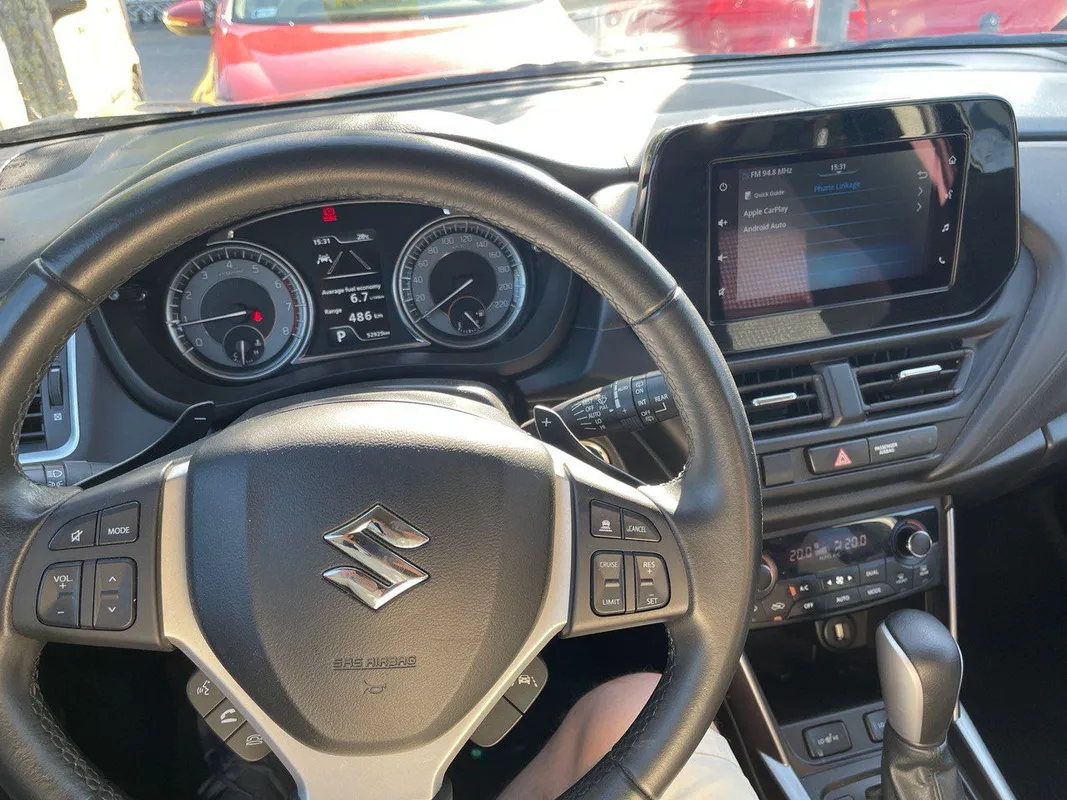
Suzuki SX4 S-Cross in Hungary
+ удобный автоматизированный процесс получения машины, хорошая работа саппорта, соответствуящая ожиданием машина, бесплатное такси до аэропорта при сдаче машины. "-' из аэропорта по всшему ваучеру такси везти отказалось

Volkswagen Golf Variant in Hungary
Everything was excellent. The car was 10/10. It seemed so new to me that I thought I was its first driver. Overall, everything was great. Thank you.
Nissan Juke in Hungary
Everything went great. The car was new. Everything went comfortably and easily. Thank you
Nissan Micra in Hungary
Everything went well. Took the car through the automatic terminal. Returned it to the man.) Only I do not understand the cost to be honest. It seems that in the end I paid much more than I had originally paid

Volkswagen Golf Variant in Hungary
Everything was great, the car was delivered on time, technically everything was fine with it. The deposit was unblocked the next day. We liked everything.

Nissan Micra in Hungary
Everything went fine. I just got the deposit yesterday

Suzuki Vitara in Hungary
1. I booked a Suzuki Vitara, but in fact they gave me a “Chinese” one. This is not critical since the class of cars is similar and there is a note in the booking that this could happen. 2. There were difficulties when receiving the car. The machine did not recognize my license. And if there hadn’t been an employee nearby, I think I would have stood there for a very long time. 3. Returning the car went without any problems 4. I don’t like that there is no way to pay a deposit in cash... In Prague, I rented a car with a cash deposit. The main inconvenience is that the deposit on the card was returned after 20 days after the car was returned. Overall, everything went well. We will be in Budapest again, we will use your service again)
Volkswagen T-Roc in Hungary
I rented a car in October 2023 for 2 weeks. Initially I planned to rent a car at the airport, but I did not book it in advance due to various circumstances, and upon arrival there was nothing suitable in terms of price. So in the evening I found this rental in the internet, we corresponded and the next morning I took the car. The price was about twice as cheap as at the airport. Euro 20 on top of some other tax was formed in fact, but I'm not sure that it was not written anywhere on the site. I was satisfied with the mileage restrictions and "not leaving" Hungary. The car was a Nissan Qashqai. The condition is very decent, no problems during the daily two-week operation and in the city and on the highway did not experience. Registration is fast, the staff (I saw only one employee) is correct and understandable. The site is a few kilometers from the airport. Everything is formalized through some miracle terminal on the street. But the employee himself pressed buttons and scanned passport and license, so he didn't understand much. When we passed, in the same machine there is a call for a cab. The car came in about 10 minutes and took us to the airport for free. Drive there for about 5 minutes. So I recommend it. I plan to apply again in December, but it will be necessary to travel outside Hungary).
Nissan Qashqai in Hungary
The service and the car were good

Volkswagen T-Roc in Hungary
Everything was perfect. The staff, the car and others. Would definitely try this again

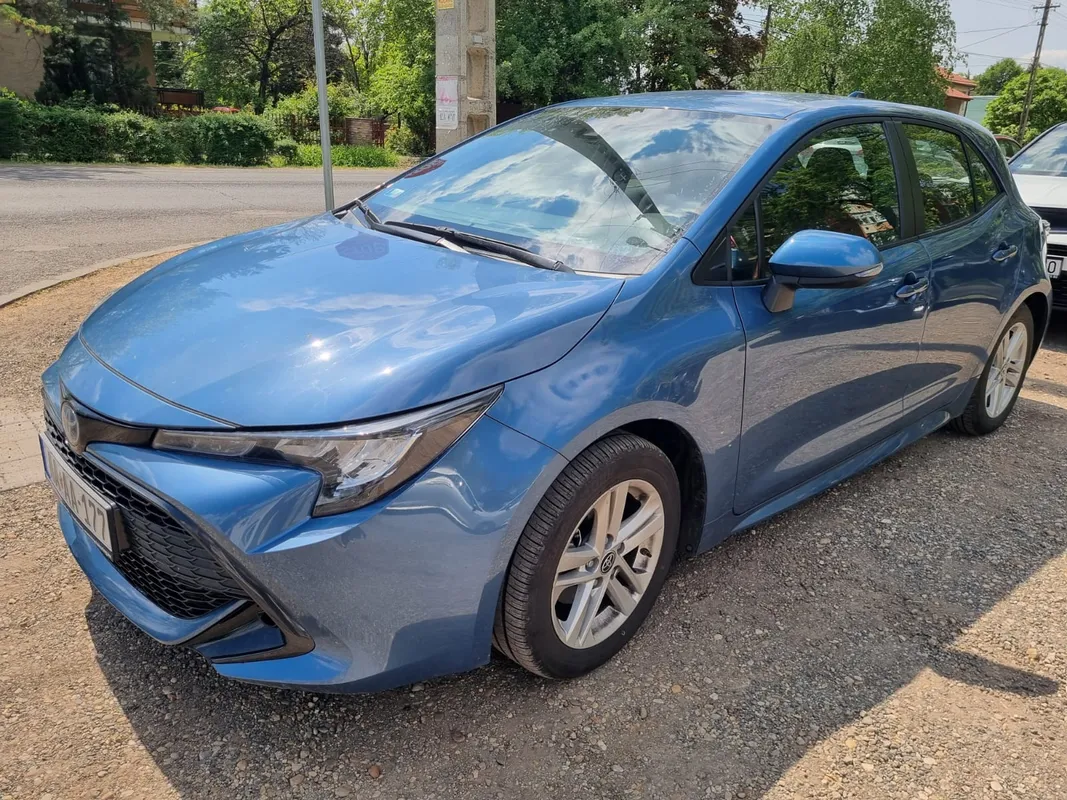
Toyota Corolla in Hungary
Everything was just fine.

SEAT Arona in Hungary
Everything went more or less well. The car was given a new one, higher class, from additional services - I had to pay for a vignette, although it was paid for a year on this car. However, the amount corresponded to the cost of the vignette for the rental period and, theoretically, it was possible to refuse this service. I was a little nervous about the deposit, it did not unlock for a long time. Everything else is ok.
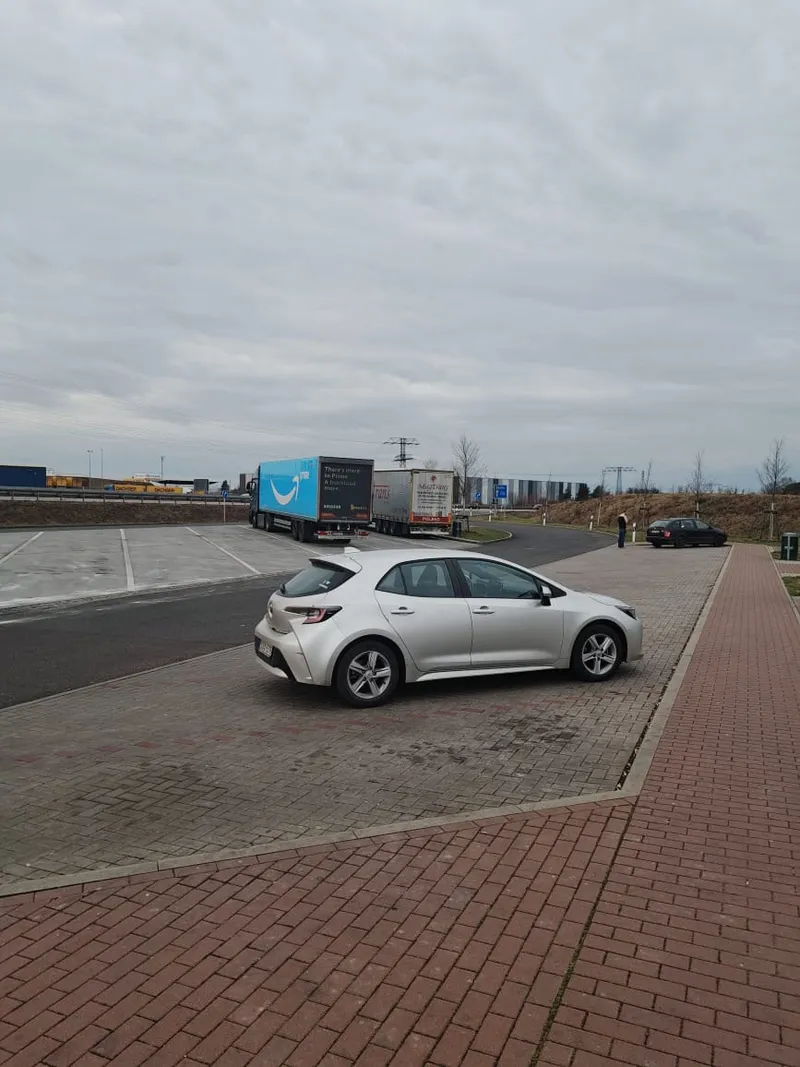
Volkswagen T-Roc in Hungary
Everything went perfectly. The car is in perfect condition. I am very grateful to the staff of your company for the great attitude and service.Thank you!!!

-
Real photos and reviews per car
You see the exact vehicle, the supplier and the manager, plus reviews from drivers who have rented that same car before.
-
Zero-deposit options on many cars
The deposit amount and method are visible before you book, and many economy cars are bookable with no deposit at all.
-
Free cancellation up to 7 days
Plans change — cancel without a penalty up to a week before pickup, and message the supplier directly before or during the rental.
Driving rules
Speed limits: 50 km/h in towns, 90 on rural roads, 110 on expressways (autóút) and 130 on motorways (autópálya: M1/M3/M5/M7). Dipped headlights are mandatory outside built-up areas all year round — most rental cars handle this automatically. Children under 150 cm must travel in an approved child seat.
Hungary has one of the EU's strictest alcohol limits: 0.0‰ for all drivers. Penalties are severe — immediate licence suspension and $250–800 fines — and any drink before driving voids insurance after an accident. Eger and Tokaj are wine regions, but tasting and driving belong on separate days.
VÉDA cameras
VÉDA is Hungary's automated enforcement system: a single camera checks speed, seatbelts and the licence plate at once. Cameras are dense around Lake Balaton, on the M1/M3/M7 motorways and at entry points to Budapest.
VÉDA fines come to the rental company first. We deduct the amount from your deposit and add a $20–50 admin fee — there's no hiding a camera ticket.
The most common ticket is an unfastened rear-seat passenger — about $50. The camera reads everyone in the car, not just the driver, so belts on for the back row too.
Mandatory equipment
By law every car must carry a high-vis vest, warning triangle, first-aid kit and spare bulbs. All this is in our cars — just check at pickup.
The vest belongs in the cabin, not the boot. By the rules you should already be wearing it when you step out onto the motorway.
Spare bulbs are the easy one to forget. A torch and a phone charging cable aren't legally required, but on a winter drive into the Mátra they're worth the boot space.
Where to drive
Renting a car in Budapest is the usual starting point: BUD has the country's largest fleet, with routes fanning out in every direction. In the city itself a car is more burden than help — metro, trams and Bolt cover it. Outside the capital, a car opens Hungary properly.
Weekend routes
Lake Balaton — 120 km to Siófok, summer beach hub. Eger — 140 km, baroque town and Bull's Blood red wine. Tokaj — 240 km, historic wine region with cellar tastings. Pécs and Hortobágy — 200 km in opposite directions.
A common plan: two days in Budapest without a car, then we hand over a car for 3–4 days — Balaton, or Eger and Tokaj together. City calmly, country properly.
Cross-border in one car
Schengen neighbours — Austria, Slovakia, Slovenia, Croatia — are open without formalities; insurance auto-extends. Austria and Slovenia need their own vignettes; Croatia uses ticket-gate tolls. Vienna is 250 km, Prague 530 km via Slovakia.
One-way to Vienna or Prague is the most popular cross-border route. Drop-off fee is $150–350; one-way inside Hungary at the same supplier is normally free.
Parking in Budapest
The centre has paid zones I–V, $0.5–1.3/hour, weekdays 8:00–18:00. SMS apps need a Hungarian number, so visitors use ticket machines or Park+Ride: outer metro stations cost $2–5/day, then M2 or M3 into the centre. Central parking ends up costing more than the rental itself, and spaces are scarce — Park+Ride is the saner default for anyone staying in the inner districts.
Rates in Hungary vary throughout the year depending on the season and the rental length in days.
- January
- February
- March
- April
- May
- June
- July
- August
- September
- October
- November
- December
- Jan
- Feb
- Mar
- Apr
- May
- Jun
- Jul
- Aug
- Sep
- Oct
- Nov
- Dec
 How expensive is renting a car in Hungary: average daily rates for a one-week car rental, across all car classes. Delivery across Hungary not included.
Frequently asked questions
Yes. A Hungarian one-day vignette is valid only until midnight on the calendar day of purchase, not for 24 hours. If you buy it at 18:00, it will be valid for six hours. For an evening arrival or a trip lasting one or two days, a 10-day vignette may offer better value at around $19, compared with about $8 for one day.
A county vignette is an annual pass valid in one Hungarian county. It costs around $19, compared with about $190 for a nationwide annual vignette. It can be useful if most of your driving will be within one area, such as Lake Balaton, Eger or Tokaj. For repeated trips in the same county, it may cost less than buying short-term national vignettes.
Introduced in 2026, the M1 regional vignette covers Pest, Fejér, Komárom-Esztergom and Győr-Moson-Sopron counties, including almost the entire Budapest–Vienna corridor. It is useful for regular travel towards Austria through north-western Hungary or for people living near the border. It costs less than a nationwide annual vignette or four separate county passes.
Hungary gives you 60 minutes to buy a vignette after entering a motorway. Purchase it online at autovignet.hu or at a MOL fuel station within that period to avoid a fine. If you miss the deadline, the fine is about $80 when paid within 30 days and may rise to $600 later. Unpaid fines can be pursued in your home EU country.
The fine is about $50. VÉDA cameras can record speed, seatbelt use and the number plate in a single image, including whether passengers are wearing seatbelts. The fine is sent to the rental company, which may deduct it from your deposit and add an administration fee of $20–50. Everyone in the car, including rear-seat passengers, must wear a seatbelt.
Licences issued in the EU, EEA and UK are accepted without an International Driving Permit. If your licence was issued in the US, Canada, Australia or another non-European country, an IDP is recommended and may be required by the rental supplier. Arrange it in your home country before you travel.
They are mandatory at the international chains for the deposit hold. Local Hungarian suppliers and TakeCars also accept debit cards, bank transfers and cash — in forints or euros. Use the "no credit card required" filter when booking.
Often, yes. Many hotels, restaurants, petrol stations and rental companies accept euros — particularly in Budapest and around Balaton. The rate isn't quite as good as an ATM withdrawal, but it's convenient. Local rental deposits are accepted in HUF or EUR — check with the supplier in advance.
Yes. Austria, Slovakia, Slovenia and Croatia are all in the EU and the Schengen Area, and most rental insurance remains valid in these countries. Austria and Slovenia require their own vignettes, costing about $13 for 10 days, while Croatia uses distance-based tolls. Most suppliers do not allow travel to Serbia or Ukraine, so confirm the permitted countries in writing before you leave.
Yes. This is a popular one-way route. Drop-off fees are usually $150–250 for Vienna, $200–350 for Prague and up to $400 for Berlin. One-way rentals within Hungary are often free when you use the same supplier. Local operators and platforms such as TakeCars may charge less for cross-border one-way rentals than international chains.
Cash deposits are returned when you drop off the car, provided there is no new damage. Credit-card holds are usually released within 7–30 working days. Deductions may be made for VÉDA camera fines, parking tickets, missing fuel and unpaid vignettes. Photograph the car when you return it and keep your final fuel receipt.
No — unusually for Central Europe. Czech rules use fixed dates, Germany uses situational rules, but Hungary leaves it to the driver. Rental companies still fit winter or M+S all-season tyres from November to March. If you plan to drive into Austria or Slovakia, check separately — they do require winter tyres.
Parking apps such as Simple and Voxpay require a Hungarian phone number, so visitors usually need to use a ticket machine and display the ticket on the dashboard. Machines accept coins and, in many locations, cards. Another option is Park & Ride: leave the car near an outer metro station for around $2–5 per day and take the M2 or M3 into central Budapest.
As of May 2026, 95-octane petrol is around $1.60–1.80 per litre, with diesel slightly cheaper. That's mid-range for the EU — more expensive than Bulgaria or Romania, cheaper than Germany or Austria. The main chains are MOL (Hungarian), Shell and OMV. Many MOL counters also sell digital vignettes.
Call 112, the EU emergency number, where assistance is available in English and German. For a minor collision with no injuries, complete the European Accident Statement. The police must attend if anyone is injured or the damage is serious. Photograph the scene, notify the rental company within 24 hours, and keep the police report. Without the required report, your collision cover may be invalid.