


Pickup


Return
🎁 Use code WELCOME3 during checkout to get a discount on your first booking with us. Enjoy! ☀️

Car hire in Greece is one of the most affordable ways to explore the country beyond the cities. The market sits between two worlds: international chains with desks at the airports and local family-run companies that greet you by name and complete the paperwork in five minutes. Prices here are among the lowest in Europe, and route options range from a short city loop with car hire in Athens to a two-week mainland circuit through the Peloponnese and Meteora.
A host at ATH met a couple last June after their Aegean flight, signed the contract at the kerb, walked them around a white Fiat Panda and sent them on their way in under twelve minutes — the airport queue at the chain desks was still snaking past the kiosk.
Greece divides into three rental scenarios. First, the mainland: Athens, Meteora, the Peloponnese, Delphi. A car opens up the country because intercity public transport is slow. Second, a single large island: car rental on Crete, Rhodes or Corfu, where without a car your options become limited. Third, island-hopping through the Cyclades or the Dodecanese — here it is usually cheaper to rent on each island and take the ferry as a foot passenger.
Greek rental has its own rhythm — a kerbside meeting, a walk around the car, a quick word about where the tow trucks operate, and a WhatsApp number left open for the whole trip.
When choosing a car, note the transmission. Automatics are still uncommon and cost 40–60% more than manuals. Consider the season: summer prices on the islands are higher than on the mainland, while in winter most island offices operate on reduced hours.
How much does car hire in Greece cost?
The price depends on three things: season, pickup location and car class. According to our data, the average daily rate for an economy car in April is around $43, in May and September it is in the $46–61 range, and in August it rises to $73. The peak-to-shoulder gap is nearly twofold, and this often makes late September a better choice than July.
A family who shifted their Crete week from August to the third week of September last year paid roughly $48 a day for a Hyundai i10 instead of the $73 they had been quoted for the peak — same beach, same paperwork, different invoice.
Car hire on the islands costs 20–40% more than on the mainland — especially on Santorini and Mykonos, where small fleets sell out a week in advance during July and August. Crete and Rhodes have larger fleets, but you should still book ahead.
A guest who tried to walk up to a Santorini desk on the 5th of August found exactly two cars on the screen: a tired 1-litre manual and an eight-seat minivan. Both were gone by lunchtime.
Look at the total cost, not just the daily rate: for rentals of 14 days or more, most companies offer 20–30% off. Pay attention to the fuel policy. Full-to-full is the best option — you return the car at the same level. Full-to-empty means you pre-pay for the whole tank with no refund for what is left, and that is rarely a good deal. There are no hidden fees on TakeCars: the price you see covers insurance, delivery and any young-driver supplement.
Browse cars in popular areas
Most tourists in Greece start their trip here
How we work in Greece
TakeCars is not a classic rental chain — it's a marketplace of vetted local Greek operators. You see the actual supplier and contact person before booking, you read reviews for the specific car (not just an averaged company score), and from the car page you can message the supplier directly with a delivery question or request a meeting at your hotel rather than at the office.
The same white Fiat Panda often shows up from three different Athens suppliers on the same screen — pick the one whose pickup point is nearest your hotel, not the only one a chain happens to offer.
Booking is instant. No "let me check the fleet" emails, no waiting for confirmation. Free cancellation works up to 7 days before pickup, which matters in Greece, where plans shift around ferries, weather and the latest local recommendation. The deposit and the payment method are visible before you book, and the small print isn't tucked away — every supplier is vetted and their terms live in one table.
Open the supplier profile before you commit — you'll see how many reviews they have, which cars they rent most often, and which real customers have already driven the model you're eyeing.
Payment follows a straightforward European process: most cards work for the online deposit, the rest is settled in euro cash on arrival, and quite a few suppliers — including on car hire on Rhodes — offer a no-deposit tariff with full insurance included.

Nissan Pulsar in Corfu
everything was fine, very good car, comfortable to drive, economical.
Fiat Panda Cross in Greece
Everything was perfect, very conveniently received, we were met with a sign at the airport, promptly handed over the car, in general there were no problems with the car during the trip. Thank you very much)
Fiat Panda Cross in Greece
All went well! Great service, we are really pleased We will, for sure, book again

Hyundai i10 on Zakynthos
the car delivery was in time, how company said and the car had the good quality. No any issues with that :) Thanks a lot again

Skoda Kodiaq in Greece
Was great car was very good so the service . I shall come back again
SEAT Leon in Greece
Everything is great, very accommodating and punctual The only thing is that they didn't speak English so we understood each other by gestures, otherwise I was satisfied 😉

Hyundai i20 in Greece
Everything went great, thank you! We were very energized by this trip! I can say this: the back seats were scraped and very dirty, the man who brought us the car did not even explain anything and did not give us the key. Then we had to run after him to ask him where our key was and then as it turned out he forgot it under the seat. 👍 The outside of the whole car felt like it was covered in oil and when we decided to turn on the wipers, everything was fogged up on both sides!

Fiat Panda in Crete
The inconvenience was at the airport as we could not find the car. The next day the car was delivered to our hotel. The car is very good and economical. I liked the attitude of the person who delivered the car to us. Maximum easy and quick execution of the documents of the transfer of the car to the client. In general, we liked your company. I will recommend your services to my friends!

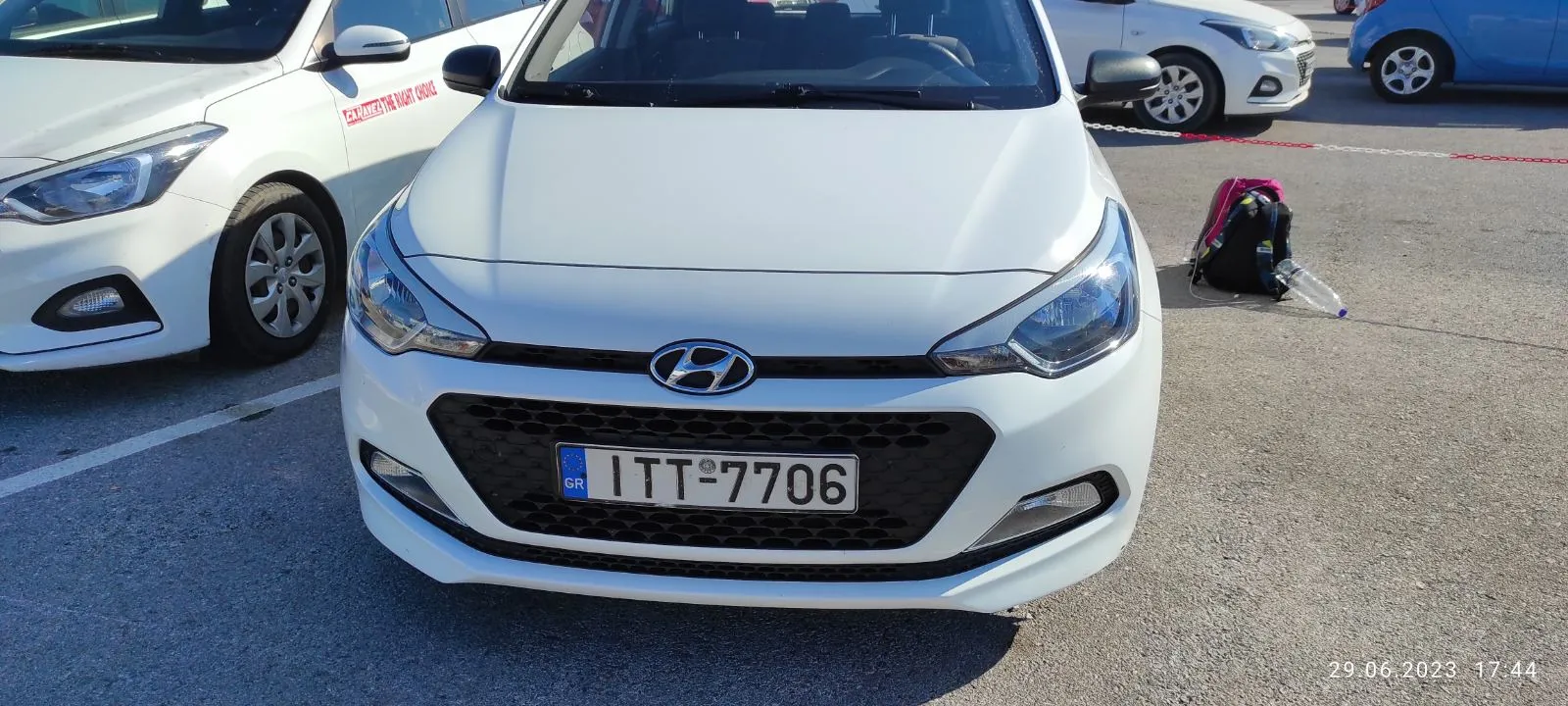

Peugeot 208 in Crete
The car is good. Despite the broken screen of the radio, the rest was all the rules. I didn't think the car was so spacious. We 4 adults fit very comfortably in the car. There was a problem with the delivery of the car to the parking lot. no one met us. But, in about 20 minutes we found the required parking lot. Only why, then they took an additional fee for renting a car outside of working hours - remains a mystery. The rest, on the wheelbarrow - no questions. I liked the island too. Thanks.


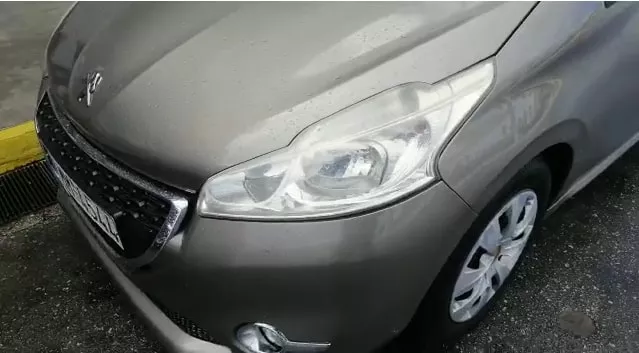
Hyundai i10 in Greece
Things are good!

Nissan Note in Greece
It was okay. thank you!
Volkswagen Polo in Crete
Well was a very good ideea to rent car from local rent! I think this should be everywhere!!! Special thanks to u re employers they were trust and nice people!!! I ll recomand to my all friends who come to visit u re island!!! 👍🏻

-
Real reviews on every car
You see not the company's overall score but the actual review for the very Hyundai i10 or Fiat Panda you're booking.
-
Instant booking, no waiting
Confirmed in seconds — no back-and-forth emails about fleet availability.
-
Free cancellation up to 7 days
Plans shift around ferries, weather or the route — you cancel without a fee and re-book on new dates.
Driving in Greece
Since 13 September 2025, a new Traffic Code has been in effect in Greece. Penalties for serious offences are 2–3 times higher, a repeat-offender rule has been introduced (the timer does not reset with each new offence), and new speed limits will apply from 2026.
Speed limits and fines
50 km/h in town, 90 km/h on rural roads, 110 km/h on expressways, 130 km/h on motorways (with a 60 km/h minimum). Speeding up to 20 km/h — €40, up to 30 km/h — €100, over 30 km/h — €350 plus a 60-day ban. Using a phone without a hands-free device — €350. Running a red light — €700+. Not wearing a seatbelt — €350.
A guest who scraped a wing mirror in Rethymno last August paid the on-the-spot ticket at a Piraeus Bank counter four days later and received the 50% discount — €175 instead of €350. The key is the ten-day window, not the location.
Alcohol
The standard limit is 0.5‰. For drivers with less than two years' experience, motorcyclists and professional drivers it drops to 0.2‰ — effectively zero. Under the 2025 Code, 0.5–0.8‰ means a €350 fine and a 30-day ban; 0.8–1.1‰ means €700 and a 180-day ban; above 1.1‰ means €1,200 and a criminal record.
Radar detectors and jammers are fully banned in Greece — a criminal offence with fines up to €2,000. Do not bring a detector from a country where it is legal.
Driving style
In cities, especially Athens, locals drive briskly and treat signs as advice. On rural roads, goats and dogs may appear suddenly — keep your distance.
On the narrow roads of Crete and the Peloponnese, do not squeeze against the kerb — the alloy rim scrapes against the limestone before you hear it, and that is the most common summer insurance claim our hosts file.
Mainland and islands
A car in Greece is a route builder. The first decision is whether to stay on the mainland or visit an island, because moving a hire car between them is rarely a good idea.
Mainland
Car hire in Athens is the usual starting point: Delphi, Meteora, Evia and the Peloponnese are within 3–6 hours. To the north — car rental in Thessaloniki, Halkidiki, the quiet beaches of Kassandra and Sithonia. The southern Peloponnese starts with car hire in Kalamata — the gateway to the Mani, the Messinian Gulf and Ancient Olympia.
Athens to Delphi to Meteora over five days is one of the most underrated drives in Europe. Set off early, stop for lunch in Arachova, and sleep under the rocks at Kalambaka. A car isn't just an option here. It's the backbone of the trip.
Islands
Car rental on Crete is essentially required for a 7+ day stay: the island is huge and east-west public transport is limited. Car hire on Rhodes opens up the southern Prasonisi beaches and the mountain villages of Embonas. Car rental on Corfu is about the northern coastal bends — you can't see them any other way. With car hire on Zakynthos, people rent for Navagio cove and the west coast.
Car rental on Santorini and car hire on Mykonos have their own story: short distances, tight parking, but the car gives peace of mind when the buses are packed. When hopping between several Cyclades islands, rent on each island separately. CDW doesn't apply on the ferry crossing.
Taking a hire car from the mainland to an island only makes sense for a single short trip. For two weeks or more, picking up a fresh car on the island almost always wins on price and insurance.
The numbers usually decide for you: the ferry slot, days off the mainland fleet, and the deposit hold that doesn't release until you return the car. Check them on the booking screen before you commit.
Rates in Greece vary throughout the year depending on the season and the rental length in days.
- January
- February
- March
- April
- May
- June
- July
- August
- September
- October
- November
- December
- Jan
- Feb
- Mar
- Apr
- May
- Jun
- Jul
- Aug
- Sep
- Oct
- Nov
- Dec
 How expensive is renting a car in Greece: average daily rates for a one-week car rental, across all car classes. Delivery across Greece not included.
Frequently asked questions
You do not need an International Driving Permit if you have an EU or EEA licence. A national licence written in the Latin alphabet is generally accepted when carried with your passport or identity card, including a UK licence. Requirements can vary for other non-EU licences, so confirm the supplier's terms before you travel.
Yes. Most local Greek suppliers accept debit cards and cash for the remaining balance at collection. International chains usually require a credit card in the main driver's name for the deposit. TakeCars shows the deposit method before you confirm, so choose a supplier whose payment terms suit you.
An economy car starts at around $43 per day in the shoulder season. In July and August, the price rises to about $73 on the mainland and may be higher on popular islands. Automatic cars usually cost 40–60% more than manuals. Many operators offer a discount of 20–30% for rentals of 14 days or longer.
Hiring a car on the island is usually the better option. Taking a car on the ferry costs around $65–160 each way, and many Greek rental policies do not provide Collision Damage Waiver cover during the crossing. Crete, Rhodes and Corfu all have local suppliers offering competitive rates and delivery to your hotel.
The new code introduced escalating penalties for repeat offences, so previous violations continue to affect later penalties. Fines for drink-driving, speeding, phone use and seatbelt offences increased by two to three times. The 50% discount for paying a fine within 10 days at the Public Treasury remains available. Further changes to speed limits are due in 2026.
Around $32 one way on the E-75 motorway — roughly 500 km. Each gate costs €1.50–€2.80 depending on the operator. As a rule of thumb, plan for $7–11 per 100 km on Greek toll motorways.
Around $14 one way for a passenger car — one of the priciest single tolls in Europe. The alternative is the Rio — Antirio car ferry next to it at about $13: a 10–15 minute crossing, usually without a queue.
Third-party liability insurance is included by law. Basic Collision Damage Waiver with an excess is also usually included. Glass, wheels, alloy rims and the underbody are normally excluded, while Super CDW may add cover for these parts. Check the exact terms, especially for island travel where roads can be narrow and parking spaces tight.
The standard minimum age is 21, and you must usually have held your licence for at least one year. Some local Greek operators accept drivers aged 19–20 and charge a young-driver fee of $5–15 per day or a flat fee of about $50 per rental. Premium cars and SUVs generally require a minimum age of 25. The upper age limit is usually 70–75, although some island suppliers accept drivers up to 80.
Yes. Many local Greek suppliers on TakeCars offer cars with no deposit and full insurance included. International chains usually place a hold of $550–1,650 on a credit card in the main driver's name. The deposit amount and accepted payment method are shown before you book.
Athens uses a different colour system from the rest of Greece. White markings indicate paid visitor parking, blue spaces are for residents, and yellow means no parking. Elsewhere in Greece, blue usually means paid parking, white is free and yellow is prohibited. Check the nearby signs carefully, as illegally parked cars in central Athens may be towed quickly.
A litre of 95-octane petrol costs around €1.72, 98-octane petrol about €1.85, and diesel about €1.55. Fuel at motorway service stations may cost around €0.40 more per litre. Many rural stations close between 19:00 and 22:00 and may not open on Sundays, so fill up in larger towns before travelling to remote areas.
The 0.2‰ limit (effectively zero) applies to drivers with under two years' experience, motorcyclists and professional drivers. Everyone else has 0.5‰. Under the 2025 Code, exceeding the limit starts at a €350 fine and a 30-day driving ban.
Athens Airport usually has the widest selection and the lowest prices because of the volume of rentals, with Thessaloniki close behind. Island airports such as Heraklion, Chania, Rhodes, Santorini, Mykonos and Corfu are typically 20–40% more expensive. Santorini and Mykonos tend to have the highest prices because their rental fleets are smaller.
Call 112 — the European emergency number with English support. Police are required to attend any accident with damage. Don't move the car before they arrive. Photograph everything, notify the supplier within 24 hours, and don't sign documents in Greek without a translation — otherwise the insurance may not pay out.