


Pickup


Return
🎁 Use code WELCOME3 during checkout to get a discount on your first booking with us. Enjoy! ☀️

Car hire in Athens is the ideal starting point for anyone planning to explore Greece beyond the capital. The city itself is easy to get around by metro and on foot, but the moment you want to visit Delphi, Cape Sounion, Nafplio or take a loop through the Peloponnese, having a car turns a long day into a relaxed drive. Athens is the most convenient base for mainland Greece, which is why the country’s largest fleet is based here.
Most guests collect the car not on day one but two or three days later — after visiting the Acropolis and exploring Plaka, once the focus shifts to travelling further afield.
Athens also has the country’s best supply of automatic cars: 35–45% of the fleet compared with 15–20% on the islands, thanks to steady business and cruise demand. The April–June and September–October periods are the easiest — the Acropolis isn’t overcrowded, central car parks have space, and trips to Sounion and Delphi remain relaxed.
Do you need a car in Athens?
It depends on your plans. Inside the city, a car often gets in the way more than it helps: the metro covers most tourist spots, Beat and Uber rides cost $5–15 across the centre, and Plaka and Monastiraki are pedestrian-only zones.
A couple staying near Syntagma did two days of Acropolis, Plaka and Anafiotika by metro, then took a $15 cab to Glyfada for dinner. They collected the car on day three for a sunset drive to Sounion.
Day trips are where a car really pays off. Delphi, Sounion, Nafplio, the Riviera and Meteora are either poorly served by public transport or require a full day each way by bus. With a car, the same trips become relaxed drives with the freedom to stop wherever you like.
For longer stays, Athens has been Greece’s main hub for monthly rentals since 2022. Students, freelancers and remote workers often rent for 28+ days from $470 — frequently better value than buying a car.

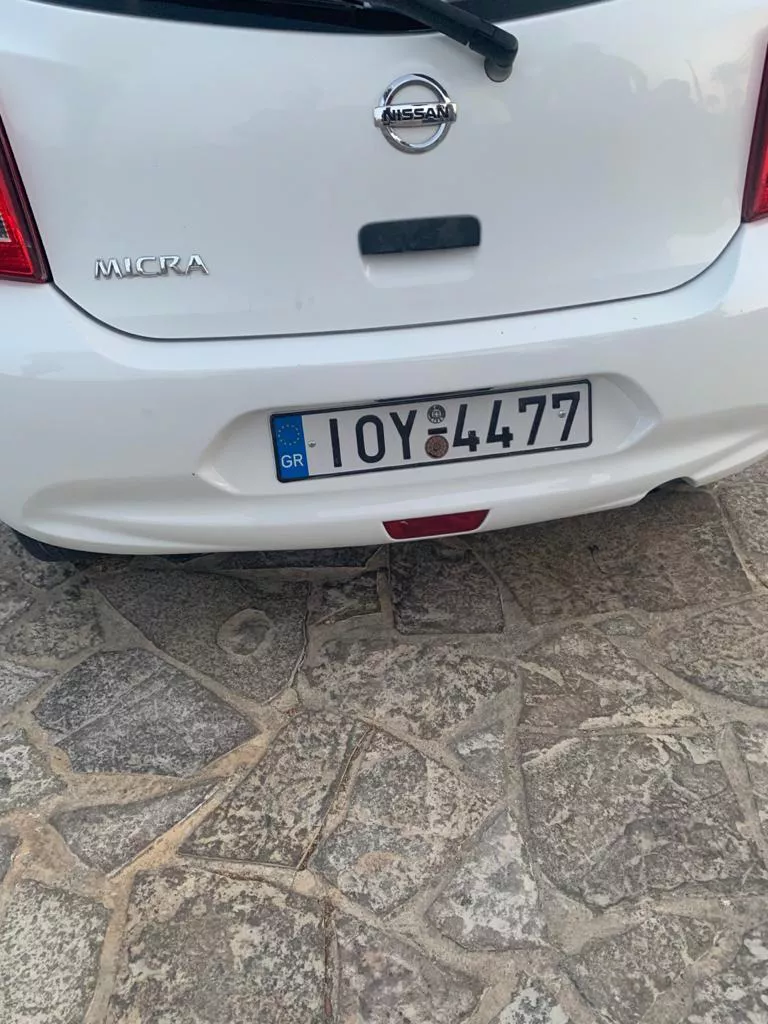
Nissan Micra in Greece
Все было хорошо, за исключением того, что машина была с пустым баком (мы заранее просили полный). из-за этого мы потеряли много времени на поиск заправки после 00 часов.
Nissan Note in Greece
It was okay. thank you!
SEAT Altea in Greece
Car rental was no problem, convenient and at the time of filing and convenient car return. The machine met the declared specifications. Thank you for organizing.
Parking in Athens
The rule many visitors miss: the historic centre — Plaka, Monastiraki and Anafiotika — is fully pedestrianised. You can’t drive in, and satnav may try to send you there if your hotel address falls within that zone.
A guest with an apartment listed as "Plaka, central Athens" followed Google Maps to the door, found a row of bollards on a stepped street, and had to reverse out for ten minutes. Park at the Acropolis Museum garage and wheel your case the last 400 metres.
For visiting the Acropolis, the most convenient option is the Acropolis Museum garage on Dionysiou Areopagitou — about $7–10 a day. Alternatives include the covered car parks at Plateia Klafthmonos and Syntagma Square: more expensive, but closer to the nightlife. On weekdays, remember that blue markings mean residents-only, while white markings mean paid parking for visitors.
Sundays and after 20:00 on weekdays are the only times when central paid zones are free — perfect for a quick dinner in Plaka. The most useful tip: don’t try to drive into the narrow central streets on a Friday or Saturday evening. Take a taxi to restaurants in Plaka and Psyrri, and collect the car from the car park on Sunday.
Rates in Athens vary throughout the year depending on the season and the rental length.
- January
- February
- March
- April
- May
- June
- July
- August
- September
- October
- November
- December
- Jan
- Feb
- Mar
- Apr
- May
- Jun
- Jul
- Aug
- Sep
- Oct
- Nov
- Dec
 How expensive is renting a car in Athens: average daily rates for a one-week car rental, across all car classes.
Why book with us

-
Widest automatic fleet
Around 35–45% of the Athens fleet is automatic. In high season Athens automatics are the first to go nationwide.
-
Meet-by-name at ATH
Local TakeCars suppliers meet you at the terminal exit. No shuttle bus to the separate CarPark building.
-
Hotel delivery in the centre
Many Athens operators bring the car to Plaka, Kolonaki or Glyfada at your chosen time.
Day trips from Athens
A car opens up the whole of Attica and a large part of the mainland. The most popular short trip is to Cape Sounion — 70 km along the coast road with no tolls. The Temple of Poseidon at sunset is worth leaving an hour before sundown.
A traveller left for Sounion at 18:30 in August, found the temple car park full and had to walk 12 minutes from the overflow area. The 17:00 departure means a quick park — the 18:30 departure usually means a longer walk.
Delphi is the classic UNESCO day trip: 180 km and about 2.5 hours each way on the Olympia Odos motorway ($10–15 in tolls return). The usual plan is to arrive by 11:00 to avoid the midday heat, then stop for dinner in the mountain town of Arachova on the way back. Nafplio, with Mycenae and Epidaurus, is another favourite: 130 km on a scenic road, and the town itself is widely regarded as the prettiest on the mainland.
Meteora is the one place we advise against as a single day trip from Athens. At 360 km one way it means at least eight hours behind the wheel, leaving little time for the rocks themselves. Stay overnight in Kalambaka instead. The Athens Riviera — Glyfada, Vouliagmeni and the thermal lake — lies just 15–25 km from the centre and makes an easy evening outing after a day in the city.
Frequent Questions
In shoulder season (April–June, September–October) economy starts at $43 a day; in July–August prices add around 30%. Athens usually runs 20–40% below the islands thanks to its larger fleet. Automatics sit 40–60% above manuals, but Athens has the country's widest auto choice — about 35–45% of the fleet.
For the city itself — yes, and often it's the smarter choice. The metro covers all the main points, Beat and Uber are $5–15 across the centre, Plaka and Monastiraki are pedestrian-only. Take the car on day three or four, when the focus shifts to day trips — Sounion, Delphi, Nafplio. Without one, a short trip out by bus turns into a marathon.
Depends on the plan. If your first 1–2 days are central, the metro Line 3 is cheaper and easier ($10, 40 minutes to Syntagma); pick the car up in town a few days in. If you're heading straight for the Peloponnese or Delphi, pick up at ATH with a meet-by-name right at the terminal exit.
No. Plaka, Monastiraki and Anafiotika are fully pedestrian. The satnav may try to send you there if the hotel address sits inside — ignore the prompts and find parking outside. The most convenient options are the Acropolis Museum garage ($7–10 a day) and the covered car parks near Syntagma.
The most convenient is the Acropolis Museum garage ($7–10 a day) — five minutes' walk to the entrance. Alternatives are the covered car parks at Plateia Klafthmonos and Syntagma (pricier, $15–20). Don't try the on-street blue markings — those are residents-only and almost always full.
Attiki Odos (the A6 ring road) is around €3 each way, €6 return. You pay at manual gates with euro cash or card. Most rental cars already have the transponder fitted, but check with your supplier — some lanes on this motorway are electronic-only.
Sundays and after 20:00 on weekdays are the only times when central paid zones go free. Perfect for a dinner stop in Plaka or Psyrri. Outside the centre — beyond the Attiki Odos ring road — and the suburbs of Glyfada are mostly free off-hours.
Yes — that's a mainland-rental advantage: an Athens car is allowed to board with a written declaration from the operator. Notify 24 hours ahead. Bear in mind: CDW does not apply during the crossing for most operators, and the car ferry slot is $65–160 one way. For 1–2 days it makes sense; longer is cheaper to hire on the island.
Depends on the route. The one-way fee between major cities is $60–150, plus around $32 in tolls along the A1. If you're going to Thessaloniki without a return leg, one-way is often cheaper than buying a flight back plus a fresh hire. Confirm with the supplier — not every operator offers it.
70 km along the coast road, about an hour without traffic. No tolls — a scenic drive along the Athens Riviera. Parking by the Temple of Poseidon is small — leave 1–1.5 hours before sunset, otherwise it's a 10–15 minute walk from the overflow lot. The site itself is €10.
180 km and 2.5 hours one way along the Olympia Odos motorway (tolls $10–15 return). Doable in a day if you leave by 8 a.m. The overnight stop is Arachova — a mountain town 12 km from Delphi, with tavernas overlooking the gorge. The two-day format takes the rush out and is worth it.
Technically yes, but we don't recommend it: 360 km and 4 hours each way along the A1, about $20 in tolls. That's eight hours behind the wheel, leaving 2–3 for the monasteries. Take an overnight in Kalambaka or Kastraki — the two-day format with the rocks at sunset turns it into a proper trip.
Small class — Hyundai i10, Fiat Panda, Toyota Aygo, Kia Picanto. Narrow streets, tight parking, dense traffic — the smaller the car, the easier. An SUV in Athens itself is overkill and costs more in car parks. If you're heading for Meteora or the Peloponnese, a Hyundai i20 or Volkswagen Polo is a better balance: compact and comfortable on the motorway.
Athens is the only Greek city with a properly wide automatic choice — about 35–45% of the fleet against 15–20% on the islands. Most local Athens suppliers on TakeCars list automatics. Book 2–3 weeks ahead in high season — July and August clear them out first.
Yes — Athens has been the main Greek long-term hire hub since 2022. 28+ day rates run from $470 for an economy to $1,100 for a compact automatic. Many operators offer extended CDW, monthly washes and free service for long-stay customers. Ask whether you can swap the car every 60 days.