


Pickup


Return
🎁 Use code WELCOME3 during checkout to get a discount on your first booking with us. Enjoy! ☀️

Car rental in Ajman is the practical way to base yourself in the smallest emirate without losing access to the other six. The city is compact: 16 km of Corniche, an 18th-century fort museum, the fish souk and the Al Zorah mangroves are all within easy reach.
Ajman has no passenger airport, so visitors fly into Sharjah (SHJ) or Dubai (DXB) and continue by road — 15 minutes from SHJ, 30–40 minutes from DXB. Public transport inside the emirate is limited, so a rental is the natural way to move between hotels, beaches and the wider UAE.
Guests are surprised by how close everything is in Ajman, but without a car the day caps out at the city limits. Pick up a rental and you're an hour away from the RAK mountains.
If your flight lands at SHJ, the fastest option is collecting the car right at the terminal. Sign the paperwork, walk to the car and you're at your hotel inside twenty minutes.
Where to collect the car
The default pickup point for an Ajman rental is Sharjah International (SHJ), about 10–15 km from the centre. Technically SHJ serves Sharjah, but it sits almost equidistant from Sharjah city and Ajman, and most suppliers run their fleets through it precisely because it covers both audiences. Dubai International (DXB) is roughly 30–40 minutes away via the E311 motorway.
Hotel delivery
If your flight lands late, or you're travelling with kids and don't want to drag luggage through a rental desk, the car comes to your hotel. Delivery takes 60–90 minutes once arranged and is usually free on longer rentals. It works well for travellers who plan a car hire in Sharjah or Ajman only for the second half of the trip after a Dubai stay.
About half our Ajman pickups happen in the hotel lobby. Families don't queue at desks — they come down with the paperwork already drawn up.
If the gap between SHJ pickup and hotel delivery is 30–50 AED, take delivery. That's less than a taxi from the airport to Ajman would cost.

Hyundai Elantra in the UAE
The car was good, the office seemed good too, but the fine left a residue. I was fined 800 baht for using my phone while driving, I paid. But the representative of the office said that I have 4 more black dots and for each dot you need to pay another 200 baht, that is another 800 baht. Is it really 800 baht to remove these 4 dots from the car?
Hyundai i10 in the UAE
The rental was excellent. The car was delivered clean, fully operational, surprisingly the gas tank was not empty, as often happens. Support is always on the phone, also the cost of rent was not overpriced with additional services. I will definitely rent a car from you again as soon as I come to the UAE

Nissan Kicks in the UAE
In general, we are satisfied. We will come back in December to take the car again. Thank you
Audi Q3 in the UAE
Everything is great with the car - fresh, minimal mileage, clean, delivered/picked up on time. The only roughnesses - a lot of contact persons, not always gave correct information. For example, the mileage on the website indicated 250km/day, when the car was delivered they assured that 150/day, then in fact in the contract it turned out to be 250/day. Or, for example, when returning the car - I had to talk to 3 people in sequence until they gave me the number of the driver who took the car. In general, this is not a problem, but rather a point that can be paid attention to
Nissan Kicks in the UAE
everything works great!


Nissan Altima in the UAE
Booked the car in March 2024. Received the car at Sharjah airport at the end of the trip and handed it back at the airport. The car is in very good condition, the transfer was quick. We traveled 6 emirates in 10 days. Everything is perfect. Returned as agreed with a full tank of gasoline and clean (went to the car wash). The only point, the deposit was returned 2.5 months. Otherwise everything was OK, the company was always in touch.
Nissan Kicks in the UAE
Great car rental company. Delivered on time. Tinting in the UAE is a lifesaver. No deposit which is very good. Drove 1100 km, visited five emirates. I was afraid that the car will not withstand the heat, but it just worked out great! Thank you very much!
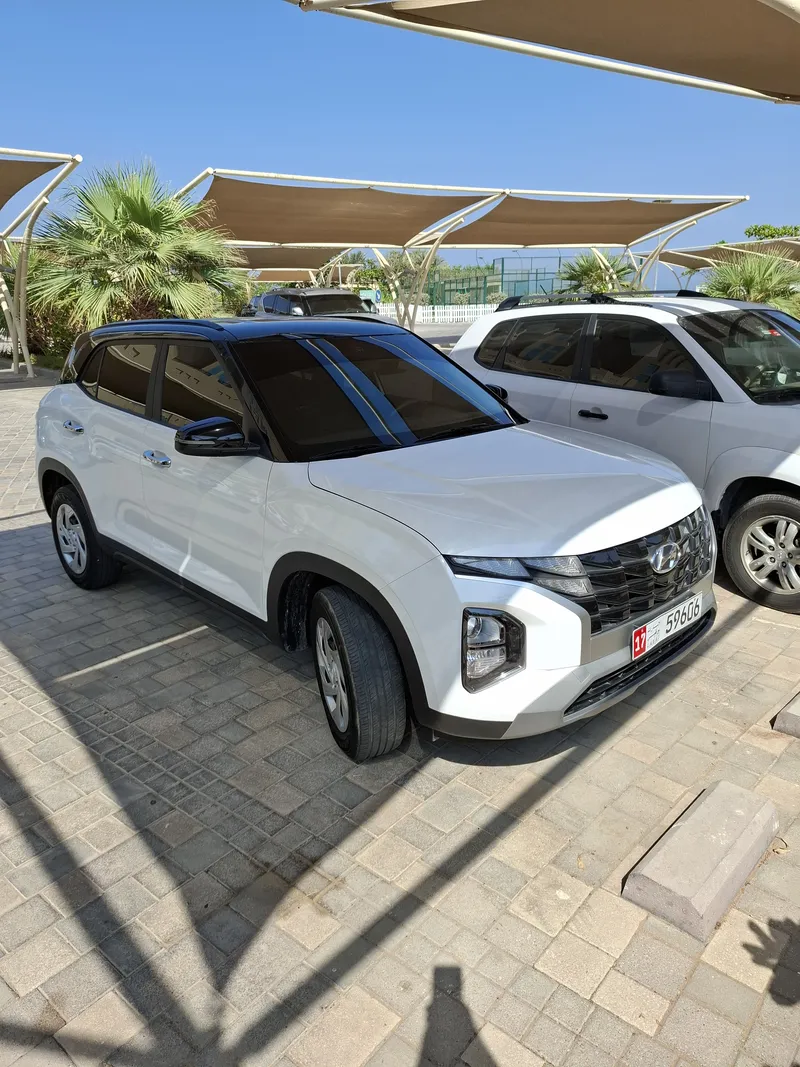
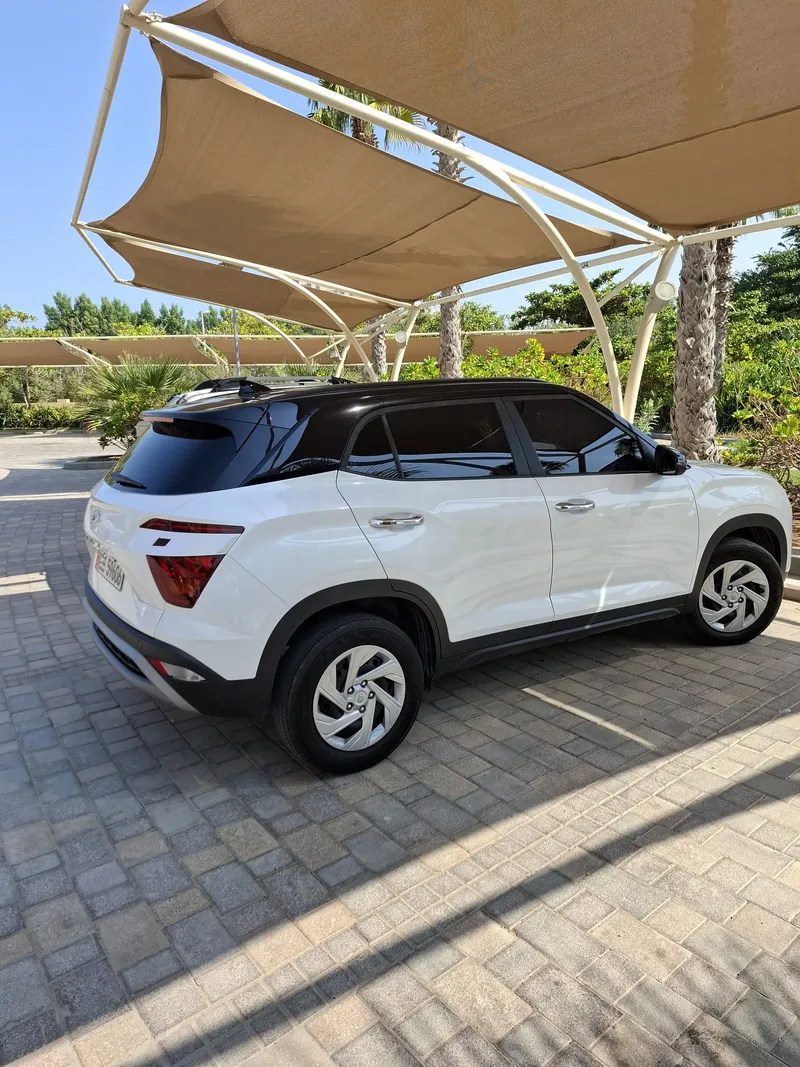
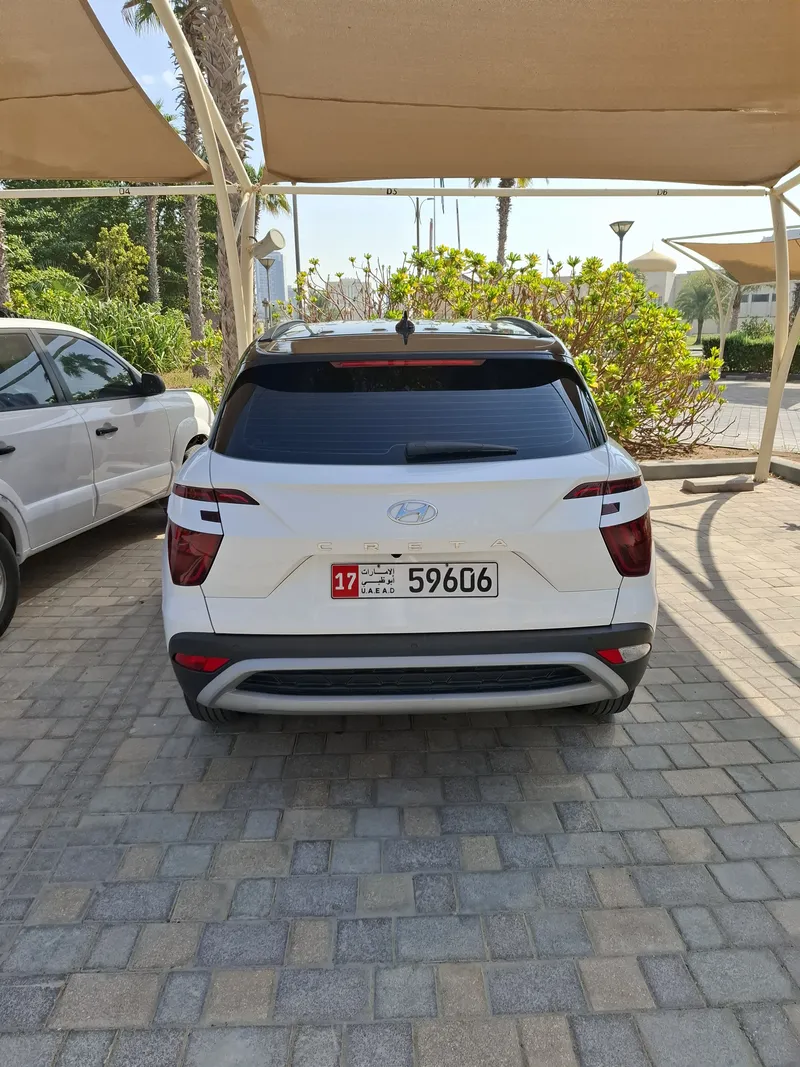
Chevrolet Tahoe in the UAE
Everything went great. We went on an unforgettable trip in that car. I was satisfied. Thank you.
Why people rent in Ajman

-
Cheaper than Dubai for the same car
Daily rates run 15–25% lower in Ajman, and the gap widens further on monthly rentals.
-
Free movement across all seven emirates
There are no checkpoints between UAE emirates, so an Ajman rental takes you to Abu Dhabi, Fujairah or Ras Al Khaimah without paperwork.
-
One SHJ pickup covers the whole trip
Collect at Sharjah Airport or have the car delivered to your hotel and you've handled both transfer and day-trips on a single contract.
Documents and deposit
To rent in Ajman you need a passport, a UAE entry visa or stamp, your home driving licence and a card in the main driver's name. Drivers from one of the 30+ recognised countries — UK, US, Canada, Germany, France, Japan, South Korea among them — drive on the home licence; everyone else needs an International Driving Permit, usually held for at least 6–12 months.
Deposit and payment
A typical deposit is AED 1,000–5,000 by car class, blocked on the card and released within 30 days per the Dubai DET rule. Several Ajman suppliers accept a cash deposit in AED or USD — useful if your home card has issues abroad. No-deposit deals exist on economy cars and longer rentals.
Insurance
Basic third-party liability is included by law but doesn't cover damage to the rental. Collision Damage Waiver is usually bundled or sold as an add-on and caps liability at an excess from AED 1,500. A zero-excess upgrade is worth a few dirhams a day if your route includes mountains or Oman.
The excess only hits people at return. A bumper scratch in a parking bay costs them 1,500–2,000 dirhams, when a zero-excess upgrade would have been a few dirhams a day.
Frequent Questions
No, Ajman has no passenger airport. The closest hub is Sharjah International (SHJ), 10–15 km away — almost equidistant from Sharjah, Ajman and Dubai, and most Ajman rentals are collected there. Dubai International (DXB) is about 30–40 km away.
Yes, SHJ is the most convenient pickup — 15–25 minutes to Ajman hotels and no separate transfer needed. Compare any airport surcharge against a city office, since hotel delivery in Ajman is sometimes cheaper than picking up at SHJ.
Yes — hotel and address delivery is common in the UAE and offered in Ajman, often free on longer rentals and a small fee on short ones. It usually takes 60–90 minutes once arranged. It's the easiest option since Ajman has no airport of its own.
Economy cars typically start at 70–120 AED per day, with SUVs and premium higher. Weekly and monthly rates lower the daily figure significantly. Ajman is a touch cheaper than Dubai for the same class, and the longer the rental, the bigger the saving.
Usually yes, by about 15–25% on the same class. Ajman is the practical base if your trip covers multiple emirates: you pay the Ajman rate and use the car across the whole UAE. Dubai desks tend to add a location premium for similar cars.
Between AED 1,000 and 5,000 depending on the car class. The amount is blocked on a credit card, not charged, and released within 30 days per the Dubai DET rule. Several Ajman suppliers also accept a cash deposit in AED or USD.
Sometimes — most companies want a credit card to block the deposit and cover tolls and fines, but several Ajman suppliers accept a debit card or a cash deposit instead. Confirm before arrival, since debit-card holds are often higher.
No, Ajman is completely toll-free, as are Sharjah, RAK, Fujairah and Umm Al Quwain. Salik runs only in Dubai (4–6 AED per gate) and Darb in Abu Dhabi. You'll only see toll charges if you drive your Ajman rental into Dubai or onto Abu Dhabi island.
Through the municipal MPDA SMS system: text 5155 in the format "AJM [emirate code] [plate number] [hours]", or pay via the MPDA app. The rate is 1–2 AED per hour, and paid hours run Saturday–Thursday, 08:00–13:00 and 17:00–22:00.
Parking is free all day Friday, on public holidays, and during the midday 13:00–17:00 window on paid streets. Outside those windows — 08:00–13:00 and 17:00–22:00, Saturday to Thursday — SMS payment applies at 1–2 AED per hour.
Yes — Ajman, like Dubai and Sharjah, allows a 20 km/h grace before a radar fines you. A 100 km/h road triggers at 121. Important: Abu Dhabi has zero buffer, so 1 km/h over the limit there is an instant fine.
Yes — free movement between all seven emirates is the norm, with no checkpoints. Ajman to Sharjah is 15 minutes, Dubai 30–45 minutes, and Abu Dhabi about 1.5 hours. Remember Salik tolls apply in Dubai and Abu Dhabi enforces zero speed buffer.
Only with paperwork, and not every supplier allows it. You need a No Objection Certificate from the rental company (2–3 days' lead time) and an Oman Orange Card insurance — combined often around AED 450 for 1–3 days. Many suppliers block Oman entirely or restrict it to certain Abu Dhabi crossings.
Sharjah's museums are 10–20 minutes away, Dubai 30–45 minutes, and the RAK mountains around an hour. Inside the emirate, Al Zorah Reserve's mangroves and the inland Masfut exclave near the Hajar Mountains make scenic local drives. The east coast (Fujairah, Khor Fakkan) is about 1.5 hours.
Yes — from November to February early-morning fog rolls across the open motorways, especially on E311 and E611. Smart signs automatically lower the limit; drivers should switch on headlights, slow down and keep a much larger gap than usual.