


Pickup


Return
🎁 Use code WELCOME3 during checkout to get discount on your first booking with us. Enjoy! ☀️

Car hire in Bratislava opens up everything around the city: Devín on the Austrian border, Vienna an hour west, Budapest two hours away, and the fairytale Bojnice castle a comfortable drive to the north-east. The Old Town itself is compact and almost entirely pedestrian — easy to cover on foot in a day — so a car earns its keep on day-trips, not in the centre.
Many of our Bratislava guests hire a car not for the whole holiday but for two or three day-trip days — the more sensible plan, and usually noticeably cheaper.
Bratislava is the only European capital that borders two countries at once. From a single rental car here, you can comfortably collect a slice of Austria and Hungary in one day and be back on the Danube in time for dinner.
Where to fly in: BTS or Vienna
There are two ways to arrive in Bratislava, and each one makes sense in different circumstances.
M.R. Štefánik (BTS)
The city airport, nine kilometres from the centre, around fifteen minutes by car. Modest in size, with most of its schedule run by Wizz Air and Ryanair: routes from London, Bergamo, Sofia, Skopje. Rental counters sit directly in arrivals.
Vienna International (VIE)
Fifty kilometres west, about fifty minutes via the A6/D2. Schengen, no border check. VIE has a far larger international network, a wider choice of vehicles and noticeably lower rates on many classes. Slovak Lines and RegioJet buses run between the two airports for €5–10, but if your trip involves day-trips around the region, picking up the car at VIE and driving it to Bratislava is almost always smoother.
If a guest is connecting in from Dubai or New York, we usually point them at Vienna. Cheaper flights, wider fleet, and the extra hour of driving more than pays for itself.
BTS is worth checking for late Wizz and Ryanair arrivals — many of them land after 11pm. Confirm your supplier works after midnight, or arrange after-hours pickup in advance.

Hyundai i20 in Slovakia
Very satisfied.
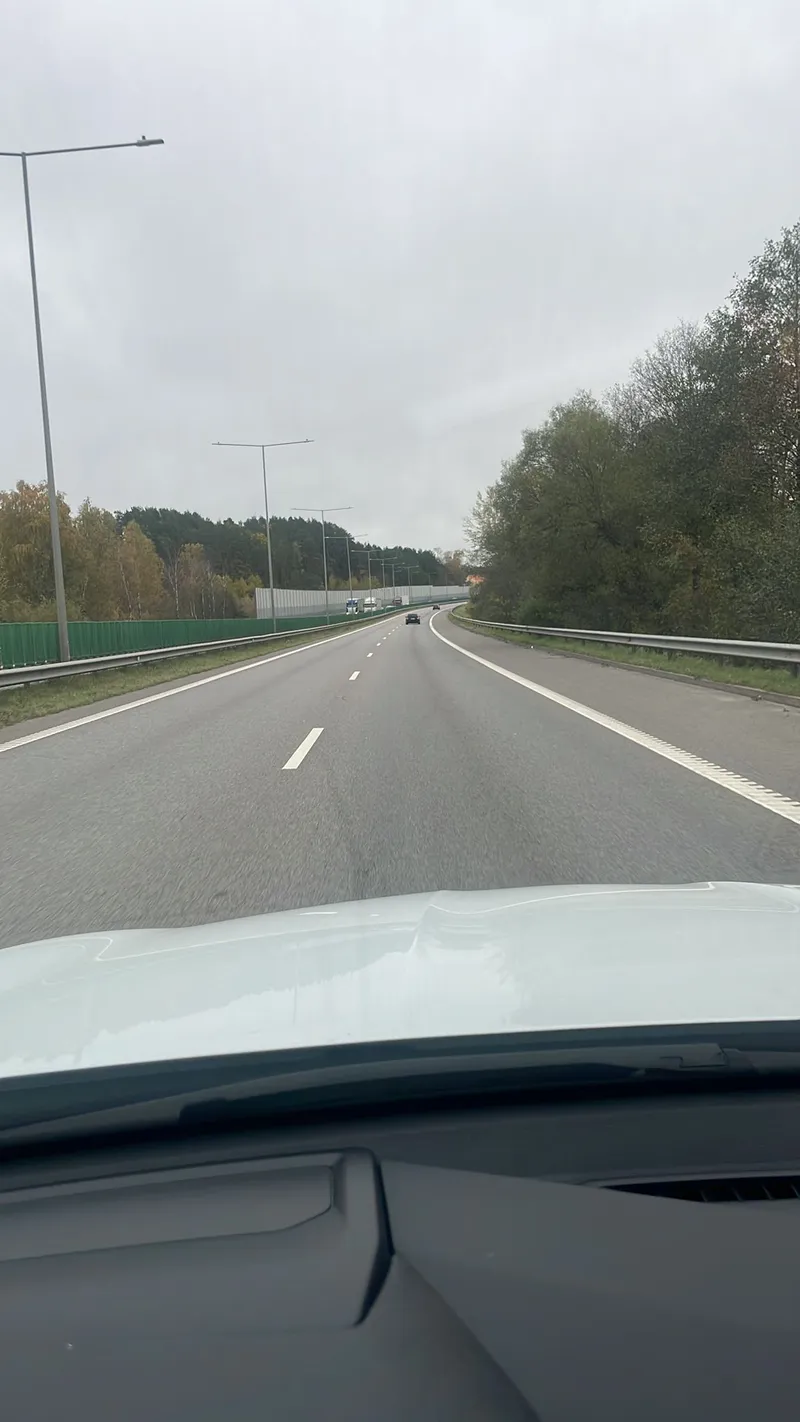
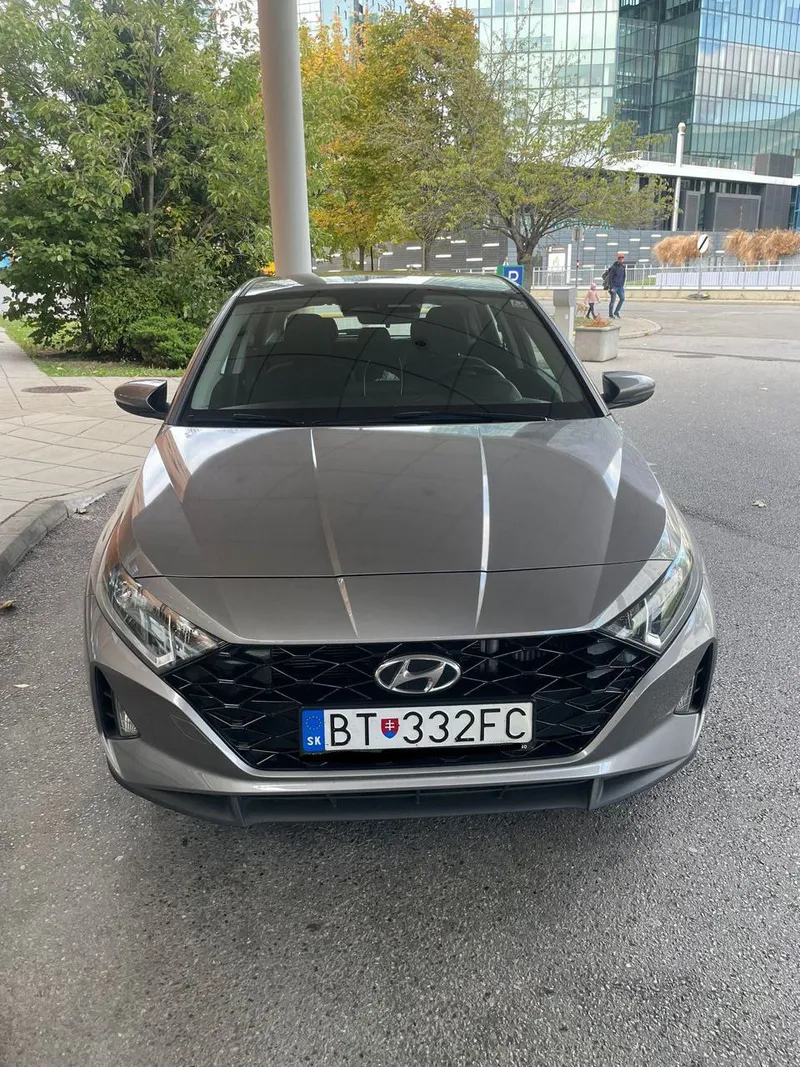
Hyundai i20 in Slovakia
Everything went super! I was completely satisfied with the car and service! Everything went as agreed. On time and without problems. Next time I will definitely apply again!!!
Hyundai i30 in Slovakia
That went well. You know your job.
Hyundai i20 in Slovakia
Everything was great, car was good, got it ready on time.
Where to drive from Bratislava
Within an hour or two of Bratislava you will reach destinations that, in any other European capital, would require a flight. That is the strongest argument for a car here.
The most popular trip our guests take from Bratislava is the Devín–Vienna pairing. Slavic-era ruins above the river confluence in the morning, lunch in a Vienna café, back on the Danube by dinner.
Half-day to a day
Devín — 10 km, a hilltop fortress on the Austrian border at the confluence of the Danube and Morava. Vienna — 60 km / 1 h on the D2/A6, Schengen, Austrian vignette required. Trenčín — 120 km / 1.5 h, the castle rock with the Laugaricio Roman inscription (179 AD).
Worth an overnight
Budapest — 200 km / 2 h on the D1+M1, Hungarian e-vignette (~€13). Bojnice — 180 km / 2 h, the romantic 19th-century castle from period films; the spring Ghost Festival is reason enough to stay. Banská Štiavnica — 160 km / 2 h, a UNESCO mining town. High Tatras — 330 km / 4 h, Slovakia's best mountains; aim for two nights.
Bojnice deserves an overnight. Driving 180 km back through dark roads without sleep is not a plan we recommend.
Parking and getting around Bratislava itself
The Old Town is almost entirely pedestrianised. Some streets are closed to traffic; others have restricted access for residents and deliveries. The simpler route for visitors is to leave the car around the perimeter and walk in — distances in the centre are small.
Paid zones around the centre are colour-coded and cost €2–4 per hour. Payment goes through the ParkDots and Parkin apps or at street meters; you simply register your number plate. Some zones are free on Sundays.
The sensible move is to leave the car at Eurovea or near the SNP bridge and walk into the Old Town. Underground car parks at the malls are usually cheaper than on-street and dryer when it rains.
Most central hotels have their own parking, sometimes at a guest discount — worth confirming in advance. Towing is enforced strictly, particularly on Castle Hill and around pedestrian streets: a tow-zone sign on a wall is not a warning but a working rule.
On a first park in a new district, allow five minutes to read the zones — after that it becomes automatic. Just do not park on yellow lines: the rule is taken seriously here.
Rates in Bratislava vary throughout the year depending on the season and the rental length.
- January
- February
- March
- April
- May
- June
- July
- August
- September
- October
- November
- December
- Jan
- Feb
- Mar
- Apr
- May
- Jun
- Jul
- Aug
- Sep
- Oct
- Nov
- Dec
 How expensive is renting a car in Bratislava: average daily rates for a one-week car rental, across all car classes.
Three sensible patterns for Bratislava

-
A car only for trip days
Hire it for two or three days to cover Devín, Vienna or Bojnice, and rely on walking and trams within the city itself.
-
One-way Bratislava → Vienna
If you finish the trip with an international flight from VIE, the one-way fee is small (€40–80) and saves both a transfer and a separate ticket.
-
Arriving via Vienna
If your connection through VIE is more convenient, pick up the car there and drive it across to Bratislava in an hour.
Vignettes and dropping off abroad — what matters from Bratislava
Three directions cover most of what people drive to from Bratislava: Vienna, Prague and Budapest. Each country has its own vignette and you can buy them all in advance. 2025 prices: Czech around €12 for ten days, Austrian €12.40, Hungarian about €13. All three are sold online or at petrol stations near the border.
The car you collect from us in Bratislava usually has the Slovak vignette already active. The neighbouring countries are a separate purchase — handle them before you set off, not at a junction with a queue behind you.
One-way returns
Returning the car in Vienna or Prague is a regular request. The one-way fee to VIE typically runs €40–80, to Prague €60–100. Often cheaper than a Bratislava taxi and a separate ticket, especially with a family and luggage in tow.
Confirm cross-border at the time of booking. If your contract only allows Slovak borders, the Austrian crossing will let you through, but the insurance may not respond if anything goes wrong.
Frequent Questions
For walking around the Old Town, no — it is pedestrian and easy to cover on foot. A car earns its keep on day-trips: Devín, Vienna, Bojnice, the High Tatras. Many guests hire one only for two or three trip days and pay less than they would for a full-week rental.
If you are coming from London, Bergamo or Sofia, BTS is faster — fifteen minutes from the centre. For long-haul connections (Dubai, New York, Singapore), VIE is the better choice: a wider international network, larger fleet and often noticeably lower rates.
Around 50 km on the A6/D2, on average 50 minutes by car. Schengen, no border check. Slovak Lines and RegioJet buses cost €5–10, but with heavy luggage or family in tow a car is usually more comfortable.
On economy classes the difference is often small. On premium, convertibles and unusual classes Vienna pulls ahead thanks to a larger fleet. For longer rentals, it pays to price both options on your specific dates.
Yes, one-way drop-offs are standard. Fees usually run €40–80 to VIE and €60–100 to Prague. Set the end point at the time of booking — changing it later is rarely possible.
Most of the Old Town is pedestrian, with traffic restricted to residents, deliveries and hotel arrivals. Approach to a hotel with a parking reservation is fine. Do not test the central pedestrian streets — fines are heavy and towing is quick.
Underground car parks at Eurovea and Aupark, the parking by the SNP bridge and along the Danube embankment. €2–4 an hour, often cheaper and dryer at the malls. ParkDots and Parkin cover almost every on-street zone.
A few small paid car parks sit right by the castle, but spaces are scarce. In peak season it is more practical to park below — at Eurovea or on the embankment — and walk up; the climb is about fifteen minutes on a scenic path.
Yes — 10 km from the centre, around fifteen minutes by car, with paid parking at the castle (€2–3). A couple of hours is enough for the ruins themselves and the panorama over the Danube–Morava confluence. It pairs well with lunch in Devín village.
Technically yes — 330 km on the D1, about four hours each way. But that is eight hours of driving and very little actual mountain time. Most guests stay at least one night, and ideally two.
Yes — 200 km / 2 hours on the D1+M1, with a Hungarian e-vignette (~€13 / 10 days). A proper visit takes 8–10 hours on the ground, so leave before 8am to be back without hitting the evening rush.
For a day trip, weekdays before 8am to reach the city before Schönbrunn and the museums open. Weekends have lighter traffic but busier car parks. Aim to head back before 7pm to avoid the evening pinch.
Yes. English is the working language at all rental desks in Bratislava. German and Hungarian are also common, particularly with local operators. Russian is rarer and mostly with private suppliers.
Most BTS counters stay open until the last flight, but they are not 24/7. Confirm the pickup time at booking; if your flight is delayed, an after-hours fee of €30–60 may apply.
Overnight. The 180 km route and the mountain stretches make a same-day return tiring, particularly after a Ghost Festival evening. The sensible plan is to arrive after lunch, see the castle and festival in the evening, sleep in Bojnice or Prievidza.