


Pickup


Return
🎁 Use code WELCOME3 during checkout to get a discount on your first booking with us. Enjoy! ☀️

Car rental in Austria turns a Vienna flight into a real trip across the Alps and along the Danube. The capital itself works well with trams and the U-Bahn, but the Wachau, Hallstatt, Tyrol and the Salzkammergut lakes only become accessible once you have your own car. Half the country consists of villages, lakeshores and mountain valleys that no train reaches.
In 2026, daily rates average $51 in low season and $62 at the summer peak (June–September). Vienna is slightly higher — around $58 in winter and up to $69 in August. Booking 4–6 weeks ahead usually saves another 10–20%, especially on automatic and family cars.
A couple flew into VIE last August on a late Lufthansa flight from Frankfurt. We met them by flight number, signed the contract on the bonnet, and they were on the A4 within fifteen minutes — past the queue still waiting for the chain-rental shuttle.
TakeCars pickup points are in Vienna, at Vienna Airport (VIE) and in Bratislava, 45 minutes across the Slovak border and often noticeably cheaper. Several Vienna suppliers meet customers in arrivals by flight number — no shuttle bus, no shared queue and no walk to a remote lot.
Vignettes and mountain tolls
The ASFINAG vignette covers motorways (A) and expressways (S). If the car is rented in Austria, the vignette is already included — either as a sticker on the windscreen or as a digital version linked to the number plate. ASFINAG 2026 prices for cars up to 3.5 t: €9.60 for one day (digital only), €12.80 for 10 days, €32.00 for two months, €106.80 for the year. The cost becomes relevant if you collect the car in Germany or the Czech Republic and drive into Austria — buy the vignette before entering any motorway, on asfinag.at, in the Unterwegs app or at a border petrol station.
The 2-month and annual digital vignettes only activate on the 18th day after purchase under EU consumer-protection law. Leaving the same week? Take the 10-day option.
Driving without a vignette incurs a €120 replacement toll on the spot; refusing payment escalates the fine to €3,000. Cameras read every number plate, and Austria pursues unpaid fines across the EU.
Mountain tolls are charged in addition to the vignette. The A13 Brenner motorway from Innsbruck to the Italian border costs around €11.50 each way. The Grossglockner High Alpine Road in 2026 costs €46.50 for a car and around €40 for an EV — open from late April to October only. Other paid sections include Felbertauern (~€13), Silvretta and Timmelsjoch (~€18), and the A10/A11 tunnels.
A family of four drove the Grossglockner in June for €46.50, parked at Edelweissspitze to see the marmots, then re-entered the same day on the same ticket. Switchbacks, glacier views, and lunch back in Heiligenblut by four.
The pass offers one of the great Alpine drives, not just a toll road, and the ticket includes same-day re-entry — convenient if you want to see both sides of the ridge.
Most tourists in Austria start their trip here
Documents, payment and deposit
EU/EEA driving licences are accepted as is. Drivers from outside the EU/EEA need an International Driving Permit (IDP) if their licence is not in the Roman alphabet. Even if the desk does not check, the police can fine you and the insurance may be voided after an accident. Carry the IDP together with the original licence, not instead of it.
The minimum age is 18–19 with most suppliers; a young-driver fee of $7–17 per day applies under 25. Premium classes, vans and large SUVs usually require drivers to be at least 21–25.
A guest from outside the EU walked up to a chain desk in March with a perfectly valid Maestro card and a debit Visa. Both were refused. He drove with us forty minutes later because Vienna accepts a cash EUR deposit.
Payment can catch travellers off guard. International chains require a real credit card — Electron, Maestro and prepaid cards are refused. TakeCars accepts Visa, Mastercard and UnionPay for online prepayment, and several Vienna suppliers accept the security deposit in cash EUR or on a debit card at pickup. That is rare in Austria and one of the main reasons travellers without a credit card book Vienna through us.
Deposits range from €300–1,500. International chains sit at the upper end and accept only credit cards; local Vienna providers often offer €0–300 options under the Low / No deposit filter.
A Vienna host in our network takes a €400 cash EUR deposit on a Skoda Octavia. The chain desk across the hall blocks €1,200 on a credit card. Same airport, same car class, very different start to the holiday.
Cash deposits in EUR are not offered by international chains in Austria; we can provide them in Vienna because we know each partner personally and stand behind every booking.

Hyundai i30 Combi in Austria
thank you, everything was fine. I'm happy
Hyundai i20 in Austria
Everything went well. The car is new, I was met at the airport, and the car was handed over to me at the airport.
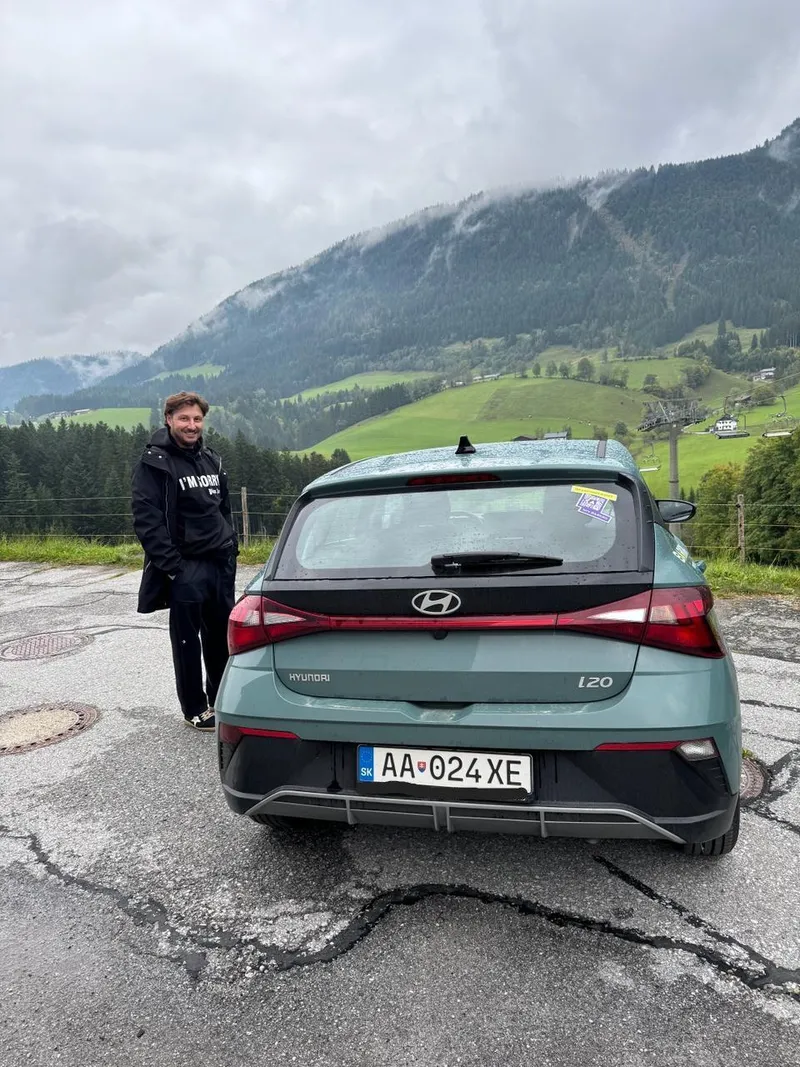
Hyundai i30 Combi in Austria
Everything went great with the rental. The car was new, clean. The car was handed over right at the hotel, which was very convenient. But the most important convenience is the possibility of cash deposit and the cost is lower than on any aggregator in Vienna.
Hyundai i30 in Austria
Everything was great! We met quickly. Processed quickly. The car is in good condition and clean. The delivery of the car was also quick and at the agreed time. Special thanks for helping us out and accepting the deposit in cash. I will recommend your service to my friends.
Hyundai Bayon in Austria
everything was just great: the car, all arrangements were fulfilled from start to finish, the car was given earlier than we could at first, for which I am grateful, otherwise we would have spent three hours at the airport with our suitcases. Thank you very much, the staff are all attentive!

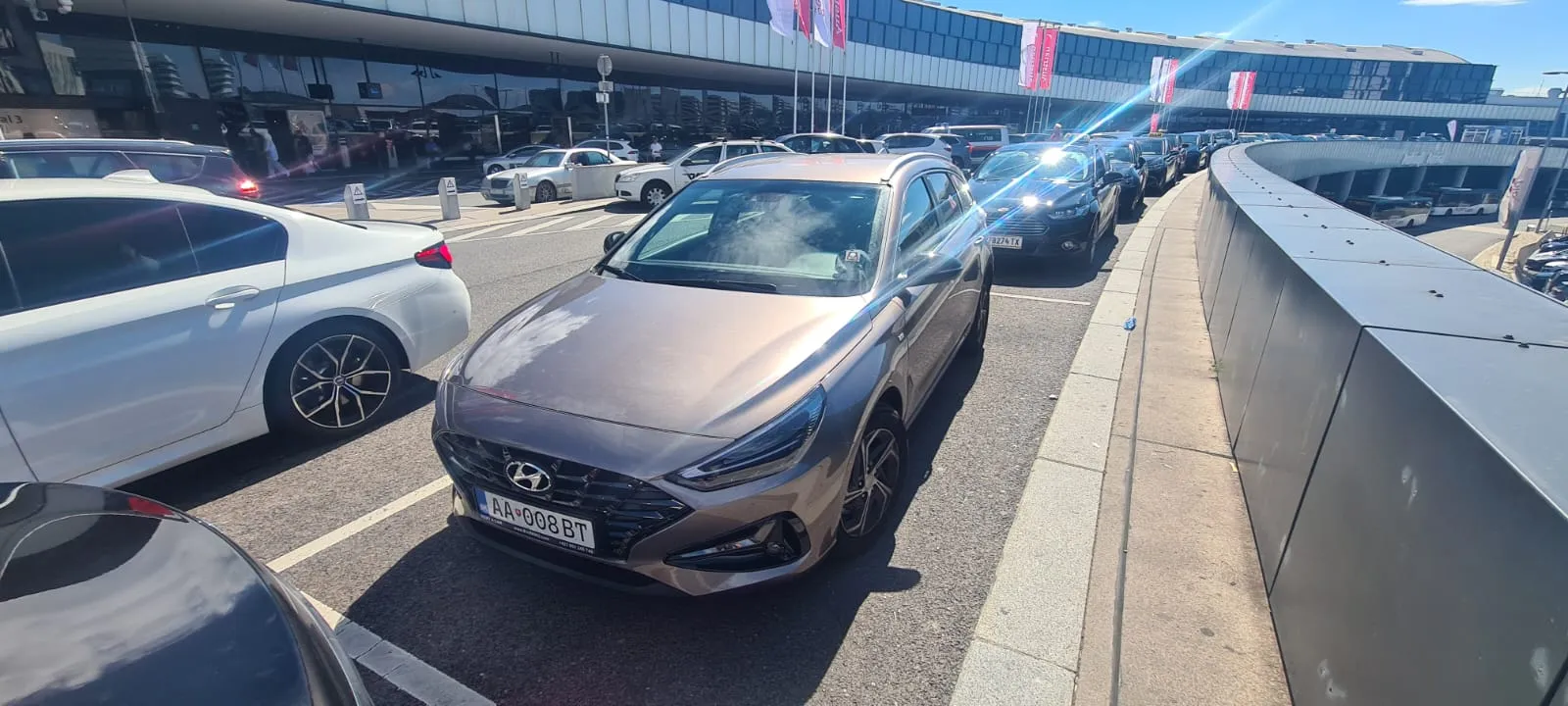
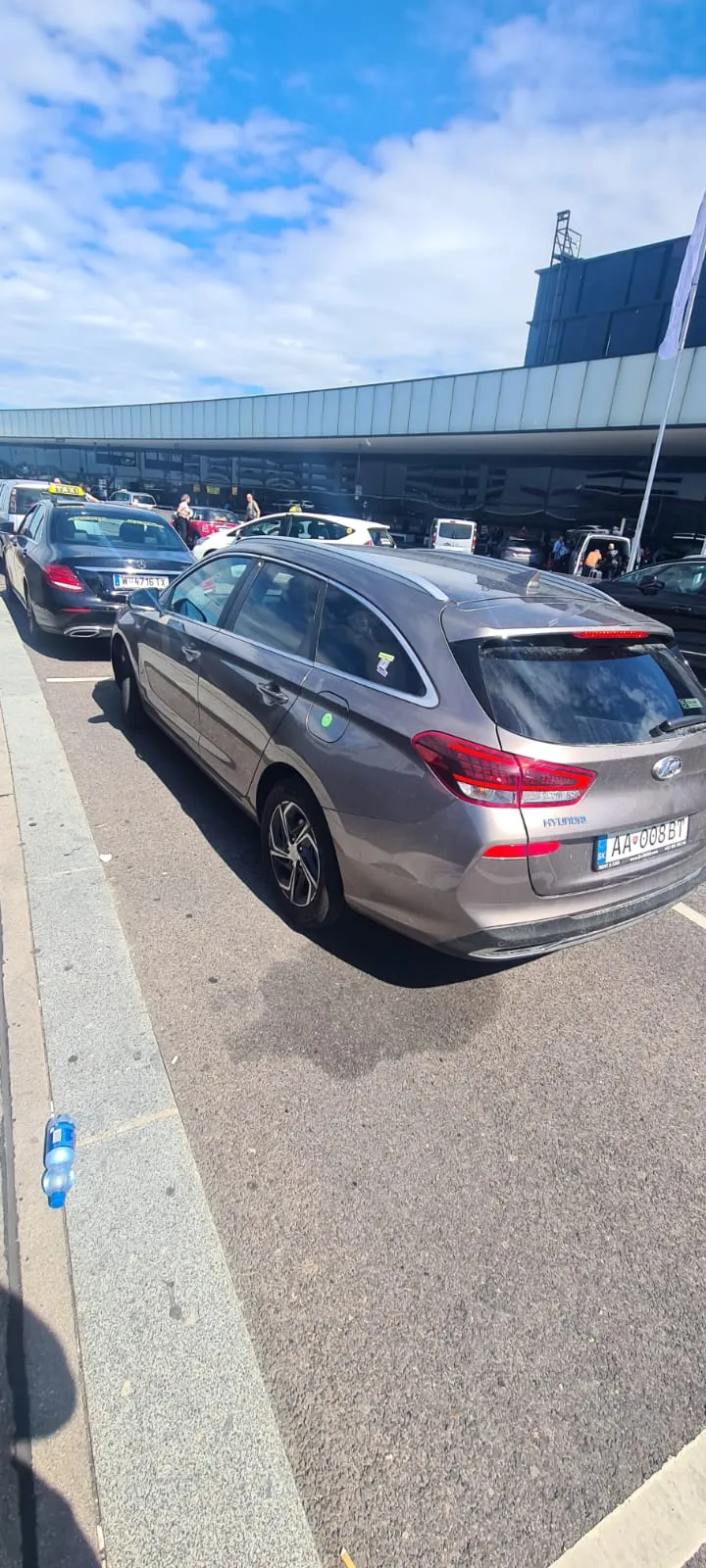
Hyundai i30 Combi in Austria
everything was very good. 5/5

-
Cash EUR deposit option in Vienna
Several Vienna suppliers accept the security deposit in cash, a rarity in Austria where the big chains insist on a credit card.
-
Meet-and-greet at Vienna Airport (VIE)
Selected cars are handed over by flight number in the arrivals hall — no shuttle bus, no shared queue.
-
Verified reviews per car
Every listing shows real renter reviews, and most rates include free cancellation up to 7 days before pickup.
Driving in Austria
Austrian rules are clear on paper, but a few things still catch travellers off guard on day one.
Speed and IG-L
Standard limits: 50 km/h in towns, 100 km/h on rural roads, 130 km/h on motorways. On parts of the A12 and A13 in Tyrol and Styria, IG-L 100 signs drop the motorway limit to 100 — easy to miss, and IG-L fines under environmental law are significantly higher than ordinary speeding tickets.
A driver from Innsbruck told us the cruise control caught him out on the A12 last spring: IG-L 100 lit up over the gantry, cruise stayed at 130, and the fine arrived three weeks later. Read the overhead signs, not the dash.
Section control
Streckenkontrolle is automatic average-speed enforcement: cameras at the start and end of a section compare your timing. Active sections include the Kaisermühlen tunnel in Vienna, Plabutsch and Karawanken. Using a mobile phone while driving costs €50; speeding 20 km/h or more over the limit costs €30–€2,180; extreme excess reaches €7,500.
Alcohol and winter tyres
The drink-drive limit is 0.5 ‰ for experienced drivers and 0.1 ‰ for those with under two years behind the wheel.
From 1 November to 15 April, Austria runs a situational winter-tyre rule: on snow, ice or slush, M+S tyres on all four wheels (4 mm tread) or chains on the driven wheels (ÖNORM V5117) are mandatory. Cars rented inside Austria during that window come on winter tyres; cars from Germany sometimes do not.
One point worth noting: Austria has no Umweltplakette and no Umweltzone. That is the German system. Vienna requires no environmental sticker at all.
Renting in the capital
Car rental in Vienna mostly makes sense when you leave the city — the Wachau, the Burgenland lakes, day trips to Bratislava, Prague or Budapest. For the capital itself, public transport is among the best in Europe and the centre is largely pedestrianised.
All 23 districts sit inside the Kurzparkzonen short-term zone with a 2-hour maximum, enforced Mon–Fri 09:00–22:00. Weekends and holidays are free. The 2026 rate is €1.70 per half-hour, a 30% increase from 2025. Tickets are available from Trafik kiosks, U-Bahn machines or the HANDYPARKEN app.
A guest left a Skoda overnight on an Anrainerparkplatz in the 9th district last winter, thinking the 22:00 cutoff applied. It does not — residents-only spaces are off-limits 24/7. The tow lot in Floridsdorf cost him €240 plus the parking fee. Read the signs.
Overnight on-street parking is free 22:00–09:00 and on weekends. A covered car park costs $22–38 per 24 hours, or use a Park & Ride at a U-Bahn terminus (€4.60/24h).
Car rental in Vienna is available in the city and at Vienna Airport (VIE). City pickup is typically $5–17 per day cheaper — no airport concession fee. A third option, rare among aggregators, is pickup in Bratislava: 45 minutes to central Vienna.
A 24/48/72-hour Wiener Linien pass beats a rental for the city itself. But for Vienna → Wachau → Melk a car turns a weekend into a real road trip.
The simple approach is to use the city pass for the centre and add the car on the day you leave Vienna.
Rates in Austria vary throughout the year depending on the season and the rental length in days.
- January
- February
- March
- April
- May
- June
- July
- August
- September
- October
- November
- December
- Jan
- Feb
- Mar
- Apr
- May
- Jun
- Jul
- Aug
- Sep
- Oct
- Nov
- Dec
 How expensive is renting a car in Austria: average daily rates for a one-week car rental, across all car classes. Delivery across Austria not included.
Frequently asked questions
If you rent the car inside Austria, the vignette is already valid — either a sticker on the windscreen or a digital vignette tied to the number plate. If you rent in Germany, Italy or another neighbouring country and drive in, the vignette is not included — you must buy one before joining any A or S road. Always confirm at pickup.
ASFINAG 2026 prices for cars up to 3.5 t: €9.60 for one day (digital only), €12.80 for 10 days, €32.00 for two months, €106.80 for the annual sticker. The 2-month and annual digital vignettes activate only on the 18th day after purchase under EU consumer-protection law — book the 10-day option if you need to drive immediately.
The on-the-spot replacement toll, known as an Ersatzmaut, is €120 for cars. If you refuse to pay or try to evade it, you may face an administrative fine starting at €300 and reaching €3,000 for repeated offences. Cameras read number plates automatically, and Austria pursues unpaid fines across EU borders.
The deposit depends on the car class and supplier. Large international chains typically place a hold of €800–1,500 on a credit card, while local providers may require as little as €300. On TakeCars Austria, the deposit terms are shown for each car at checkout, and several suppliers in Vienna accept cash deposits in euros.
Most international chains require a credit card and do not accept Electron, Maestro or prepaid cards for the deposit. Smaller providers in Vienna, including several listed on TakeCars, are more flexible. Depending on the car, you may be able to pay the deposit in cash in euros or use a debit card.
EU/EEA licences are accepted as-is. Drivers from outside the EU/EEA need an IDP if their licence is not in the Roman alphabet (Cyrillic, Arabic, Japanese, Chinese, etc.). The police can fine you even if the desk did not ask. Carry the IDP together with your original national licence — not instead of it.
From 1 November to 15 April, Austria applies a weather-dependent rule. In snow, ice or slush, all four wheels must have M+S tyres with at least 4 mm of tread, or snow chains approved to ÖNORM V5117 must be fitted to the driven wheels. Cars rented in Austria during this period normally come with winter tyres, but cars rented in Germany may not.
Yes. Even with a valid Austrian vignette, the A13 Brenner motorway from Innsbruck to the Italian border charges a separate section toll of around €11.50 one-way for a car. Pay at the toll station in cash or by card, or buy in advance via the ASFINAG digital section toll.
The 2026 toll is €46.50 for a car, €36.50 for a motorbike and around €40 for an EV. The road is open only from late April/early May to late October — closed all winter. The ticket includes same-day re-entry. Buy at the entry stations Ferleiten (Salzburg side) or Heiligenblut (Carinthia side), or in advance online.
Most Austrian suppliers allow travel to Switzerland, although a cross-border fee of around €11–55 may apply, and some suppliers prohibit cross-border travel in premium cars. To use Swiss motorways, you need an annual Swiss vignette, which costs CHF 40, even if you are visiting for only one day. Rental companies rarely include it, so you will usually need to buy one at the border or online.
No. Unlike many German cities, Austrian cities, including Vienna, do not require an environmental sticker for passenger cars. You do not need a German-style Plakette. The main related restriction is the IG-L 100 km/h speed limit on parts of the A12 and A13 in Tyrol and Styria.
Streckenkontrolle is an automatic system that measures your average speed over a section of road. Cameras record your car at the beginning and end of the section and calculate your average speed. If it exceeds the limit, a fine is issued automatically. Active sections include the Kaisermühlen Tunnel in Vienna, Plabutsch and Karawanken, so braking only when you reach the final camera will not help.
Day visitors cannot drive into Hallstatt's historic centre, as barriers restrict access to residents. Use P1 for overnight guests, P2 for day visitors in summer, or P3/P4 outside the village. In 2026, parking costs roughly €5 for one hour, €9 for two hours and up to €18 for the day. The car parks often fill between 09:30 and 12:00, so arrive before 09:00 or use the Park & Ride in Obertraun.
Vienna's short-term on-street parking zones are free from 22:00 to 09:00 on weekdays and throughout the weekend. However, Anrainerparkplätze, which are reserved for residents, remain off-limits at all times. Parking there may result in towing and a fee of more than €240. Safer options include covered car parks at around €22–38 per 24 hours and Vienna's Park & Ride facilities at about €4.60 per day.
According to TakeCars Austria, daily rates run from $51 in low season to $62 at the summer peak; in Vienna $58 to $69. The cheapest months are January–April and October–December; the most expensive are July–September. The promo code WELCOME3 gives a discount on the first booking. For summer and ski season, book 4–6 weeks ahead.