


Pickup


Return
🎁 Use code WELCOME3 during checkout to get a discount on your first booking with us. Enjoy! ☀️

Car rental in Sharjah has its own rhythm, distinct from Dubai. The emirate presents itself as the cultural capital of the UAE: a UNESCO Heritage Area, Islamic museums and the Mleiha archaeological centre with 130,000 years of human history. One detail worth noting early on: Sharjah is the country’s only dry emirate, and alcohol is fully banned.
Most guests fly into SHJ — the Air Arabia hub — or drive in from Dubai in 30 minutes on the E11. The car is delivered to the terminal exit, your hotel or the corniche. You get the same vetted partners, real reviews and transparent pricing.
A couple staying near Al Qasba told us they barely touched the keys for three days, then drove the car flat out on day four — Mleiha in the morning, Khor Fakkan by late afternoon. That is the typical Sharjah pattern: the car on standby, then earning its keep on day-trip days.
Sharjah to Dubai takes only 30 minutes off-peak. At rush hour the same drive can stretch to 1 hour 15 minutes, as Sharjah residents commute into Dubai for work.
Prices, deposit and payment
Sharjah rentals tend to be cheaper than those in Dubai: the tourist market is smaller and there is less competition for cars. This is a rare situation in the UAE where fewer brokers can mean a better deal for the renter.
How much does it cost?
In low season an economy car starts at ~$17 (~65 AED), compact $27–50, mid-size SUV $50–110, premium and luxury $165–680 a day. Weekly and monthly tariffs cut the per-day rate by 20–40%. If you plan a few days between the Heritage Area and Al Khan beach, a longer booking is noticeably cheaper.
Sharjah is the only emirate where average rental rates are lower than in Dubai. That offsets the slightly smaller selection and a narrower local-partner network.
Deposit and payment
The deposit follows the standard UAE setup: 1,500–3,000 AED for economy, 3,000–10,000 AED for SUV and premium, released within 2–30 days. Under the 2024 rules, partners must release the hold within 30 days. Not having a credit card is not a problem — partners accept debit or cash, sometimes with a service fee of around 5%.
For the rental itself, paying in cash in dirhams is often simpler: it can secure a fairer rate, and any minor issues can be resolved on the spot without involving banks.

Kia K5 in the UAE
everything is good, went well too, there was only one nuance that the cars were not brought to the hotel, as agreed, and had to go to pick up themselves, otherwise all ok 👍 thank you!

Toyota Camry in the UAE
We liked the car very much, we are satisfied with our choice, if we come next time we will definitely rent a car from you again.
Nissan X-Trail in the UAE
Everything is super!

Mitsubishi Attrage in the UAE
In general, everything is fine. On the downside, the car was not a Mitsubishi Attrage, but a Nissan Synny. And I also had to replace the first car - the rear view camera did not work. Otherwise, everything is fine.

Mitsubishi Xpander in the UAE
Thank you very much to the firm. When I visit the UAE, I will turn to you. The car was brought to the hotel, as indicated, half an hour earlier than the appointed time, clean. Filling out documents and inspection of the car took 15-20 minutes. Picked up the same near the hotel. Overall - I recommend👍 Thank you again, the vacation was a success🤟😎



Nissan Kicks in the UAE
Thank you, everything went well! The car was a KIA Celtos. It was delivered on time and picked up on time. We were very pleased with everything. The car is in excellent condition. The delivery man was nice and friendly too. Thank you. If possible we will order a car from you again and this time for a longer period of time
Nissan Kicks in the UAE
Everything was at a decent level. The car was delivered on time. The car is practically new, in perfect technical condition. The car was clean - inside and out.

Nissan X-Terra in the UAE
The car is in good condition. Mileage under 50 t km The interior is fabric and as a consequence in stains
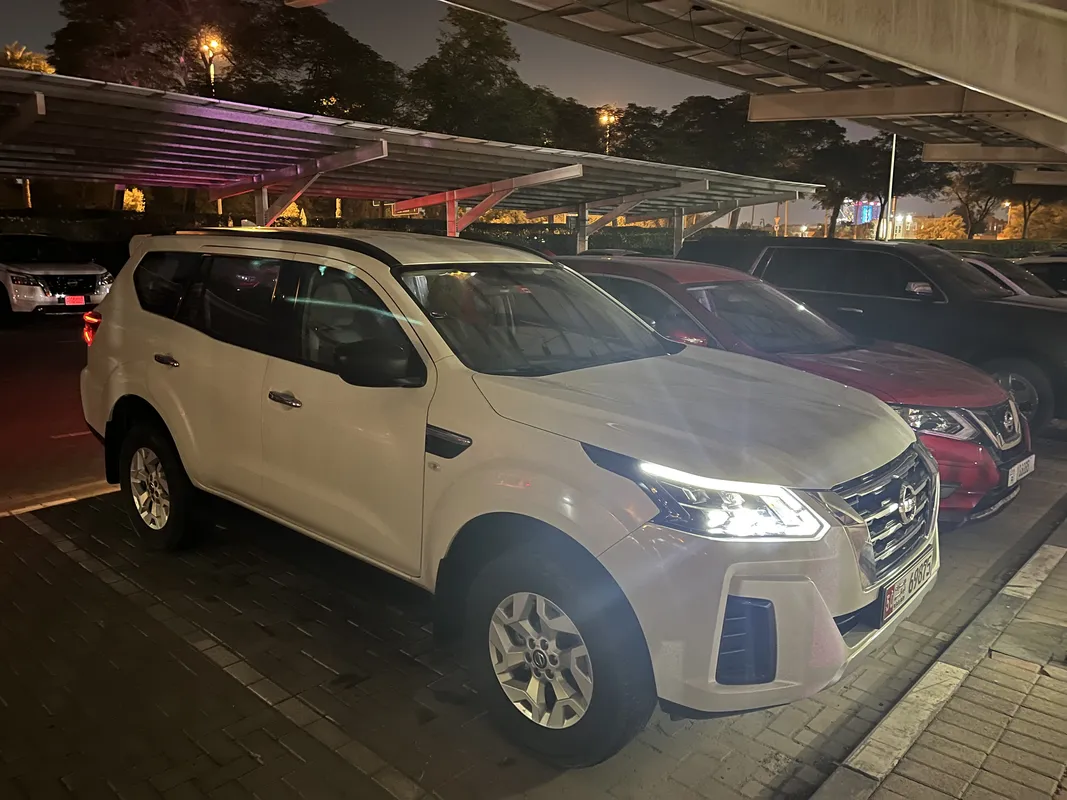
Nissan Sunny in the UAE
I rented Nissan Sanni for 6 days in Sharjah, from 07.11.2023 to 13.11.2023 I paid about 3000 rubles deposit while I was in Russia, using a bank card of payment system Mir. The payment went without problems. I paid the rest in cash when receiving the car. The car was fresh, clean. In general, at 10.00 the car was brought to the hotel, which was very convenient. I also rented it near the hotel. I never regretted that I took the car in this rental organization. The service was top-notch. Any question can be discussed by vatsap. Thank you.
Renault Megane Sedan in the UAE
Everything went great! The auto was replaced with a newer one. The delivery was on time. The driver was a little delayed when returning the car, but not critical.
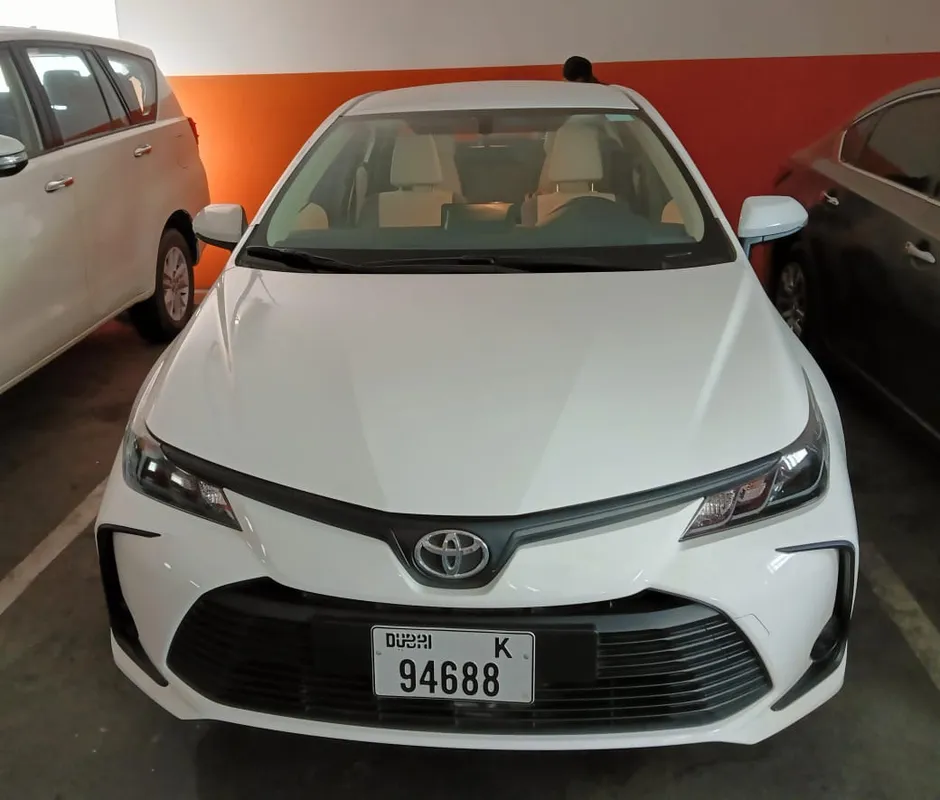
Renault Duster in the UAE
Everything was great. Thank you!
Renault Megane Sedan in the UAE
Good afternoon. Using the platform, I booked a Renault Megane in the UAE (Sharjah region). The rental company provided the car without any problems. However, when I returned the car, I found two scratches on the bottom of the bumper, which were definitely not my fault (or I inspected them inattentively, as they were on the bottom of the bumper). It seemed strange that during the inspection the representative immediately paid attention to them and did not examine the car further. Despite the insurance "FULL CASCO" (by the way, no insurance documents were not actually given to me) I was obliged to compensate for the damage. If you count on the insurance, then it is necessary, according to them, to go to the police and make a report on a minor accident, which is not possible, because there is no time, vacation with children and they are not left alone. The renter's representative said you could download an app, but it wasn't working (then I checked the website and it worked), which the representative most likely knew. The cost of reimbursement of two scratches was taken "out of thin air" and was not confirmed by anything (consultation with the office), no act was drawn up, except for the car return sheet, which had the appropriate marks on the scheme. I paid 525 dirham, the representative wanted to take cash, but I insisted through the terminal to make it official. Waited for the terminal for about an hour (brought another representative). Checked the fines, toll roads - all in the end I returned the car. But
Nissan Sunny in the UAE
Suddenly everything went well. A new car was handed in. There were no problems when handing over: Nine was asked for minor scratches, fines and parking and salicies were not required. I liked it. Did not leave a deposit.
Roads, parking and rush-hour traffic
The emirate of Sharjah itself has no toll points — neither Salik nor Darb. If you head into Dubai (and almost everyone does), expect 1–3 Salik gantries at $1 (4 AED) each. The Sharjah–RAK route is fully toll-free, while Sharjah–Abu Dhabi adds Salik in Dubai and Darb on entry to the capital during peak hours.
If you book a car in Sharjah only for cultural days, it’s worth it — there isn’t a single toll gantry inside the emirate.
Parking in Sharjah is mostly free: on the streets, at malls and at hotels. Paid zones appear sporadically in the Heritage Area and along the Buhaira Corniche — around 2 AED per hour, capped at 24 AED per day. Speed limits are 60–80 km/h in town and 100–120 on motorways. There is no Dubai-style +20 km/h tolerance — cameras trigger on every kilometre over the limit. The biggest road challenge in Sharjah is rush hour: 07:00–09:00 and 17:00–19:00, when Sharjah residents commute to Dubai and back. A 30-minute drive can easily turn into 1.5 hours.
The most common advice we give Sharjah guests is to plan longer trips for 09:30–10:00 — by then the resident wave has cleared, and the road into Dubai is clear.
Rates in Sharjah vary throughout the year depending on the season and the rental length.
- January
- February
- March
- April
- May
- June
- July
- August
- September
- October
- November
- December
- Jan
- Feb
- Mar
- Apr
- May
- Jun
- Jul
- Aug
- Sep
- Oct
- Nov
- Dec
 How expensive is renting a car in Sharjah: average daily rates for a one-week car rental, across all car classes.

-
1. Compare cars in Sharjah
We make it easy to compare prices and rental terms in Sharjah so you can rent a car more easily
-
2. Secure your online booking
Reserve your vehicle with a small deposit, and we guarantee it will be waiting for you upon arrival in Sharjah.
-
3. Share your rental experience
Help others make the right choice when renting cars on TakeCars Sharjah.
Routes, cultural sights and trips beyond the emirate
What to see in Sharjah with a car
The Heritage Area is a restored old town under UNESCO consideration, with the traditional Souq Al Arsah, the Al Hisn fort and historic houses. The Sharjah Museum of Islamic Civilization (~$7 entry) holds a strong collection of Islamic art and calligraphy. The Al Noor Mosque is open to non-Muslims with free guided tours on Mondays and Thursdays at 10:00. The Sharjah Aquarium on Al Khan beach costs around $7 to enter.
Allow three hours for the Heritage Area: a slow walk through the souq, the fort, the historic houses and a couple of stops for photos on the corniche. Plan it for the morning when the heat is mild.
Trips beyond the emirate
Sharjah → Mleiha is 50 km and 45 minutes east, an archaeological centre with the "Out of Africa" exhibition, palaeolithic finds and pre-Islamic Arab burials (entry around $16). Sharjah → Khor Fakkan is 130 km and 1.5 hours through the Hajar mountains to the Indian Ocean: beaches, an amphitheatre and the Wadi Wurayah dam. Sharjah → Ajman is just 15 km and 20 minutes — easily paired with a beach afternoon.
Frequent Questions
Better not to. Sharjah is the UAE's only dry emirate: the sale and consumption of alcohol are fully banned. A bottle from Dubai duty-free, left visible in the boot, is treated as a violation at a roadside check. If transit through Sharjah is unavoidable, keep it sealed in luggage rather than in the cabin.
Sharjah enforces modesty laws more strictly than Dubai. On streets, in car parks and inside malls, knees and shoulders must be covered for everyone — passengers and drivers alike. Women are not required to cover their hair, but bikinis are only acceptable on private hotel beaches. Police checks for clothing on the road are rare, but public-place rules are observed strictly.
SHJ is the Air Arabia hub — the first low-cost carrier in the Middle East, since 2003. Major partner desks are in the main terminal. With our partners the setup is usually different: the car is brought to the terminal exit by your flight number. For late-night flights, confirm at booking so the manager is on shift.
The trick is to shift your departure outside the peaks. From 07:00 to 09:00 and 17:00 to 19:00, Sharjah residents commute en masse to Dubai. The standard 30-minute drive turns into 1–1.5 hours in those windows. Best times for long trips: after 09:30 in the morning and before 16:30 in the afternoon.
Yes, if archaeology interests you: 130,000 years of human history, the "Out of Africa" exhibition and palaeolithic finds. The drive is 50 km and 45 minutes east of Sharjah. Entry around $16, with a typical visit lasting 2–3 hours. It pairs well with desert activities (fossil hunting, stargazing) — that turns into a full-day plan.
Around 130 km and 1.5 hours through the Hajar mountains on the E18. The route is scenic — switchbacks, viewpoints and photo stops. On arrival you find a beach amphitheatre on the Indian Ocean and the Wadi Wurayah dam. There are no toll points. Fuel up in Sharjah before you leave: petrol stations are sparser on the eastern side.
The Heritage Area runs paid parking — around 2 AED per hour, capped at 24 AED per day. Free parking is available at the neighbouring souq and at malls nearby. Friday mornings until 13:00 and public holidays are free across all zones. Best to park early: in high season the zones fill up after 11:00.
Yes. Al Noor is one of the few UAE mosques open to non-Muslims. Free hour-long tours run on Mondays and Thursdays at 10:00. Modest dress is required: covered shoulders and legs for everyone; women are issued an abaya and headscarf at the entrance. Parking at the mosque is free.
No. The +20 km/h buffer only applies in the emirate of Dubai. In Sharjah cameras trigger on every kilometre over the sign. Be especially careful on the E11 when coming back from Dubai — after the +20 buffer in Dubai, the same speed in Sharjah triggers a fine from 300 AED.
Yes, with sensible planning. Allow 1 hour to DXB off-peak and 1.5 hours in peak hours, plus 2.5 hours for international check-in. So leaving 4–4.5 hours before take-off is comfortable. For long-haul flights with heavy luggage, add another hour of buffer.
If your day is just the Heritage Area and the Museum of Islamic Civilization, taxis are cheaper: parking is paid, the headline sites are within walking distance, and the car would sit more than it drives. For Mleiha, Khor Fakkan or Ajman, a car is essential, even for one or two days.
There are no gantries inside Sharjah, but heading into Dubai on the E11 you will pass 1–3 Salik gantries at $1 (4 AED) each. The exact number depends on the destination: Marina and Downtown collect 2–3 crossings, the Dubai Mall area usually 1–2. The charges go through the deposit as usual.
You can, but a modest swimsuit is preferable: bikinis and very short trunks are better kept for private hotel beaches. Public beaches keep a family format — knee-length shorts and a covered swimsuit feel more comfortable socially. Police fines for swimwear are rare, but stares are not.
The Sharjah Light Festival is an annual event of light installations on the emirate's main buildings (Heritage Area, Al Noor Mosque, the square at Al Hisn fort). It runs in February for around 11 days. Entry is free and crowds are large — central roads can be congested after 19:00 on those dates.
For the city itself and trips to Ajman or Dubai, a regular saloon is enough — flat roads and generous parking. For Mleiha and Khor Fakkan, a compact SUV is more comfortable on the mountain stretch and the light gravel near the archaeological sites. The desert sections at Mleiha stay with the organised tour.