


Pickup


Return
🎁 Use code WELCOME3 during checkout to get discount on your first booking with us. Enjoy! ☀️

Car rental in Turkey unlocks the country in a way no shuttle bus or organised excursion can match. Distances are large, the road network is solid, and most of what brings people here — from the Lycian coast to Cappadocia — sits a few hours from the airport. The local fleet is broad, the airports are well-connected, and an independent road trip is genuinely the natural way to see it.
For most guests, the car becomes part of the holiday rather than a chore. Three or four days from an all-inclusive resort to reach Pamukkale or the Saklıkent Gorge; a fortnight along the coast between Antalya and Kaş; or a quick city-to-city run in shoulder season when prices drop.
A couple landing in Antalya last May signed the contract on the bonnet by gate D. Five minutes, voucher, keys, off down the D400. The shuttle bus to the big-chain office hadn't even left.
Payment is straightforward. Visa, Mastercard, Maestro and contactless are accepted everywhere; credit cards are required only by the international chains, while local suppliers happily take cash deposits in EUR, USD or Turkish lira. Most guests pay an online deposit of 15–20% to confirm the booking and settle the rest on collection.
The question we get most often is whether you really need a credit card. Not with us. A debit card or a couple of hundred euros in cash is enough at almost every local supplier.
The fleet typically starts with the Fiat Egea — by far the most common Turkish hire car — and runs up to eight-seat minivans for families. Most cars are 2020 or newer.
What you need to rent
The basics are short: a passport with your entry stamp and a valid driving licence. EU and EEA licences are accepted directly. UK licences are accepted for tourists, but the official UK government recommendation is to carry an International Driving Permit alongside, especially for older paper licences or stays longer than a few weeks. The IDP is cheap, valid for a year, and worth the peace of mind at a Turkish police checkpoint.
A British guest drove for two weeks Antalya to Cappadocia on a paper licence last spring. Nobody asked for an IDP — but at a checkpoint near Konya the officer leafed through twice. He bought one online the next morning.
The minimum age is 21 with at least two years' driving experience. Premium models, 4×4 vehicles and minivans are usually 25 and over. Drivers under 25 pay a young driver surcharge of around $10 per day with most local suppliers.
Payment is friendly to most European guests. Visa, Mastercard, Maestro, contactless and Apple/Google Pay all work for the online deposit. On collection, local suppliers also take cash in EUR, USD or Turkish lira; the international chains insist on a credit card in the main driver's name.
Bring a debit card and a couple of hundred euros in cash. That covers almost any combination — deposit, fuel top-up, or a coffee at the airport.
Before you leave the car park, check the car against your voucher: model, year, transmission, fuel type. Quiet substitutions for "the same class" do happen in high season.
Most tourists in Turkey start their trip here
What it costs
Pricing follows the season. In low season, a Fiat Egea — the most common Turkish hire car — starts at $8–10 per day for a manual and $12–15 for an automatic. Mid-range models such as the Renault Megane or Hyundai i30 sit at $12–20. Family minivans run $60–80.
In high season (June–September) prices roughly triple: the Egea starts at $35, mid-range $45–55, minivans $120–180. On the coast in July and August the better cars are gone two to three weeks ahead, so renting in Bodrum or Antalya is best booked early.
August in Antalya is fully booked a month out. A family flying into AYT last summer left it until landing and ended up with a manual Egea for the price of a Duster.
Beyond the daily rate, the voucher usually includes: TPL (third-party liability, mandatory by Turkish law), basic CDW, the airport surcharge, optional Super CDW (Full Coverage), young driver surcharge and a return-elsewhere fee if you drop the car in a different city. Tolls and fines are billed afterwards with a small admin charge from the supplier.
The price on the voucher is the price you pay. If something isn't on the breakdown, it won't be on the bill either.
Cash deposits depend on car class: roughly $100 for an economy, $200–300 for mid-range and up to $500 for a minivan. A few suppliers offer zero-deposit tariffs — pay for Full Coverage and no deposit is held at all.

Renault Symbol in Turkey
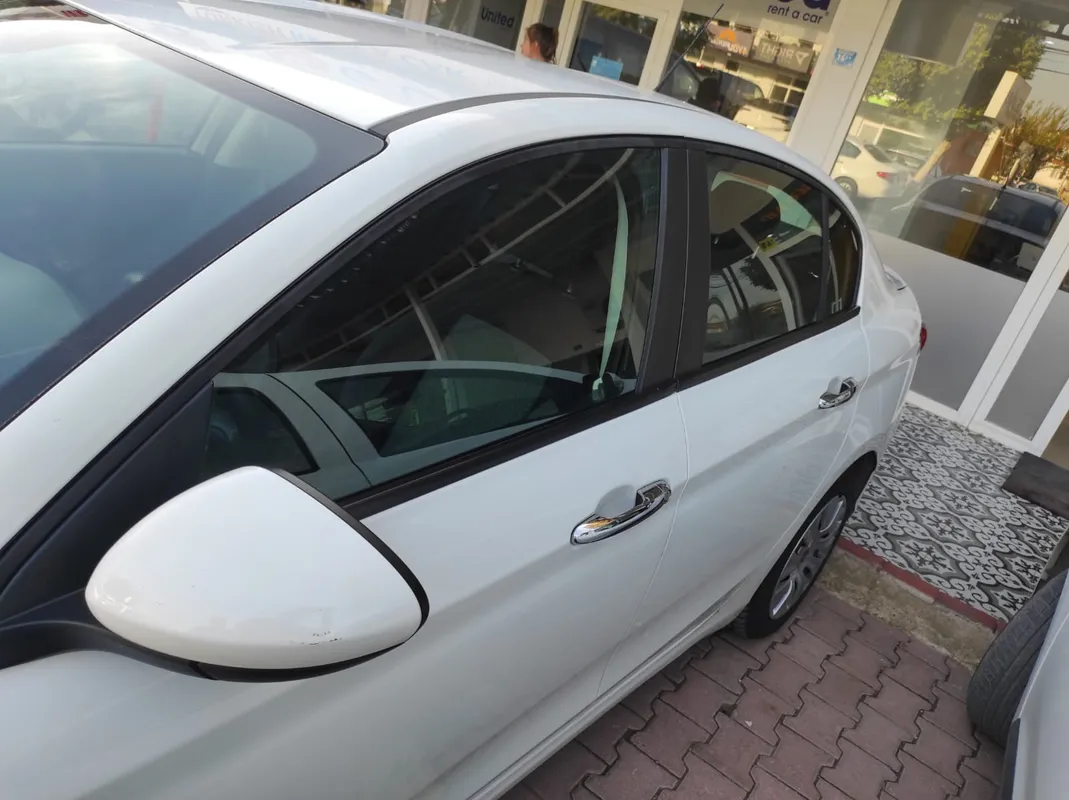
All in all, everything is good, I can't say anything bad. In the end I got a Fiat Agea or something like that.... The only thing on the website says that insurance is included in the price, but in fact it is not. I had to pay extra for insurance. But everything is fine in essence...

Hyundai Accent Blue in Turkey
it was good Thx
Skoda Scala in Turkey
It was all good
Renault Clio 5 in Turkey
It was not so good

Fiat Egea Multijet in Turkey
It's all very good

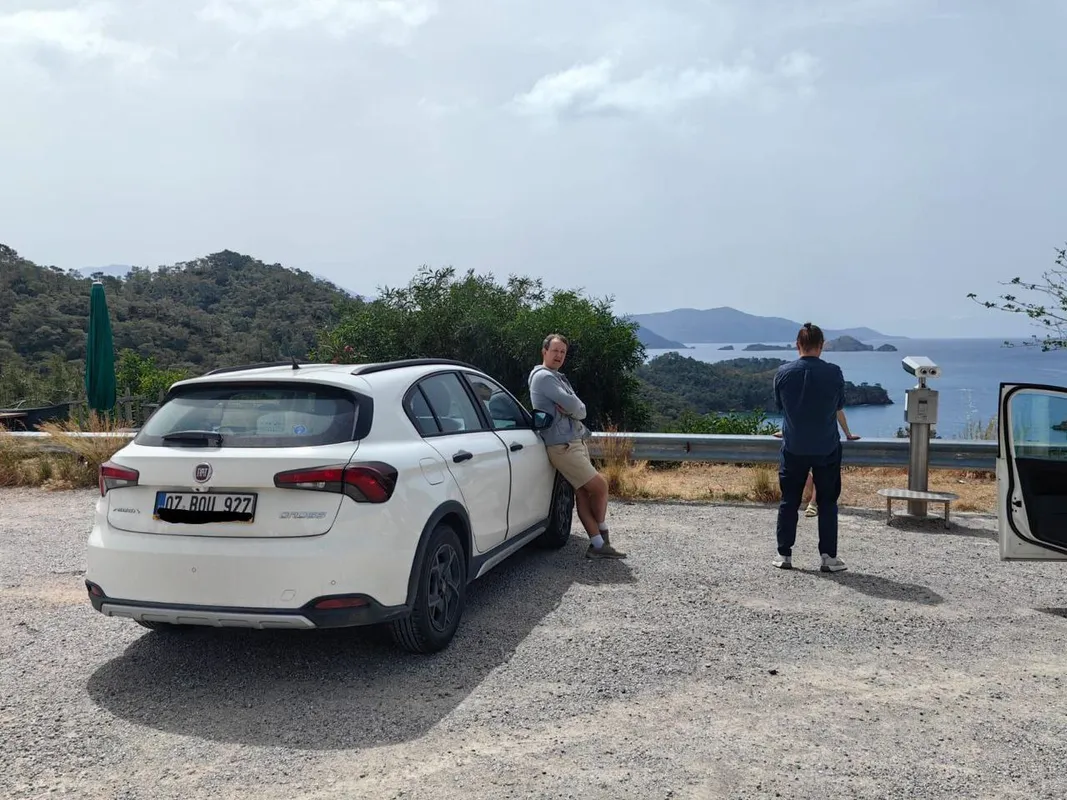
Fiat Egea Cross in Turkey
Everything went well with the rental. The car was clean and new for the money, and we also agreed on 1 insurance. That fully without deductible covered the risks. When we returned the car, there were also no problems, we returned it quickly, we were taken to the airport afterwards, and that was it.

Skoda Scala in Turkey
it's okay.

Fiat Egea Multijet in Turkey
It was very good.
Fiat Egea Multijet in Turkey
everything's fine
Fiat Egea in Turkey
Everything went well, I was met at the airport, taken to the office where all the documents were drawn up. The car was the same as we had booked, in good condition. There were two things that we did not like very much. First: the car had no fuel at all, we had to look for a gas station. The second: when we handed over the car we were charged 300 lira for travel on toll roads, but the bill for them did not show. According to our data, we had to pay 150 liras for the toll roads. For us these are insignificant trifles. If we need a car in Turkey - we will turn to you, rating 5-
Citroen C3 in Turkey
Everything went well We contacted each other on WhatsApp, met quickly, we knew the meeting point that was announced. We paid, got the documents and drove away. We found a scratch when we turned it in, but since we had hull insurance, they said it was fine. We got our deposit back. They took us to the airport. Five points, no complaints.
Fiat Egea Cross in Turkey
Everything went well, the car was fine, everything was fine with the rental, they picked us up from the airport and drove us there. The cars were only a bit delayed (about 20 minutes) as they were waiting for the staff. And there was a little confusion with the cash deposit. But, all ok

Hyundai i20 in Turkey
Everything went very well. Very convenient to rent a car, no delays. Comfortable price, no restrictions on mileage. The only difficulty was that the guys did not speak English, so we had to communicate via google translator from Russian to Turkish and back again.
Take Cars in Turkey
We work at every major Turkish airport — IST, SAW, Antalya, Dalaman, Izmir, Bodrum and Cappadocia. Cars are 2020 or newer. We meet you by flight number at arrivals — no shuttle, no transfer to the office.

-
Verified reviews on every car
See how this Egea or this Duster has actually performed, not an average for the supplier.
-
The price on the voucher is final
All taxes, basic insurance and fees are baked in — no recalculation at the desk.
-
Free cancellation up to 7 days
Direct messaging with the supplier lets you agree details with the person handing over the keys.
Tolls, bridges and HGS
Since March 2022 Turkey runs a single toll system on its motorways — HGS (Hızlı Geçiş Sistemi). Barriers were removed; neither cash nor cards are accepted at the toll point. Every rental car carries an active HGS sticker on the windscreen, and the charge is deducted automatically as you pass under the gantry.
You don't need to slow down at a toll gantry. The sticker reads at 30 km/h and at 110. What matters is that it's actually on the car.
Istanbul bridges
Bosphorus crossings have their own logic. On three bridges — 15 Temmuz Şehitler, Fatih Sultan Mehmet and Yavuz Sultan Selim — you only pay in one direction, Europe to Asia. Going back is free. The Osmangazi Bridge on the Istanbul–Izmir motorway and the Eurasia Tunnel under the Bosphorus charge in both directions.
A guest doing the Istanbul–Izmir loop in March paid Osmangazi twice and then routed back across 15 Temmuz for nothing. The difference paid for dinner.
What it costs
Rough 2026 figures: Eurasia Tunnel about ₺225 by day, Osmangazi Bridge about ₺795, Istanbul to Ankara around ₺150, Istanbul to Izmir around ₺500. Free alternatives exist almost everywhere but add 30–90 minutes.
HGS is billed after you return the car. A small admin fee on top is normal practice — ours is fixed in the contract from day one, no surprises later. Every car we offer ships with an active sticker, but it's worth confirming on collection.
Rules, fines and parking
Speed limits are familiar: 50 km/h in town, 90 km/h on country roads, 120 km/h on motorways. There is also a minimum of 40 km/h on motorways. Speed cameras and average-speed zones are common at city entrances and on tolled stretches.
Alcohol at the wheel
Turkey has an unusual rule: 0.5‰ for a driver who is alone in the car, but 0.0‰ as soon as you carry any passenger — adult or child, no difference. Most visitors don't know this. The fine for a first offence is roughly ₺6,400.
The rule sounds odd until you hear the logic. Drive alone, your call. Carry a passenger, you're responsible for them. Either way, over 0.5‰ and any insurance is void.
Children and equipment
Children under 12 travel in the rear seats; under 135 cm needs a child seat. Suppliers charge $3–7 per day for one — best added at booking, they sell out in summer. Radar detectors and jammers are illegal, including any built into a sat-nav.
Fines and parking
The Turkish system rewards quick payment: 25% off if paid on the spot, another 25% off within 15 days. Camera fines are forwarded by the supplier with a $15–30 admin fee. In central Istanbul parking is paid — use İSPARK or your hotel car park. Around Marmaris and Fethiye from Dalaman, most resorts offer free parking.
Parking in central Istanbul is always a hunt. In Sultanahmet or Beşiktaş head straight to an İSPARK lot. A ticket on the street arrives faster than a free space.
Park inside the lines, watch for blue-painted curbs, and keep a few coins for the local attendant — many of the smaller İSPARK plots still run on tickets, not contactless.
Insurance and borders
Third-party liability (TPL) is mandatory by Turkish law and included in every rental. Basic CDW (Collision Damage Waiver) is usually bundled too, with an excess: you pay a fixed amount in case of damage and the insurer covers the rest. Standard exclusions: glass, wheels, rims, undercarriage, interior.
About 70% of guests take Full Coverage. In Istanbul or on Cappadocia's switchbacks, a $1,500 excess is one scrape on a wing. Full Coverage removes that risk for $8–15 a day.
What Super CDW covers
Super CDW (Full Coverage by some suppliers) covers glass, wheels, rims and theft, and zeroes the excess. It doesn't cover drink-driving over 0.5‰, off-road tracks, unpaid tolls or towing. For mountain routes it's standard; on the coast at Belek, Side or Kemer many guests stick with basic cover.
After an accident
After any incident, even a small scratch, call 154 (traffic police) and wait. The police report is mandatory — without it no insurance pays out, and the repair comes out of your deposit. Don't move the car until the police arrive; tell your supplier in parallel.
Don't try to settle on the spot. Without the police report Turkish insurance doesn't trigger, and the renter ends up alone with the bill.
Crossing borders
Usually not allowed. Insurance is void at the borders with Greece, Bulgaria, Armenia and Iran. Georgia is sometimes possible with written permission. Northern Cyprus by ferry from Taşucu is occasionally allowed with a supplier's signed approval.
Rates in Turkey vary throughout the year depending on the season and the rental length in days.
- January
- February
- March
- April
- May
- June
- July
- August
- September
- October
- November
- December
- Jan
- Feb
- Mar
- Apr
- May
- Jun
- Jul
- Aug
- Sep
- Oct
- Nov
- Dec
 How expensive is renting a car in Turkey: average daily rates for a one-week car rental, across all car classes. Delivery across Turkey not included.
Frequently asked questions
Yes, between major cities and airports — Istanbul ↔ Antalya, Antalya ↔ Izmir, Antalya ↔ Dalaman and similar pairings. The drop-off fee starts at $200–300 depending on distance and supplier. In high season these cars run out fast, so book early. Returning the car outside Turkey is not permitted.
Not by law, but strongly recommended in eastern Turkey, the Taurus mountains, Cappadocia and the Black Sea coast from November to April. Snow chains are useful as a back-up on steep mountain roads. Studded tyres are forbidden anywhere in Turkey. For Antalya, Bodrum and Izmir, winter tyres are usually unnecessary.
Istanbul IST suits the city and the north-west. Sabiha Gökçen SAW is closer to the Asian side and a useful base for Cappadocia. Antalya AYT is the main hub for the Turkish Riviera. Dalaman DLM serves Marmaris, Fethiye and Ölüdeniz; Bodrum BJV the Aegean coast; Izmir ADB Ephesus and Çeşme.
It happens more often in Turkey than in Western Europe. Some suppliers hand the car over with a minimal amount of fuel and ask for it back the same way — the full-to-full convention isn't universal here. Photograph the dashboard at collection and make sure the fuel level is recorded on the inspection sheet by the supplier.
Not with our local suppliers. A debit card, Maestro or contactless is enough for the online deposit, and the balance plus refundable security deposit can be paid in cash on collection (EUR, USD or Turkish lira). A credit card in the main driver's name is required only by the international chains that work in Turkey to their own standards.
Yes. EU and EEA licences are accepted directly. UK licences are accepted for tourists for up to six months from your date of entry. Older paper UK licences and stays longer than a few weeks are easier with an International Driving Permit alongside. Foreign licences in non-Latin alphabets typically require an IDP.
For EU drivers, no. For UK drivers, an IDP is officially recommended by gov.uk and easy to get from the Post Office for £5.50, valid one year. It's not a strict requirement at most rental desks, but it removes the small risk of a misunderstanding at a Turkish police checkpoint and is standard for any longer trip.
21 with at least two years of driving experience. Premium cars, 4×4s and minivans usually require 25. Drivers aged 21–24 pay a young driver surcharge of around $10 per day. There is rarely an upper age limit, though some suppliers ask for a medical note above 70.
It depends on the car class: roughly $100 for economy, $200–300 for mid-range and up to $500 for a minivan. With local suppliers the deposit is usually paid in cash and returned on the spot when the car is handed back undamaged. Zero-deposit tariffs exist if you pay for Full Coverage upfront.
HGS is the only electronic toll system on Turkish motorways since 2022. Every hire car has an active sticker and the charge is deducted as you pass under the gantry. Rough figures: Istanbul to Ankara around ₺150, Istanbul to Izmir around ₺500. The supplier bills HGS after the car is returned, with a small admin fee fixed in the contract.
Only when crossing Europe to Asia. The three suspension bridges (15 Temmuz, Fatih, Yavuz) are free in the opposite direction. The Osmangazi Bridge on the Izmir motorway and the Eurasia Tunnel under the Bosphorus charge both ways. Payment is HGS only — neither cash nor cards are accepted at the toll point.
0.5‰ for a driver alone in the car, and 0.0‰ as soon as any passenger — adult or child — is on board. This rule catches a lot of visitors out. Motorbikes, vans and any vehicle with a trailer have a 0.2‰ limit. The fine for a first offence is roughly ₺6,400 and any insurance becomes void above 0.5‰.
Yes. Turkish law requires a police report (call 154, the traffic police) for any damage, including a scratch. Without it the insurance does not pay out and the repair is taken from your deposit. Don't move the car until the police arrive. Let your supplier know in parallel — they'll guide you on the spot.
Crossing into Greece, Bulgaria, Armenia, Iran, Syria or Iraq is not allowed — insurance is void at the border. Georgia is sometimes possible with individual permission and a surcharge of $100–200. Northern Cyprus is occasionally allowed by ferry from Taşucu or Mersin with written approval. The Republic of Cyprus is closed to Turkish hire cars.
Often yes — 150–250 km per day with some Turkish suppliers, which is a step away from the unlimited mileage that's standard in much of Europe. Going over costs $0.20–1 per km. For long routes such as Istanbul to Cappadocia (730 km) or Antalya to Pamukkale (240 km), choose an unlimited-mileage tariff at booking.