


Pickup


Return
🎁 Use code WELCOME3 during checkout to get discount on your first booking with us. Enjoy! ☀️

Car hire in Ljubljana is mostly a decision about day trips. The city itself is compact, walkable and bike-friendly: the centre is 20 minutes on foot, the Old Town pedestrianised, the fleet hub a 25-minute drive away at Ljubljana Jože Pučnik (LJU).
From Ljubljana you have eight popular destinations within a two-hour radius: Lake Bled, Lake Bohinj, Postojna Cave, Predjama Castle, Piran, Maribor, Triglav National Park and the Vršič Pass. Four Schengen capitals are comfortably within reach too: Trieste, Zagreb, Venice and Vienna.
A couple landing at LJU on a late Friday flight signed the contract at the kerb, drove straight to a hotel on Trubarjeva. By Saturday morning they were already on the H4 to Bled.
Most travellers take the car only for the days they actually drive out — one for Bled, one for Postojna and Piran — and walk the city itself.
A car for the city itself?
It depends on how many days you have and what you plan to see.
For Ljubljana itself you don't really need a car. The Old Town is pedestrianised, public transport runs cleanly, Tivoli Park and the Dragon Bridge are on foot from any central hotel. Parking in the centre is paid (€1.50–2.50 per hour via EasyPark), and getting out of the Triple Bridge area in rush hour takes longer than walking.
A guest from Manchester picked up the car at LJU on arrival, then left it in Tivoli car park for three days. €60 in parking before the first drive out — the airport surcharge cost less than the daily city sit.
When you need it
If you have Triglav National Park, the Vršič Pass, Bohinj or a day on the coast on the list, doing it without a car becomes an awkward chain of buses. Public transport reaches Bled and Postojna, but it eats half your day on the way there.
Most of our customers pick up the car on day two or three — once they've taken the city in and want to drive out to Bled or Postojna. Book only the days you'll actually drive: it saves money and the headache of hunting for hotel parking.

Chevrolet Aveo in Slovenia
Everything went well! No comments! I recommend!

Toyota Yaris in Slovenia
It was really super 🤩 Everythnig it was perfect 👌👌👌

Toyota Yaris Cross in Slovenia
everything went perfectly. Booking was very easy and the interaction with the agency was flawless, communication was top notch.
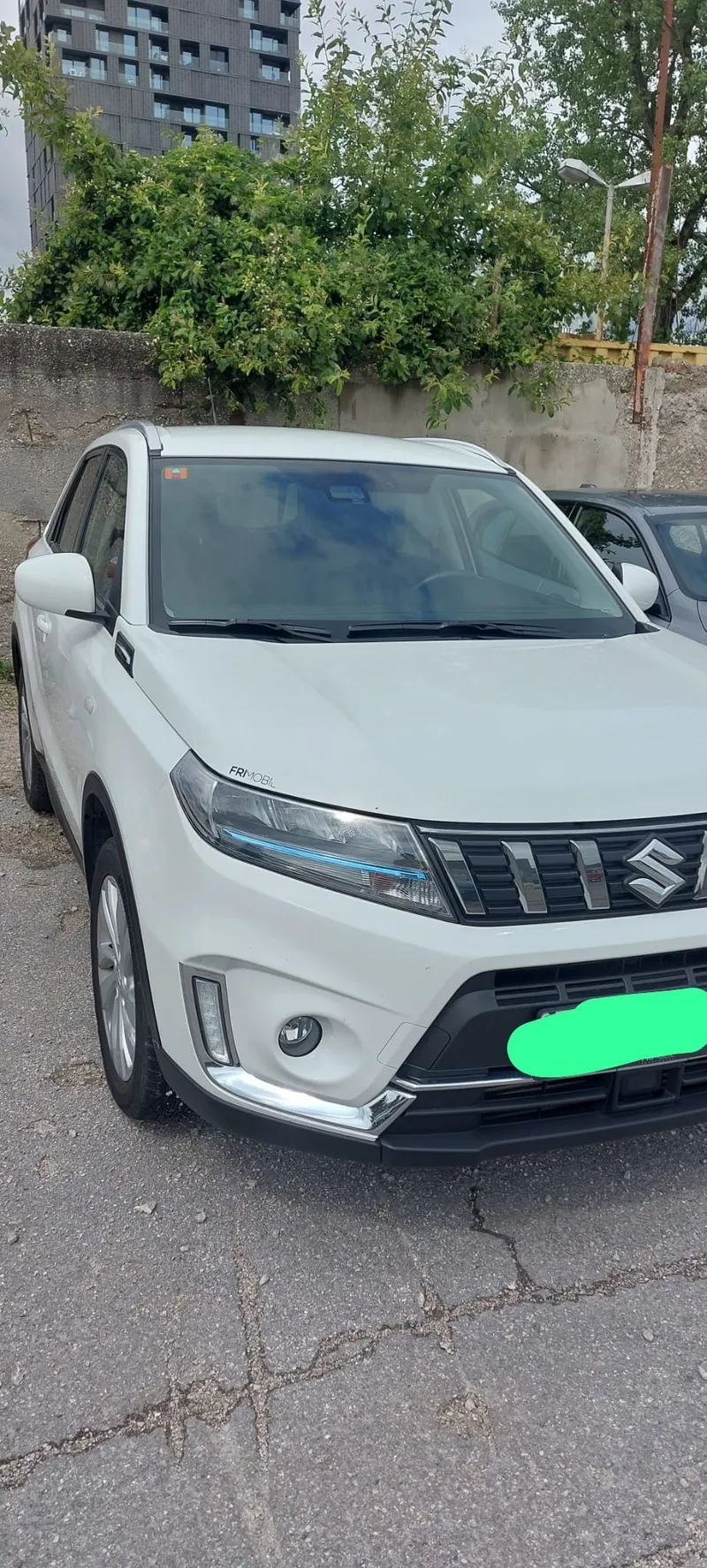
Toyota C-HR in Slovenia
all good

SEAT Ibiza in Slovenia
Everything went well, the car would be in excellent condition, the landlords are polite and punctual, there are no complaints)
Mazda 2 in Slovenia
It went great thanks everything went very well and the guys were helpful
Mazda 2 in Slovenia
Well we didn't get the Mazda 2, we got an Icelandic blue metallic Chevrolet Aveo. We were a little disappointed because it was a much older car than the Mazda 2 we were expecting ofcourse. But we accepted it because it was bigger and more comfortable. But it wasn't the best choice in hindsight. Cause then, the music installation didn't work so well, the speakers were giving bad sound, and apart from that the jack didn't make a good connection, so it was difficult to play our own music. Further the automatic gear didn't work properly, at higher speeds it kept changing, so we had to stay under a certain speed, this was anoying. And sometimes giving problems on the highway. So alltogether we were not so satisfied with the car. The owner was kind and and had someone with him that translated to English for us. The communication went well overall. Kind regards, Janneke Schouten

Mazda 2 in Slovenia
The car did us good the whole week. Dan met us with the car at the airport, explained everything well despite the language barriers. The car enabled us to experience more of Slovenia and it’s incredible views
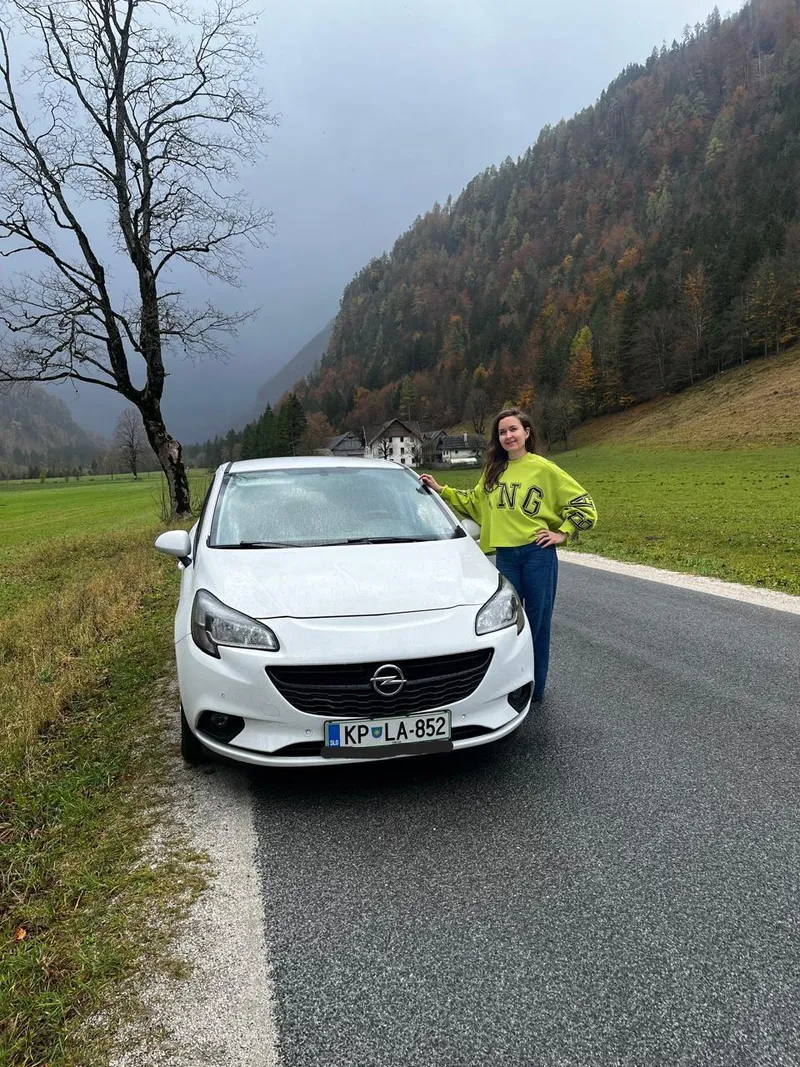
Opel Corsa in Slovenia
Everything went great, very decent people rent a car in good condition, thanks to your service was able to see the country, in the current conditions found only your service, where there is an opportunity to rent a car to a Russian man without unnecessary fuss and at an affordable price.
Peugeot 5008 in Slovenia
Thanks for good job. Attentiveness and care for the client accompanied us throughout the entire rental period. Thanks again.

SEAT Ibiza in Slovenia
I was very happy. The rental process was easy, and with the car everything was great.
SEAT Ibiza in Slovenia
first of all , i'd like to thank's a lot to the staff of the slovenian company for their kindness and patience , they were helpfull , make some discount , and good service. And for the localcarhire company , it was really great help for us to easelly find such an good offers and reasonable prices in the pick season . We'r definitelly reccomended!!

Peugeot 5008 in Slovenia
Everything went well, they gave me a Renault Scenic instead of a Peugeot.
LJU airport pickup
Ljubljana Jože Pučnik (LJU) sits in Brnik, ~26 km north of the city centre via the H4. The drive takes around 30 minutes and traffic stays light even in high season.
The terminal has counters for the major international chains and the Slovenian leader Avantcar. On TakeCars you can book with any of them, and often more cheaply with verified local suppliers who meet you outside the terminal.
A late-night arrival on a delayed flight from Stansted: contract signed at 02:10, keys in hand five minutes later. The shuttle counters had already shut for the night.
If you don't need it straight away
GoOpti and Nomago shuttles run €5–10 into the centre and take about 45 minutes. Taxis are €40–50, Bolt is sometimes available. The train from Brnik station is slow and infrequent. If you plan to take the car only from day two, a shuttle to the hotel is the simplest route.
Picking up in the city on day two instead of at LJU is often €15–20 a day cheaper and skips the airport surcharge.
Day trips from Ljubljana
Ljubljana is a strong base for short trips: half of what you should see in the country sits within an hour or two of the city.
The most popular run is Lake Bled, 55 km and 45 minutes northwest: island church, clifftop castle, a 6 km walk round the lake. A bit further and quieter is Lake Bohinj (80 km, 1 hour), inside Triglav National Park, with a cable car up Mt. Vogel.
A couple from Edinburgh went to Bled in mid-July and turned the car around at the first car park — full. Drove on to Bohinj and had the lake to themselves by 11am.
The southwest direction is Postojna Cave (55 km) and Predjama Castle (60 km). They sit 9 km apart and combine naturally: caves with an electric train plus a castle built into a cliff.
The coast is Piran (115 km, 1.5 hours): Venetian architecture and Adriatic sunsets. Doable as a day trip, more relaxed with an overnight. Separately, the Vršič Pass (90 km, 2 hours) is open mid-May to mid-October — 50 hairpin bends across the Julian Alps.
Rates in Ljubljana vary throughout the year depending on the season and the rental length.
- January
- February
- March
- April
- May
- June
- July
- August
- September
- October
- November
- December
- Jan
- Feb
- Mar
- Apr
- May
- Jun
- Jul
- Aug
- Sep
- Oct
- Nov
- Dec
 How expensive is renting a car in Ljubljana: average daily rates for a one-week car rental, across all car classes.
Why book through us

-
Real photos and reviews of every car
You see the exact vehicle you'll pick up, not a generic category image.
-
Transparent price and deposit before booking
All fees, insurance and the Slovenian vignette are shown upfront. You pay at the desk the same total you saw at checkout.
-
Direct messaging with the supplier
Ask about a specific route or border crossing and the supplier will tell you in advance which insurance and documents you need.
A base for four countries
A big perk of hiring a car in Ljubljana is the closeness of four Schengen borders. Italy, Austria, Hungary and Croatia (which joined Schengen in January 2023) are all reachable without border checks.
Italy: Trieste and Venice
Trieste is 100 km and 1.5 hours via the A1: a half-day with dinner over the gulf and back. Venice is 240 km and 2.5 hours; doable in a day but tight, an overnight is better. Italian motorways are tolled (€5–8 to Trieste, €10–15 to Venice), paid at booths by card or cash.
A family from Bristol drove into central Trieste on a Sunday and picked up a ZTL fine the same evening. Cameras read Slovenian plates the same as Italian ones — ask the supplier where the boundary sits before you go.
Croatia and Austria
Zagreb is 140 km via the A2: no passport check since 2023, but the tolls remain (around €8 each way). Vienna is 380 km, easier with an overnight. Remember the Austrian vignette — a 10-day digital one costs €12.40 and is bought separately.
Let the supplier know if you're crossing into a neighbouring country. A green card is issued and there may be a small daily surcharge.
Frequent Questions
GoOpti and Nomago shuttles cost €5–10 and take around 45 minutes. Taxis are €40–50, Bolt is sometimes available. The train from Brnik station is slow and infrequent — not the best option. If you plan to pick up the car in the city on day two rather than at the airport, the shuttle is the simplest route.
No. The historic centre is a pedestrian zone: Prešeren Square, the Triple Bridge, the Ljubljanica embankment and the surrounding area are closed to traffic. Access is only granted to hotels and deliveries with a permit. Everyone else parks in paid zones around the centre or at Park & Ride lots on the outskirts.
The cheapest option is Park & Ride on the outskirts: €1.20–1.50 per day with a bus into the centre. Paid zones in the centre are €1–2.50 per hour, payable through the EasyPark app. Most hotels also offer their own parking, usually paid, around €15–25 per day.
About 50 km and 45 minutes northwest via the A2. In high season there can be queues at the Bled exit — better to set off in the morning. Lakeside parking is paid (~€3 per hour); it is easier to leave the car at P+R Bled and walk 5 minutes to the lake.
Yes, this is the most logical itinerary. Postojna Cave and Predjama Castle are 9 km apart, tickets are often sold as a combo, and half a day is enough for both. From Ljubljana they are 55 and 60 km respectively.
Bled is more iconic and easier to reach (55 km). Bohinj is quieter, more authentic and sits inside Triglav National Park (80 km). At peak season Bled is genuinely crowded; if you want calm, go to Bohinj. You can also combine: Bled in the morning, Bohinj after lunch.
Technically yes: 240 km one way, 2.5 hours without traffic. But the day is tight — five hours of driving leaves only 5–6 hours in Venice. Most travellers add at least one overnight to have a relaxed evening on Piazza San Marco.
Around €5–8 one way. Italian motorways use a distance-based system: take a ticket on entry, pay on exit by kilometre (~€0.07/km). Card and cash both work. No vignette is needed for this route — the Slovenian one only works inside Slovenia.
Yes. Austria uses a vignette system: a 10-day digital vignette costs €12.40 and is linked to your number plate. Buy it online or at a kiosk near the border. Without one the fine is around €120. Note also the Karawanken Tunnel — it is paid separately from the vignette.
Around €8 one way. Since January 2023 Croatia is in Schengen, so there is no passport check anymore. Tolls work the same way as in Italy: take a ticket on entry, pay on exit. Cards are accepted.
Yes, one-way is possible. The fee depends on the direction: to Zagreb — €30–60, to Trieste or Venice — €40–80. Useful for travellers continuing through Croatia or flying out of Italy. Confirm the conditions with the supplier on TakeCars in advance.
At the airport is convenient if you need the car straight away. In the city it is usually €15–20 a day cheaper and the airport surcharge is removed. If you are planning 2–3 days in Ljubljana without a car, picking up in the city on day two makes more sense.
The terminal has the main international chains and the Slovenian leader Avantcar — usually cheaper than the international ones. TakeCars carries both: major networks and verified local suppliers who meet customers outside the terminal.
Based on our experience — only the days you will actually drive, not the whole trip. For a classic itinerary (Bled, Postojna+Predjama, Piran) two or three days is enough. A car in the city itself only complicates things — Ljubljana is built for pedestrians and public transport.
Postojna Cave + Predjama Castle: under an hour's drive, an electric train inside the cave (kids love it), little walking, lunch at one of the tourist restaurants by the entrance. The alternative is Bled: boats to the island, a walk around the lake, and a slice of traditional Bled cream cake.