


Pickup


Return
🎁 Use code WELCOME3 during checkout to get discount on your first booking with us. Enjoy! ☀️

Car rental in Split is the natural way into Dalmatia. Croatia's second city — capital of Dalmatia, home to Diocletian's Palace, and the country's busiest ferry hub — works as a fleet anchor for a wide arc: Trogir and Šibenik next door, Krka and Plitvice up the A1, the Pelješac wine peninsula and Dubrovnik south of the bridge. Split itself is mostly walkable; the car earns its keep on the trips out.
A couple stayed five nights at a place near Bačvice without a car, then picked up a Yaris on day three for Krka and the islands. Cheaper than renting the whole week, and no parking puzzle around the Riva.
SPU airport sits west of town, parking in the centre runs in zones, and the ferry port at Trajektna luka works as a serious international hub. The rest of the page is about the practical bits — pickup, parking, ferries and the road south.
SPU pickup and Trogir option
Split Airport (SPU) is 25–27 km west of the city, closer to Kaštela and Trogir than to Split itself. The drive into town takes 25–35 minutes via the D8 or the A1 depending on traffic, and a touch longer when a cruise ship empties out at the same time. The terminal and the lots just outside it host the major international chains and most of the larger local fleets.
A family flying in on a Wizz Air red-eye from Manchester met our host at the SPU arrivals barrier at 1:10 am. Paperwork done in five minutes, in the car, on the D8 to Kaštela before the international desks had even reopened.
An airport surcharge of 10–20% over the base rate is standard. For a long stay where most days are inside Split itself, picking up later in town is often the cheaper move — you skip the surcharge and the parking question for the first few days. For a short visit, the airport pickup is simply easier.
The other option is a Trogir collection or hotel delivery. Confirm the format at booking — some suppliers do it free, others charge a fixed delivery fee. A delivery to a hotel near Bačvice or Žnjan is usually the smoothest if you arrive late.

Suzuki SX4 S-Cross in Croatia
It was great!

Suzuki SX4 S-Cross in Croatia
Everything was perfect, both the pick-up at the hotel and the drop-off at the airport, as specified in the reservation. With a small delay in delivery that was quickly resolved by phone.Everything was perfect, both the pick-up at the hotel and the drop-off at the airport, as specified in the reservation. With a small delay in delivery that was quickly resolved by phone.
Suzuki Swift in Croatia
Everything was great, no issues whatsoever! We went to Cetina river source, the car was perfect
Suzuki Swift in Croatia
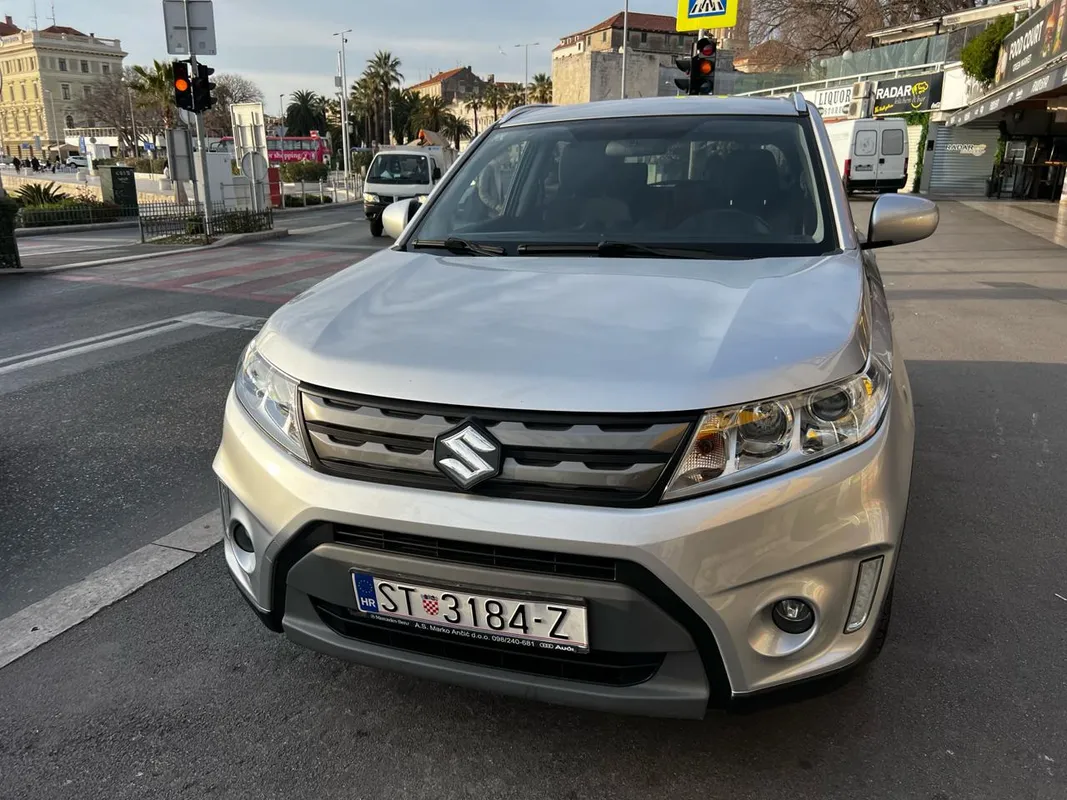
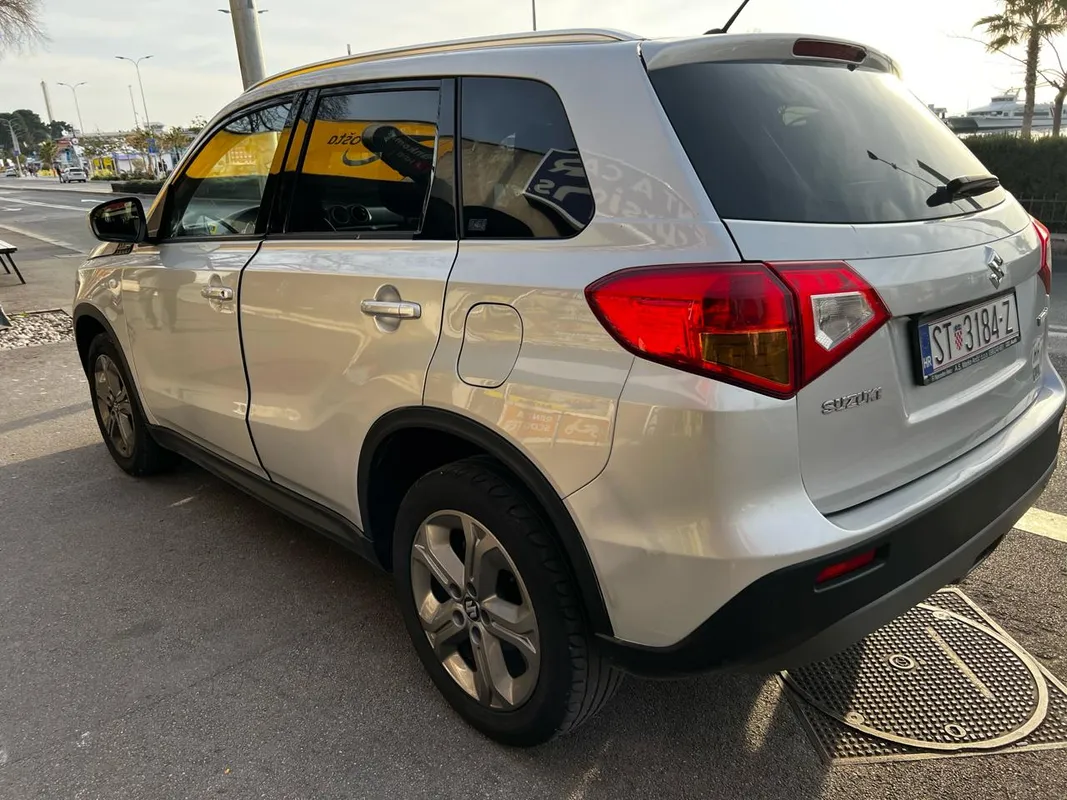
In February 2024 we rented a car for a couple of days in Split through TakeCars website, everything was great! We originally ordered a Suzuki Swift - but in fact the manager offered a Suzuki Vitara without extra charges. The car turned out to be excellent - clean and comfortable, although we heard a lot of stories about the local outdated fleet. The rental staff explained everything clearly in English, gave advice about local peculiarities and what to do in emergency situations. When renting a car they made a video recording of all the damage and returning the car was just as easy and quick. The roads and views were great too, so we had the best experience of the trip - definitely recommend it!
Old Town parking and the Riva
Diocletian's Palace and the streets inside the walls are fully pedestrianised — you can't drive in. Parking outside runs in zones: the closer to the Riva, the higher the rate and the shorter the maximum stay.
A guest from Edinburgh parked at the Riva for what they thought was a quick coffee, came back forty minutes later to a ticket for an unactivated session. The app sits free at the Apple/Google store — set it up before you arrive, not after.
Zone 1, the central streets, runs $2.70–3.30 an hour with a 2-hour cap. Zone 2 — the belt around the centre — is $1.60–2.20 an hour with no hard limit. Zones 3 and 4 are cheaper, the outer streets are often free. Paid hours are 7 am to 9 pm weekdays, 7 am to 2 pm Saturdays, free on Sundays in most zones. Pay at the meter, by SMS or through the Split Parking app. The Riva itself and the tightest stretch of Zone 1 run $4–5 an hour and cap at two hours — strictly a drop-and-go format.
The pattern that works for a multi-day stay is a hotel with its own parking, or a covered garage at $20–25 a day, then walking. Old Split is compact: Marjan, the Green Market, Bačvice beach — everything is 10–15 minutes on foot. If you're staying inside the walls and arriving by car, ask reception in advance for the unloading point — vehicle access is regulated and usually opens only for a short morning window.
Ferries to Hvar, Brač and Vis
Split is one of the busiest ferry ports in the Mediterranean. Jadrolinija and Krilo run regular car ferries from Trajektna luka to the nearby islands, and Croatia is one of the few European countries where a rental car travels on the ferry with no extra paperwork. Ferries to Hvar dock at Stari Grad — Hvar Town is a further 20-minute drive across the island. There's no car ferry to Hvar Town itself. Brač is reached at Supetar in about 50 minutes.
For a single-day jump to Hvar Town or central Bol, leave the car in Split and take the Krilo passenger catamaran. Inside both old centres the car is more nuisance than help, and you skip the car-deck booking entirely.
In peak season, arrive 1–2 hours before departure for the car deck — without an online booking, slots fill quickly. Fares are seasonal: a passenger car with driver runs about $40–55 to Hvar and $30–45 to Brač each way.
A couple of guests in July tried to roll up an hour before the 14:00 to Supetar without an online slot. They watched two earlier sailings load and then had to wait until the 19:30. The Jadrolinija app removes half the summer stress.
Foot-passenger fares are $7–10 each way; if you only need a day on the island, that's the cheapest way to go.
Rates in Split vary throughout the year depending on the season and the rental length.
 How expensive is renting a car in Split: average daily rates for a one-week car rental, across all car classes.
Why book on TakeCars

-
Real reviews on the actual car
You see the supplier, the host you're renting from, and the experience of past guests on that specific vehicle.
-
Transparent terms for Split
The deposit amount, payment method and exactly what the insurance covers are visible before checkout — no surprises at the desk.
-
City delivery and on-the-spot support
Hotel delivery in Split or Trogir, free cancellation up to 7 days, and direct messaging with the supplier.
Day trips and the road south
Three directions stand out from Split. North on the A1 to Plitvice, Krka and Zadar; south over the Pelješac Bridge to Dubrovnik with no Bosnian transit; and inland to Mostar across the border.
The Pelješac Bridge has reset Dalmatian planning. Split to Dubrovnik now runs entirely inside Croatia — about three hours, no two border checks, no Green Card. Ston and a winery stop fit naturally on the way.
Split to Dubrovnik via the A1 and Pelješac is around 230 km and three hours without serious traffic. For a one-way drop, the fee with local suppliers is typically $110–270 — usually cheaper than returning the car to Split and burning a travel day.
For Bosnia, the natural day trip is Mostar: about 2.5 hours via the A1 and then over the border. Bosnia is outside the EU and Schengen, so a Green Card and explicit written permission from the supplier are required. Not every car in the fleet is cleared for Bosnia — message the host before booking, and arrange the Green Card before departure, not at the crossing.
To the north, the classic day trips are Krka waterfalls (80 km, an hour each way) and Plitvice (250 km, 2.5 hours). For Plitvice between November and April, ask about winter tyres — the upland section can require them.
Frequent Questions
SPU is 25–27 km west of Split, closer to Kaštela and Trogir than to the city itself. The drive takes 25–35 minutes via the D8 or A1, depending on traffic. In peak season and at cruise-arrival hours, allow an extra 15 minutes.
Most suppliers add 10–20% over the base rate for an airport pickup. If your trip is longer than five to seven days and most of it is in Split, picking up the car later in town can be cheaper. For short visits, collecting at the airport is simpler.
No, Diocletian's Palace and the central streets are fully pedestrianised. Vehicle access is regulated and only opens for short delivery windows. If you're staying at a hotel inside the walls, agree the unloading point with reception in advance.
Zone 1 runs $2.70–3.30 an hour with a 2-hour cap. Zone 2 is $1.60–2.20 an hour with no hard limit. Zones 3 and 4 are cheaper, the outer area often free. Paid hours are 7 am–9 pm weekdays and 7 am–2 pm Saturdays, free on Sundays in most zones. Pay via meter, SMS or the Split Parking app.
Parking right by the Riva and Zone 1 is $4–5 an hour with a 2-hour cap. It's a format for short stops — dropping a guest, picking up bags. For longer stays, move out to Zone 2 or use a covered car park at $20–25 a day.
Yes — Croatia is one of the few European countries where this is standard. From Split's port, Jadrolinija and Krilo accept rental cars on the routes to Hvar (Stari Grad), Brač (Supetar), Šolta and Vis. In peak season, book the car deck in advance through the Jadrolinija app.
There's no car ferry to Hvar Town itself — only to Stari Grad on the north of the island, with a 20-minute drive on. For a Hvar Town day, leaving the car in Split and using the passenger ferry is usually better — the town centre is mostly pedestrianised.
In peak season, around $40–55 one way for a passenger car with driver to Stari Grad. In shoulder season, roughly $30–40. A foot passenger pays about $7–10. Booking online for peak sailings is recommended — slots can sell out a day or two ahead.
About 230 km and roughly 3 hours without serious traffic. The route runs along the A1 and over the Pelješac Bridge, with no Bosnian border crossing. This is now the standard route — faster, no Green Card, no border queues.
With local suppliers, typically $110–270; international chains charge more. It often saves a day and the return-leg mileage compared with returning the car to Split. Check the exact fee with the supplier before booking.
About 2.5 hours each way via the A1 and the Bosnian border. Bosnia is outside the EU and Schengen — you'll need a Green Card and written permission from the supplier. Not every car is cleared for Bosnia, so confirm at booking.
Krka waterfalls are 80 km away, an hour each way — an easy day trip. Plitvice Lakes are further: 250 km and 2.5 hours via the A1. Between November and April, ask about winter tyres for the Plitvice route — the mountain section can require them.
It depends on the supplier. Some international chains run 24/7 with a fixed late-night surcharge; some local suppliers close at 11 pm. For a late flight, book a 24-hour operator and confirm the late-night format before the day of arrival.
Yes. The Split → Zagreb one-way fee is usually $55–165, the route runs entirely on the A1 — about 405 km and 4–4.5 hours of driving. It's worth doing if you fly out of Zagreb — saves a day and the return drive.
The lowest rates are November to March: economy from $16–22 a day. The best balance of price and weather is May, early June, September and early October. July and August are the peak — prices rise by half to double, and economy cars are often booked 6–8 weeks ahead.