


Pickup


Return
🎁 Use code WELCOME3 during checkout to get a discount on your first booking with us. Enjoy! ☀️

Car rental in Rethymno puts central Crete within an hour of either island airport and turns the rest of the week into a choice of gorges, beaches and mountain villages on your own clock. The Old Town stays pedestrian, the highway links you to Chania and Heraklion equally, and the car waits for the moment you want to use it.
The town sits midway along the north coast: roughly 60 km from Chania (CHQ) and 80 km from Heraklion (HER). From either airport you drive in by lunchtime and then choose — gorges and beaches to the west, or Knossos and the southern mountains to the east.
A couple landed at CHQ at half past eleven at night. Car parked at the exit, contract done on the bonnet in five minutes, off to their Old Town apartment while the global chains' shuttle queue was still forming.
Many arrivals plan only beach days. Forty-eight hours in they want to see Samaria or Preveli, and without a car that becomes a puzzle of KTEL timetables and twice-daily connections.
Pickup and drop-off
Local Rethymno suppliers usually work from more than ten pickup points: Chania (CHQ) and Heraklion (HER) airports, Rethymno Port, the town centre, hotels and villas, and the resort strip along the north coast — Bali, Panormo, Georgioupoli, Platanias and Kavros. Share your flight number when you book and the car will be at the gate even if your arrival slips.
One-way within Crete is normal for island-based suppliers. Picking up at one airport and dropping off at the other is widely allowed, and if you prefer to rent a car in Heraklion and return it in Rethymno (or the other way round), most companies will accommodate it with at most a small fee. The same applies to car rental in Chania before a flight out of CHQ.
A family flying in at 2 a.m. agreed a €20 night fee in advance. The host was waiting at the CHQ exit, keys in five minutes — cheaper than a taxi to Rethymno would have been, and the kids slept through the handover.
Most people return the car where they picked it up. But on Crete one of the most popular itineraries is land at one airport, spend a week on the island, and fly home from the other.

Volkswagen Up! in Greece
The rental went great, no problems at all. The only thing that could be improved is telling about the traffic cameras. Drove according to the signs, not exceeding, but the flow was going faster, although there were cameras. I don't understand why

Toyota Yaris in Crete
Car, service and communication were excellent. When our car got damaged by another one while parked at night, Nikos was handling everything in a very professional and impeccable way. I would definitely rent again from him.

Toyota Yaris in Crete
The service is great. The car was driven to the hotel at the appointed time. The owner is a nice young man, he answered all the questions regarding the peculiarities of driving rules in Crete in English. The lease was filled out very quickly, without wasting time. Toyota Yaris is not new. The body and the worn interior are slightly scratched. Despite the aesthetic appearance, the technical condition is normal. Does not stall, the clutch does not slip, the brakes are sharp, the steering wheel does not lead, the wheels do not knock. Rented for two, for 7 days. Dashed off more than 1000 km in the mountains and cities, we were very pleased with the comfort of the trip. We will be in Greece, we will definitely turn to the guys again for services.

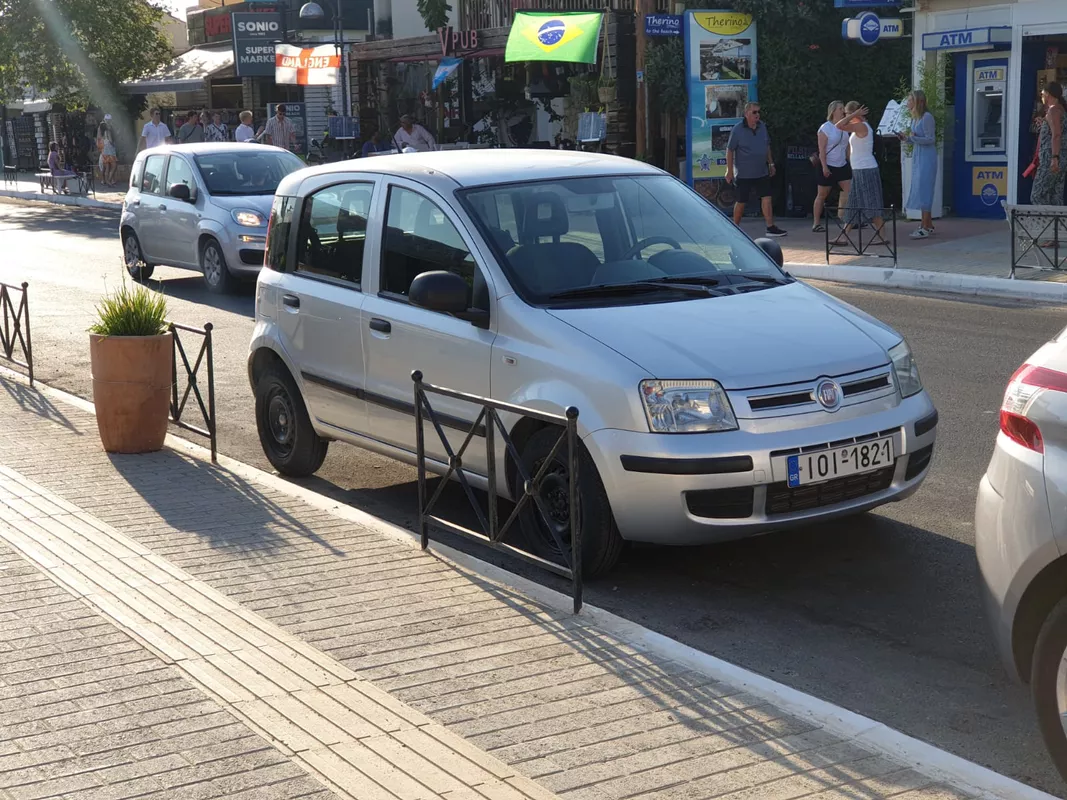
Fiat Panda in Crete
Not so good in the end i received fiat panda i want to pay with credit card in the end i paid cash and you charged me 40 euro for return the car in the night but no one was ther they said me to leave the car near the airport

Volkswagen Polo in Crete
Instead of the Volkswagen Polo, another car was provided. Everything was fine, the car was provided on time, clean, no problems arose
Opel Agila in Crete
Everything went perfectly, no problem! Great service and car! I recommend you to my friends who will be in Crete in the future.
What TakeCars offers

-
Super CDW with no deposit
Cash in euros or a debit card is accepted by our local Crete suppliers — no credit-card hold required.
-
10+ meeting points
Rethymno Port and town centre, Chania and Heraklion airports, plus hotels, villas and resorts in Bali, Panormo, Georgioupoli, Platanias and Kavros.
-
All-inclusive pricing
No airport surcharges, young-driver add-ons or one-way fees appearing at the desk that weren't in the quote.
Parking in Rethymno
Old Town is car-free
You cannot park inside Rethymno Old Town at any hour — the narrow Venetian streets are a protected pedestrian zone and towing operates around the clock. Cars are left on the lots around the perimeter.
Main car parks
The two go-to options are the lot beneath the Fortezza fortress on the north side, and the car park near the Public Garden on the south. Reported rates run around €15–20 per 24 hours in season, and both sit roughly ten minutes' walk from the harbour and Old Town gates.
A guest dropped a passenger on a double yellow near the Old Port "just for a minute" and came back to a tow-truck hooking the car up. Recovery, fine and a wasted afternoon — for a thirty-second stop.
Blue-line bays
Blue-painted bays are paid, time-limited parking — you buy a ticket from the machine or an app and put it on the dash. Signs always override the markings, and around the Old Town, port and waterfront the rules change from street to street. Even experienced drivers parking on the unfamiliar side scrape an alloy against the kerb; don't hug the edge too closely on a freshly collected car.
Frequent Questions
A: You can't — the Old Town is a pedestrian zone with parking banned at all hours. Use the lots around the perimeter: the Fortezza fortress car park on the north side, the Public Garden lot on the south, or the waterfront bays. Both main lots are about €15–20 per 24 hours in season and ten minutes' walk to the Old Port.
A: Blue-painted bays are time-limited paid parking — you buy a ticket from a nearby machine or an app and display it on the dash. Around the port and Old Town, signs override markings and rules change street to street. Clamping and towing are enforced, so pay even for a short stop.
A: Yes — it's one of the most common itineraries on Crete. Suppliers allow pickup at CHQ or HER and drop-off in Rethymno town or port, either free or with a small one-way fee depending on the rate. Confirm the fee at booking rather than discovering it at the desk.
A: Rethymno sits roughly midway on the north coast. Chania (CHQ) is about 60 km away — an hour by highway. Heraklion (HER) is about 80 km, around 1 h 15 m. The road between the two is a fast dual-carriageway, only narrowing as you approach Heraklion itself.
A: Almost never. Crete contracts forbid taking the car off the island because the insurance excludes ferry transport. If you're moving on to mainland Greece or another island, drop the car in Rethymno or at the port and pick up a fresh rental at the next destination.
A: Yes — Rethymno Port is a standard drop-off and suppliers will meet you there. The car itself doesn't go on the ferry; you hand it over and walk on board. Allow 15–20 minutes for the paperwork before sailing.
A: Yes — Rethymno suppliers work with 10+ delivery points including hotels, villas, the town centre, the port and the resort strip — Bali, Panormo, Georgioupoli, Platanias and Kavros. Delivery to nearby spots is usually free; outlying locations carry a small fee. Confirm the address and time in advance.
A: Yes. The desks at CHQ and HER cover late flights, and town and port suppliers arrange meet-and-greet for out-of-hours arrivals, sometimes with a small night fee of around €15–30. Provide your flight number when booking so the team can track you even if you're delayed.
A: Yes — its central position makes day-trips practical both west (Chania, Samaria, Elafonissi) and east (Heraklion, Knossos). The south coast via the mountains — Preveli, Arkadi — is just over an hour away. The Old Town is walkable, so you only really need the car for excursions.
A: Easily — Heraklion is around an hour east on the highway and Knossos is just past the city. Don't drive into central Heraklion; park at the palace itself, which has a large paid lot. There-and-back with lunch and a slow look around fits a relaxed day.
A: For the town and the north-coast highway a compact petrol hatchback is plenty — cheap on fuel and easy in narrow lanes. If your plans include mountain villages and rougher tracks, a small SUV gives more clearance. A full 4×4 is only worth it if you genuinely intend to leave the tarmac.
A: Between CHQ, HER and the main towns it's often free or a small fee — local suppliers operate island-wide. Drop-offs at remote spots such as Sitia or Paleochora cost more, but the figure is fixed. Always confirm the one-way fee at booking rather than assuming it's included.
A: Many Crete contracts exclude unpaved roads, meaning damage there isn't covered even with CDW. Paved access to beaches like Preveli is fine. For genuinely off-tarmac coves, check the terms in advance and consider a small SUV — and bear in mind that a puncture on a rough track is the most common breakdown call.
A: On the coast, no — winters are mild. But the Psiloritis and Lefka Ori ranges see snow from December to March, and roads to villages such as Anogia may need chains or close after a fall. Check the forecast before a winter mountain drive and ask the supplier what's in the boot.
A: There's no Uber on Crete. KTEL intercity buses link the main towns reasonably well but reach beaches and villages only two or three times a day. You don't need a car for the Old Town itself, but without one you'll miss the gorges, wild beaches and mountain villages that draw most people to the island.