


Pickup


Return
🎁 Use code WELCOME3 during checkout to get a discount on your first booking with us. Enjoy! ☀️

Car hire in Ras Al Khaimah is the backbone of a smooth holiday here. There is no metro, buses are sparse, and the highlights — Jebel Jais, Al Marjan, the mountain wadis and the beach resorts — sit spread across the emirate. A car turns the whole map into a single trip rather than three separate taxi negotiations.
A day on a hire car in RAK costs less than a return taxi to the zipline, and that is before evening traffic on the E311 starts grinding.
Most guests fly into DXB and drive up themselves — about an hour on the E311. RKT mainly handles Air Arabia, Wizz Abu Dhabi and a handful of RAK Airways flights, and you can collect the car there too. Same vetted partners either way, with real reviews and a price that includes everything before you click book.
Prices, deposit and payment
The RAK rental market is narrower than Dubai's, so the average rate sits a touch higher. Seasonal spikes are mild here, with the exception of the winter holiday window.
How much does it cost
In low season an economy car starts at ~$19 (~70 AED), compact $30–55, mid-size SUV $55–122, premium and luxury $165–680 a day. Weekly and monthly tariffs cut the per-day rate by 20–40%. A monthly economy tariff often includes insurance, servicing and sometimes unlimited mileage.
RAK fills up over Christmas and New Year — the Al Marjan beach resorts go first. For those dates, book the car two months ahead.
Deposit and payment
The deposit follows the standard UAE setup: 1,500–3,000 AED for economy, 3,000–10,000 AED for SUV and premium, released within 2–30 days. Under the 2024 rule the partner must release the hold within 30 days. No credit card is no problem — partners accept debit or cash, sometimes with a service fee of around 5%.
A family staying on Al Marjan ran the economy down to a quarter-tank and then realised the nearest ADNOC was a 12-minute detour back toward town. Top up before you head into the mountains or the wadis.
A good partner asks about your itinerary at pickup and points out the last stations along the way — worth two minutes on the forecourt.

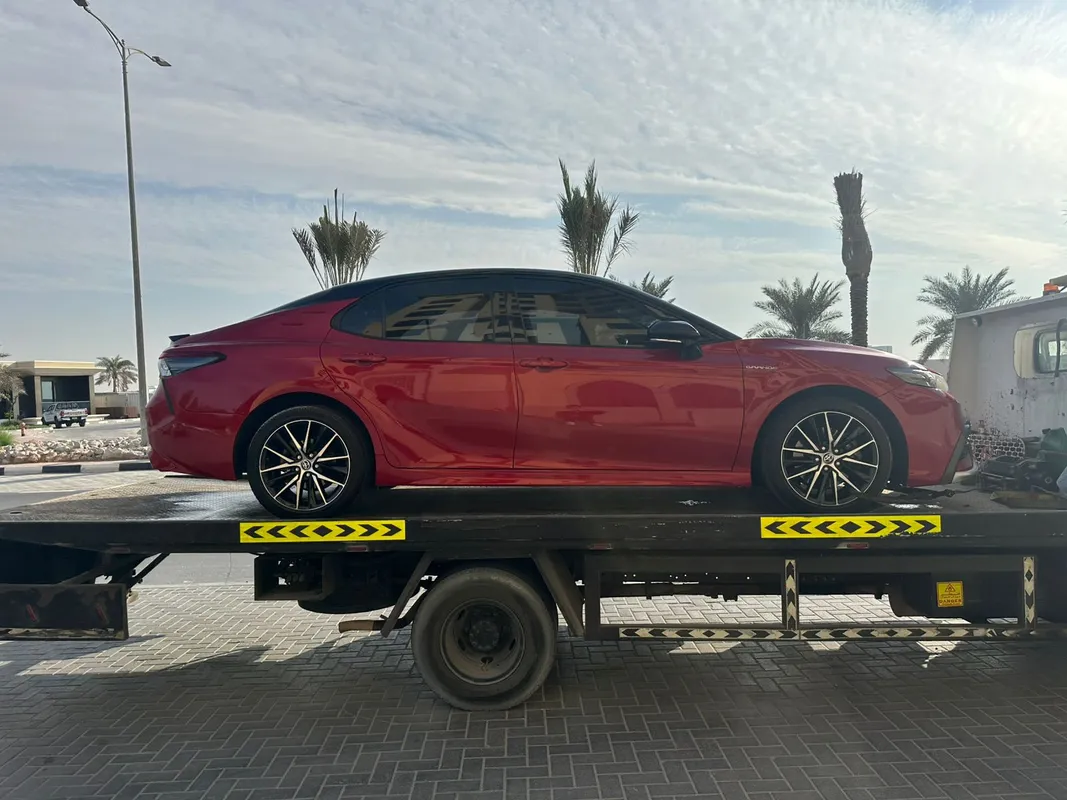
Toyota Camry in the UAE
All good, I will take more next time
Toyota Corolla Cross in the UAE
everything was good, the only thing was that the car was not Cross, but a regular sedan 🙂 the car was brought on time, clean, with a full tank, the deposit was not much long to return...in principle, if it will be necessary to order a car again, I will order it again through you.
Nissan Patrol in the UAE
Great company, great service! Work with a variety of payment solutions The cost is very reasonable. Picked up a Nissan Patrol in May 2025 with delivery and drop off in Ras Al Khaimah. The car is in excellent condition. Representatives and managers are polite, everything is on time and on schedule. Recommended!

Hyundai i10 in the UAE
Impressions are not good from the rental, gave Nissan Sunny, the stereo did not work, the car barely drove. It was not a good rental.
Nissan Kicks in the UAE
Everything went fine, the car was replaced with a better one. The deposit was returned exactly on time, in full. I recommend it to everyone
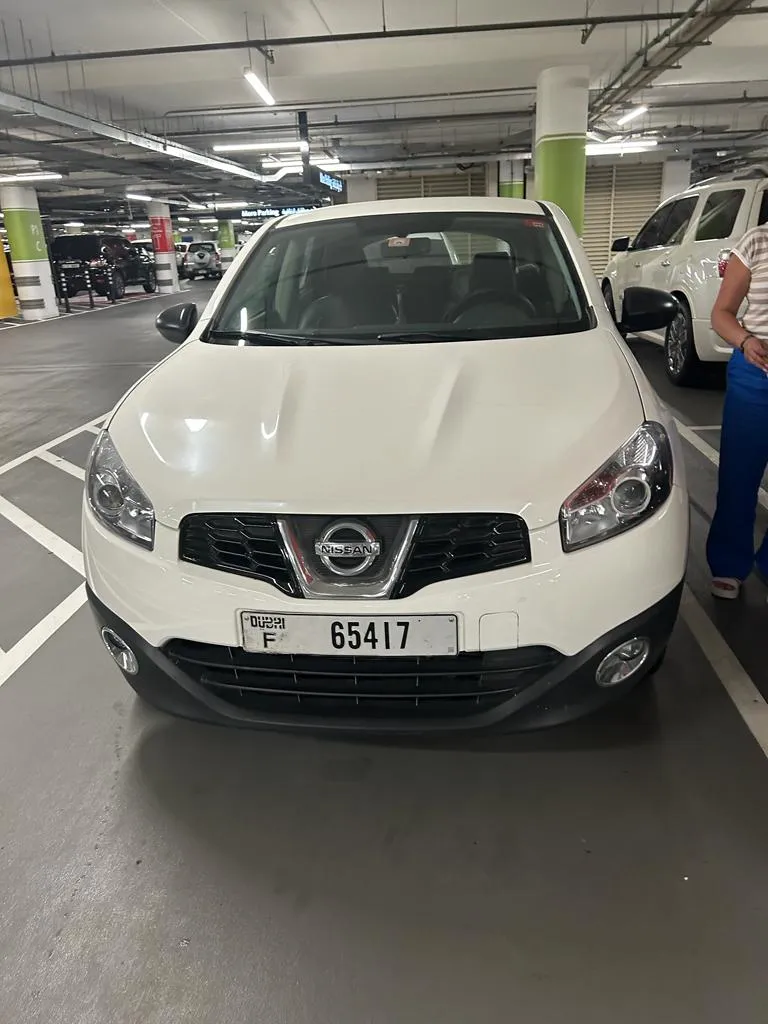
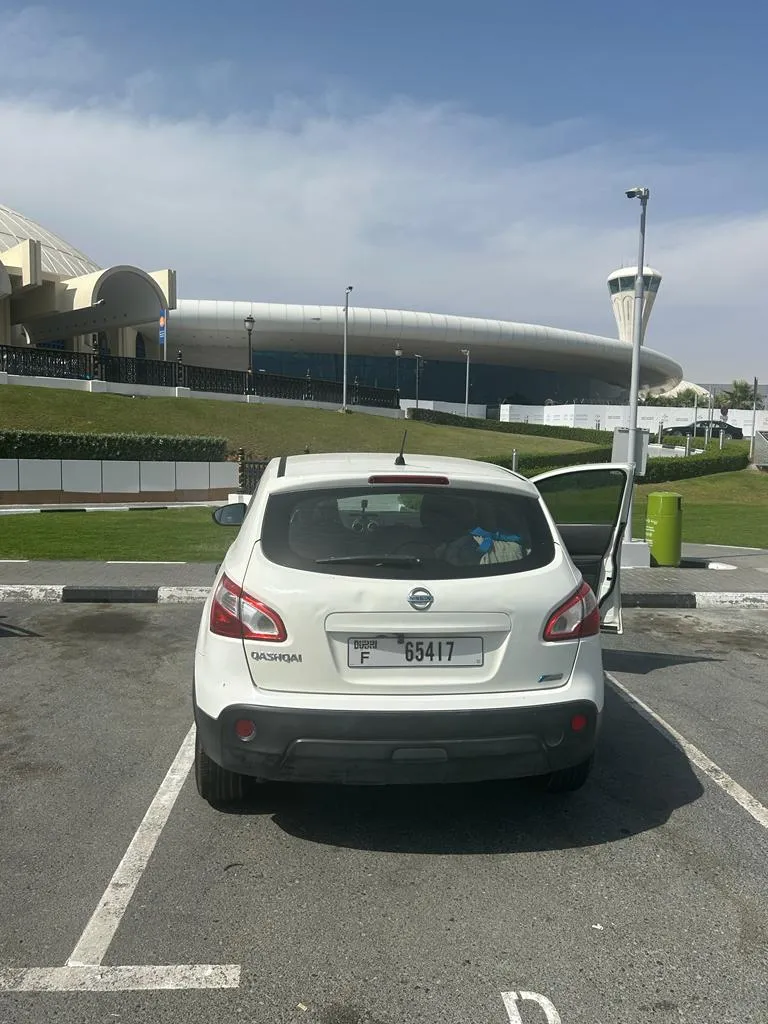
Nissan Qashqai in the UAE
Everything is fin
Roads, speeds and tolls
The emirate of RAK has neither Salik nor Darb — a rare luxury in the UAE. Toll gantries only appear when you head into Dubai: 1–3 Salik points at $1 (4 AED) each. The RAK–Sharjah route is fully toll-free, and RAK–Abu Dhabi adds Salik in Dubai plus Darb at peak hours.
RAK is the one emirate where a whole trip can pass without a single toll gantry, provided you stay clear of Dubai and the capital.
Speed limits in RAK sit slightly under Dubai's: 60–80 km/h in town, 100–120 on motorways. The mountain road up to Jebel Jais is capped at 80 km/h — the switchbacks are tight, and rushing is not the point. Crucially, RAK has no +20 km/h camera tolerance like Dubai's: cameras trigger on every kilometre above the sign. Most parking in RAK is free — on the streets, at malls, at hotels. Paid zones are rare and tend to sit in the tourist quarters near the corniche.
A couple from Manchester missed the no-tolerance rule on their first day and picked up two fines on Sheikh Mohammed Bin Salem Road before lunch. The cameras pay attention.
The road up to Jebel Jais is a pleasure in itself: fresh tarmac, smooth bends and viewpoints every few kilometres. But 80 km/h is the working limit on the climb, not a decoration — and the cameras stand precisely on the most photogenic bends.
Rates in Ras Al Khaimah vary throughout the year depending on the season and the rental length.
- January
- February
- March
- April
- May
- June
- July
- August
- September
- October
- November
- December
- Jan
- Feb
- Mar
- Apr
- May
- Jun
- Jul
- Aug
- Sep
- Oct
- Nov
- Dec
 How expensive is renting a car in Ras Al Khaimah: average daily rates for a one-week car rental, across all car classes.

-
1. Compare cars in Ras Al Khaimah
We make it easy to compare prices and rental terms in Ras Al Khaimah so you can rent a car more easily
-
2. Secure your online booking
Reserve your vehicle with a small deposit, and we guarantee it will be waiting for you upon arrival in Ras Al Khaimah.
-
3. Share your rental experience
Help others make the right choice when renting cars on TakeCars Ras Al Khaimah.
Routes, Jebel Jais and trips beyond RAK
What to see in the emirate
Jebel Jais is the highest peak in the UAE (1,934 m) — a 1.5-hour switchback drive from central RAK. Entry and parking are free, with restaurants, viewpoints and Jais Flight — the world's longest zipline (2.83 km, ~$227) — at the top. Al Marjan is a chain of artificial islands with beach resorts; Wynn opens here in 2027 as the UAE's first integrated casino resort. Wadi Shawka and Wadi Bih are mountain riverbeds with natural pools and easy walks.
Plan 4–5 hours for Jebel Jais including the drive and lunch at the top. A warm jumper is mandatory — the summit is roughly 10 °C cooler than RAK below.
Trips beyond RAK
RAK to Dubai is 85 km, around an hour on the E311 — the obvious day trip for shopping and the Burj Khalifa. RAK to Fujairah is 95 km through the Hajar mountains on the E18, dropping you on the Indian Ocean coast. The Oman border (Musandam peninsula) sits 30 km north, but most partners do not allow Oman crossings on the rental: the practical option is to drive to the Tibat crossing and book a separate tour from there.
Frequent Questions
A regular sedan or compact SUV is fine — the tarmac is flawless along the entire route and the bends are smooth. Four-wheel drive is not required. What matters is solid brakes and a healthy air conditioner: each climb and descent takes around 45 minutes, and the engine works hard. Top up the tank before leaving RAK — there are no petrol stations on the mountain itself.
The zipline runs by advance booking — in high season, reserve a slot 1–2 weeks ahead. The price is around $227 per person, with a 50–150 kg weight limit. The flight lasts 2–3 minutes at 120–150 km/h, with riders strapped face down. Parking sits right at the launch deck on the mountain.
The rule is simple: never enter a dry riverbed during or after rain, even if the sky brightens in patches. Check the forecast and local news before heading out. April and early November are the riskiest weeks, with occasional storms. When the weather is settled, Wadi Shawka and Wadi Bih are safe and beautiful.
Yes, a one-way Dubai to Ras Al Khaimah is a standard option, with a surcharge of $30–55 depending on the tariff. It works well for a fly-in DXB and fly-out RKT combination — especially with an Air Arabia flight home. Some monthly tariffs include the option for free, so confirm at booking.
The last filling stations are inside RAK itself and around the junction with the Jebel Jais Road. There is no fuel on the mountain — the next stops appear only on the descent back into RAK. A standard run (central RAK → summit → central RAK) uses roughly half a tank on an economy car.
No. The +20 km/h buffer only applies in the emirate of Dubai. In RAK the cameras trigger on every kilometre over the sign. The Jebel Jais road is capped at 80 km/h — that is the working limit on the switchbacks, not a margin. Cameras are placed precisely on the most photogenic bends.
Around 85 km and about an hour on the E311. In peak hours (07:00–09:00 and 17:00–19:00) the trip can stretch to 1 hour 30 minutes, especially on the way into Dubai. Add a buffer for DXB flights. The route passes 1–3 Salik gantries (~$3–4 each way).
RKT is a small airport — around 1.5 million passengers a year. Major partner desks sit in the terminal. With our partners the setup is usually different: the car is delivered to the terminal exit by your flight number. For late-night arrivals, confirm at booking so a manager is on shift.
Parking on the Al Marjan islands is mostly free: at beach hotels for guests, at public beaches and at retail spots. Paid zones appear at some new premium-segment hotels and may need validation at reception. Around the future Wynn site (opening 2027) the parking layout is still being shaped.
Most partners do not allow border crossings on the rental — the insurance does not extend beyond the UAE. The Tibat crossing is 30 km north; the realistic option is to leave the car on the UAE side and take a Musandam day tour with a local operator.
Down in RAK it can be +30 °C, while the Jebel Jais summit sits at +18–20 °C and gets cooler in the evening. A light jumper or windbreaker is essential, and closed shoes help on the viewpoints. If you are doing the zipline, leave warm layers in the car — they hand out a jumpsuit at the start.
No, off-road and dunes are not covered by insurance — that applies to economy and SUVs alike. For desert safaris around RAK, organised tours work well (Al Wadi Desert, Bedouin Oasis): their own 4x4, an experienced driver and usually a campfire dinner. You leave the car at the hotel or camp for the day.
If your flight goes to DXB, that is almost always the better choice: international routes are cheaper into Dubai, and rentals there run about 10–15% lower than in RAK. SHJ works well for budget Air Arabia flights — only 70 km and 50 minutes to RAK with no Salik. RKT really only suits a direct flight into RAK on a short rental.
Around 95 km and 1.5 hours through the Hajar mountains (E18 + E89). The road is scenic — switchbacks, gorges and views of both coasts, with several photo stops and small cafés. There are no toll points. Fuel up in RAK; stations are sparser on the eastern side.
The tarmac is flawless and the markings are fresh, but speeds should sit even below the posted 80 km/h after dark: mountain mist and dew make the bends noticeably slick. The summit viewpoints are lit, but coming back to RAK after midnight is not ideal — oncoming traffic is sparse, and any help would take longer to reach you.