


Pickup


Return
🎁 Use code WELCOME3 during checkout to get a discount on your first booking with us. Enjoy! ☀️

Car hire in Barcelona is the natural base for half of north-eastern Spain — Costa Brava, Montserrat, the Penedès wineries and the Pyrenees all sit within a 200 km radius, and El Prat (BCN) is one of Europe's better-stocked rental hubs.
The city itself is best explored on foot. Narrow Gothic streets, one-way systems through the Eixample, scooters everywhere, parking as a task in itself — most customers don't take a car for Barcelona itself, they take it to escape it. The metro T-Casual at €13 for ten trips covers the centre neatly; the rental handles everything around it.
A couple from Manchester picked their car up the morning of their Costa Brava run and dropped it back the same evening. Three days of city, one day of car — about a third of what a full-week hire would have cost.
Most of our Barcelona bookings end up on the AP-7 to Costa Brava or the C-58 to Montserrat. The bus options there are either very long or non-existent.
Hire a car for the city, or just for day trips?
This is probably the single most important question to settle before you book. Barcelona is one of those European cities where you don't need a car day-to-day. The metro covers the centre and the suburbs, public transport runs to schedule, and Uber, Bolt and standard taxis all operate.
Parking in the centre is either the paid blue zone (€2.50–4.50 per hour, usually capped at 2–4 hours) or an underground car park (€3–5 per hour). Green zones are residents-only — fines come quickly. Since 2021 the citywide speed limit is 30 km/h on most streets.
A car starts to earn its place when you've planned at least one full day out — Costa Brava, Montserrat, Girona, Sitges, the Pyrenees. A common pattern is to collect the car at El Prat on the day of the trip and drop it back when you return.
If you've got four days in Barcelona and one of them is Montserrat, don't take the car for all four. Pick it up for 24 hours on the day — roughly a third of the cost.
Uber, Bolt and Free Now move around the city much like regular taxis. Three short rides a day often beats paid parking, fuel and the traffic.

Mercedes-Benz Viano in Spain
Great company! They delivered the car to my rental apartment right on time. I returned the car at the Barcelona airport. The price was reasonable. The paperwork was standard. Thanks!
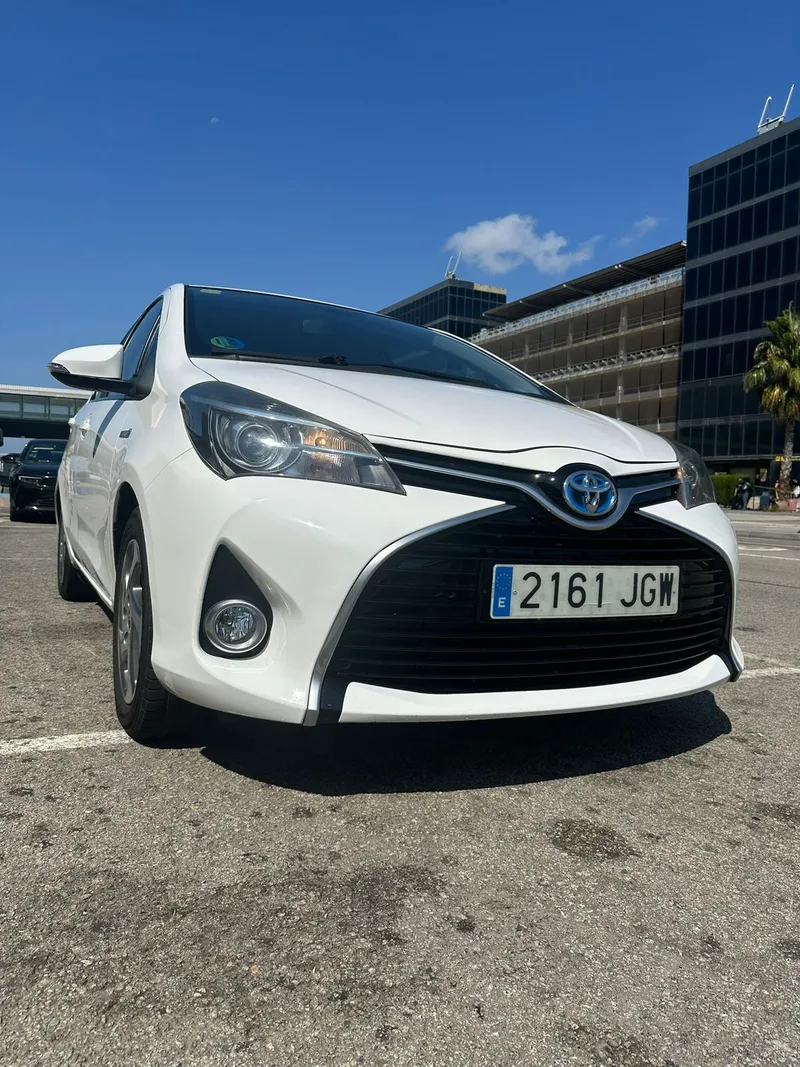
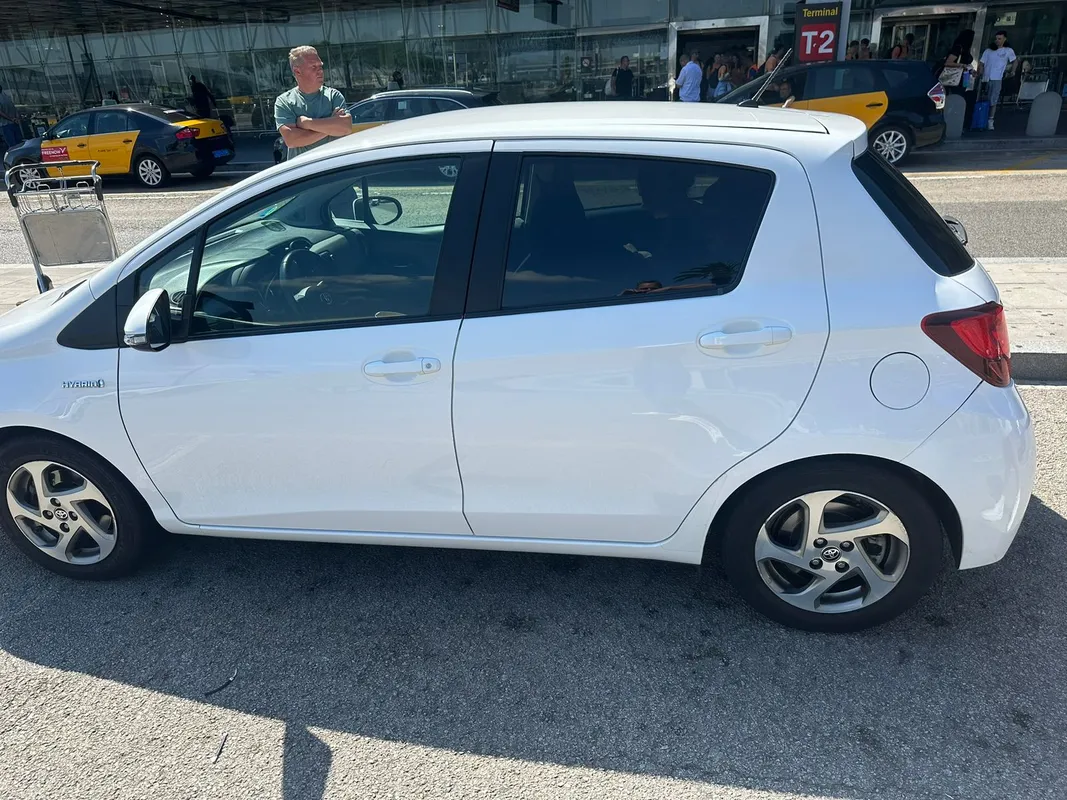
Toyota Yaris in Spain
Everything was fine with me. The lessor provided the car on time, and even waited for about 40 minutes, as the flight was delayed. I handed over the car near the terminal and signed the contract without any unnecessary formalities. In general, we were welcomed as relatives. There were no problems. I liked everything on the site too. Attitude and service are excellent. 10/10.
Toyota Yaris in Spain
Everything went perfectly, quickly received the car, also without delay turned in on the way back, communication was via watsap, very happy with the interaction! Thank you for your service!
Toyota Yaris in Spain
The car was delivered on time, the car did not let me down, the delivery was also very convenient. Thank you very much to the guys

Honda HR-V in Spain
All right, thank you. The car was provided.

Mercedes-Benz Viano in Spain
Everything went well! but we expected a more recent model of car, on the website and in fact the generation of the car was different. One light bulb burned out in the process of use, but it was not critical! Otherwise everything was good, we were quickly met and handed over the car. I have no complaints about the car.
Toyota Corolla Sedan in Spain
Everything went well. The car is in good condition, the only thing is that I got it almost without fuel, the light was on... but the gas station was not far away. Everything's fine. Thank you
Honda HR-V in Spain
Actually rented a Toyota Yaris cross. Picked up in Barcelona, returned in Madrid. The car was clean.
Opel Corsa in Spain
everything went very well

Citroen C4 Grand Picasso in Spain
it's all good.

Toyota Corolla in Spain
Everything was great! The driver was punctual and accurate on time. The car fully met expectations. Thank you!

Opel Corsa in Spain
Everything went well! No remarks!
Honda HR-V in Spain
The car is excellent in excellent technical condition, the lessor showed, explained everything and was polite, also was always in touch and answered any questions I had about the car.
What to know about Barcelona's ZBE
ZBE stands for Zona de Baixes Emissions — the low emission zone. It covers central Barcelona and a band of suburbs: from January 2025 the rules were extended to Gavà, Viladecans, Sant Boi, El Prat and others. Active Mon–Fri 7:00–20:00; outside those hours and at weekends, entry is unrestricted.
Nearly all of our Spanish cars are Euro 6 with a DGT sticker (ECO or C), so they're cleared. Before driving off, check the small round label on the bottom-left of the windscreen.
Foreign-plated cars are a different matter. If you've driven into Catalonia in your own car, a French Crit'Air or German Umweltplakette isn't enough — you also need to register at the AMB Registry online (€7, one-off). Otherwise the fine is €200. None of this applies to a Spanish hire car.
If you only need to cross Barcelona — say, reaching the airport from the north — use Ronda de Dalt (B-20) and Ronda Litoral (B-10). They sit outside the ZBE and need no registration.
From February to April 2026 the ZBE is temporarily suspended due to major train disruptions in the region. Once rail services normalise, restrictions return — check the live status before you travel.
Rates in Barcelona vary throughout the year depending on the season and the rental length.
- January
- February
- March
- April
- May
- June
- July
- August
- September
- October
- November
- December
- Jan
- Feb
- Mar
- Apr
- May
- Jun
- Jul
- Aug
- Sep
- Oct
- Nov
- Dec
 How expensive is renting a car in Barcelona: average daily rates for a one-week car rental, across all car classes.
What we do for customers in Barcelona

-
Every car ships with the DGT environmental sticker
Entry into the ZBE and central Barcelona without fines and without a separate AMB registration.
-
Pickup point and conditions at El Prat are visible up front
You'll know whether you're heading to a counter in the terminal or taking a shuttle to an off-airport lot.
-
Direct chat with the supplier before you book
Ask about the access route, office hours and any payment specifics ahead of time.
Parking, fuel, fines — what to watch
Parking colour codes
The most common tourist mistake is parking on a green line. Green is residents-only, and fines come fast. Blue (zona azul) is paid for everyone — pay at a kerbside meter or via the ApparkB / AreaDUM app, usually a 2–4 hour cap. White is free, but rare in the centre. Yellow is for disabled drivers.
Sagrada Família and other landmarks
Street parking near landmarks is a lottery, especially in season. Aim for an underground car park — Saba, BSM Marina, BSM Sagrada Família — at €3–5 per hour. Or leave the car at an outer metro station and ride in on the L2 or L5.
Fuel and fines
The Spain-wide standard is full-to-full: collect with a full tank, return it the same way. Refuel away from the motorway (Repsol and Cepsa run 15–20 cents more there) at the discount stations like Ballenoil. The 50% early-payment discount on fines applies in Barcelona too.
Parking on a green line is the most frequent tourist fine in Barcelona. The kerb colour isn't always obvious at night — if in doubt, drive on a couple of streets and find a blue zone.
Frequent Questions
Uber, Bolt and Free Now operate fully in Barcelona and run side by side with regular taxis. For three or four short trips inside the city they often work out cheaper than paid parking plus fuel, without the traffic stress. A hire car earns its place when you're heading to Costa Brava, Montserrat, Penedès or further afield.
Yes, temporarily. Because of significant train disruption across Catalonia, the regional authorities relaxed the ZBE to ease pressure on roads. Once rail services return to normal — expected around April — the standard rules come back in force. Always check the live status close to your trip; the situation moves.
From 1 January 2025 the same rules apply across Gavà, Viladecans, Sant Boi, El Prat, Cerdanyola, Barberà, Badalona, Sant Joan Despí and Sant Cugat. The framework is identical to the central zone. For Spanish hire cars with a DGT sticker, nothing changes in practice.
Only if you've driven into Catalonia in your own car from another country. Online registration with the AMB Metropolitan Registry costs €7, one-off. A French Crit'Air sticker or German Umweltplakette doesn't replace it. With a hire car picked up in Spain, the DGT sticker already covers it.
Use the ring roads — Ronda de Dalt (B-20) and Ronda Litoral (B-10). Both sit outside the zone and are useful for transit, for instance reaching the airport from the north side or heading inland to the Costa Brava. No sticker or registration is required for transit on these.
Yes. Fully electric cars and most plug-in hybrids enter the zone freely. Tesla Model 3 and Model Y, alongside other EVs, are listed by major suppliers. The Catalan charging network keeps growing — Endesa X, Iberdrola and EVUN — and chargers are easy to find via app in the centre.
For most travellers, no. The Eixample, the Gothic Quarter and El Born come with narrow streets, one-way systems, scooter traffic and expensive parking. Most of our customers keep the car for trips out of town and use the metro T-Casual (€13 for 10 trips) for everything inside Barcelona itself.
Street parking close to the Sagrada Família can be unpredictable, especially in season. Aim for an underground car park nearby — Saba, BSM Marina or BSM Sagrada Família at €3–5 per hour. Or leave the car a few metro stops out and finish the trip on the L2 or L5 line.
Blue lines (zona azul) are paid for all drivers. Green lines are residents-only — tourists are fined quickly. White is free, though rare in the centre. Yellow is for disabled drivers. Red and dashed-blue lines are loading zones — never park there.
Terminal 1 (the main one) has rental desks in the arrivals area and cars in the P1 garage. Terminal 2 (lots of low-cost flights) has a smaller rental presence, sometimes via a short shuttle to P2. Off-airport brokers usually meet customers from both terminals.
On most city streets — yes, since 2021. Main thoroughfares run at 50 km/h, and the Ronda de Dalt and Ronda Litoral at 80 km/h. Speed cameras in Barcelona are unforgiving, with fines from €100 to €600. The 50% early-payment discount applies if you pay within 20 days.
It works either way. By car, the A-2 / C-58 takes about an hour, with free parking at the foot and a funicular up. The train from Plaça Espanya is just as practical. The car only wins if you're combining Montserrat with another stop in the area on the same day.
Tossa de Mar is 90 km on the toll-free AP-7 — about 1.5 hours. Cadaqués and Cap de Creus sit at 170 km and 2.5 hours and reward an overnight stay. Parking in coastal towns is tight in summer, so leave early. Many travellers stop in Girona for an hour or two along the way.
Yes — 200 km and roughly three hours through the Pyrenees. The border is in Schengen so there's no passport check, but Andorra isn't in the EU. Tell your supplier in advance, as some apply a cross-border fee of €20–40 per day. Andorran petrol is noticeably cheaper, so many drivers fill up on the way back.
Spain's 0.05% limit is strict, with serious fines that even the 20-day discount doesn't soften. The sensible plan is a designated sober driver for tasting day. Otherwise take a guided tour from Barcelona with transport included, and keep the hire car for a different day.