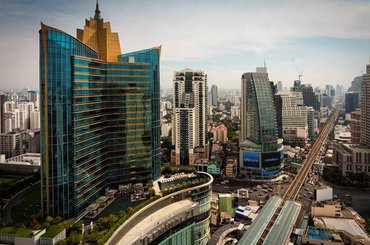
Pickup


Return
🎁 Use code WELCOME3 during checkout to get discount on your first booking with us. Enjoy! ☀️

Bangkok is, first and foremost, a starting point for routes across the country. Within the city itself a car is more burden than benefit: rush-hour traffic stands still, and the BTS, MRT and Grab cover the central spine faster and cheaper than driving.
Car rental reviews in Bangkok
Travellers leave Bangkok in two main directions. East towards the sea — Pattaya, Koh Samet, Rayong, the fruit-growing Chanthaburi and onward to the Cambodian border. West towards the hills — Khao Yai national park, Ayutthaya with the ruins of the old capital, and Kanchanaburi with the Erawan waterfall. And separately south — Hua Hin and Prachuap Khiri Khan.
Most of our guests collect at Suvarnabhumi and head out the same day. They explore the capital on the way back, on the last day — saving everyone a great deal of stress. Understanding Bangkok from the inside once is much easier than spending six evenings stuck in Sukhumvit traffic.
There are two convenient pickup points in Bangkok: Suvarnabhumi (BKK) for most international flights, and Don Mueang (DMK) for low-cost carriers like AirAsia and Lion Air, plus domestic services. Owners operate at both locations, and the handover takes 10–15 minutes right at the car — no rental desk, no shuttle bus.
What we tell guests planning to leave Bangkok the same day: don't queue for a taxi on the lower floor. Go up to the rental level, collect the car and head straight onto the M-7. You'll be in Khao Yai before you'd have reached any hotel in the central districts.
If you do end up driving in Bangkok itself
Three things to remember. The toll expressways work like this: there's a manned booth at each entry, you pay with small baht notes or coins, or automatically via an EasyPass tag. Without a tag, keep 5–10 baht coins handy. A full crossing of the city can run to $6–12, but it still beats surface streets at peak.
Shopping centre car parks are the only sensible daytime option: MBK, Terminal 21, Central World, EmQuartier, ICONSIAM. $1–2 per hour, with the first two hours often free against a shop receipt. On the street, never park against red-and-white kerb markings, even for a minute — your car will be towed, and the impound lot is on the other side of town.
Bangkok traffic runs on a schedule: 7:00–9:30 in the morning and 16:00–19:30 in the evening, it's gridlocked. Between 11 and 15, and after 22:00, there's volume but the flow is fine. If you're heading from the airport into town at peak hour, plan for three times the journey time Google Maps shows you.

Honda City in Thailand
Once again on arrival in sunny Thailand I used car rental services. At the request was booked a car Honda City, but a few days I was contacted by JOWI and informed that there is a problem with the ordered car, was offered a car of the same class, to do nothing agreed. The car itself on inspection turned out to be with a lot of cosmetic damage (which of course we fixed in the inspection report), but the technical condition of the car 100 points, we drove 5000 km for a month and the car did not deliver nikah problems. JOWI himself was always on the phone and was ready to provide the necessary assistance in case of need. The car was handed over without any problems, the process of receiving and handing over the car took a total of 15 minutes with filling out all the documents. If you want to relax and not to have problems with the car, be sure to contact. Two years in a row we use .
Toyota Yaris Ativ in Thailand
Everything went very well, the car never failed, we were satisfied, the organization is also no questions, well done, I will contact you again.

Toyota Yaris Ativ in Thailand
Everything went perfectly. The car was technically serviceable. The car did not let me down, I drove it 2000 kilometers. Everything went perfectly, the car was delivered to the airport on time. Return in Bangkok to my address on time. Overall everything is excellent.
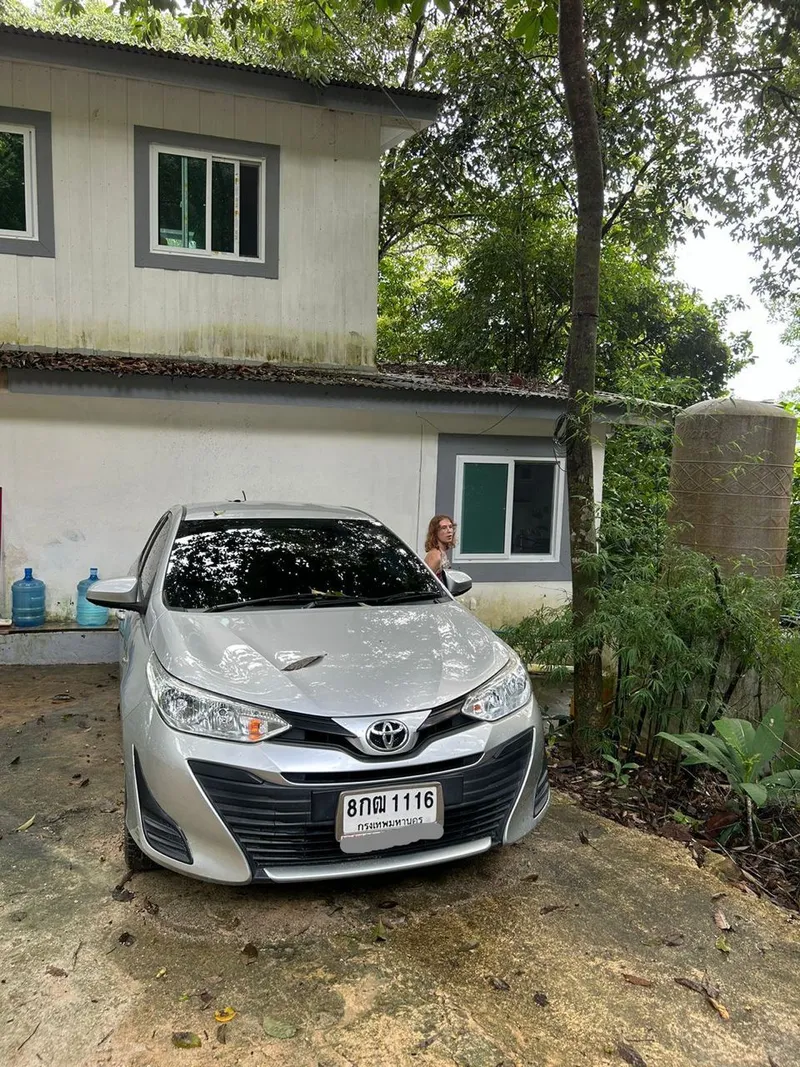
Honda City in Thailand
it's okay.
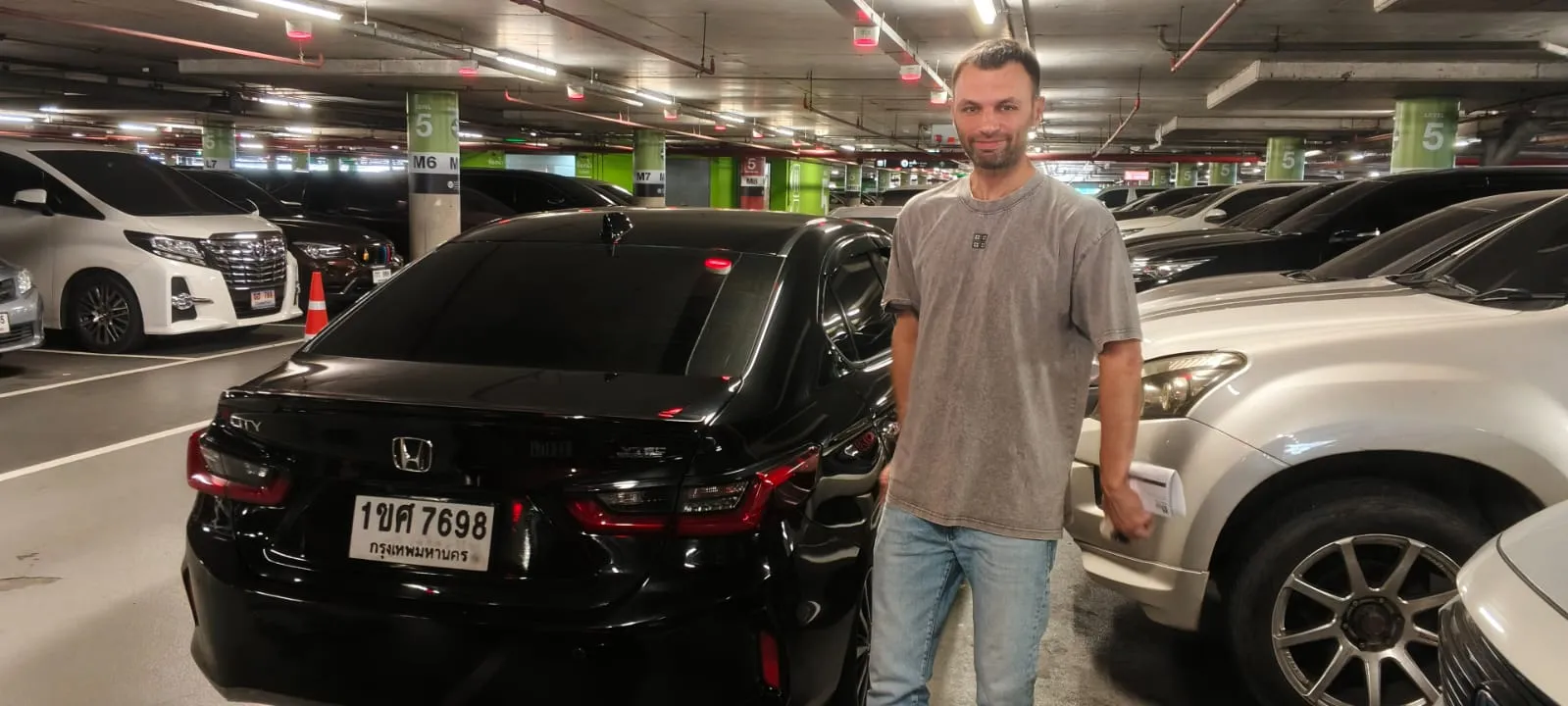
Toyota Fortuner in Thailand
Everything's great !
Honda City in Thailand
Thank you so much ! Everything went perfectly. They met me, handed over the car promptly, helped with currency exchange and buying a SIM card at the airport, did not bother me during the rental process, but were always in touch with my requests. At the end of the car was taken without jerks, returned the deposit and all this took place in a friendly and warm atmosphere, which is very important when you are abroad. The car did not let me down, worked properly, drove about 1000km, consumption about 6 l/100km, air conditioning worked properly. In general, the rating is excellent.
Toyota Yaris Ativ in Thailand
It went well.
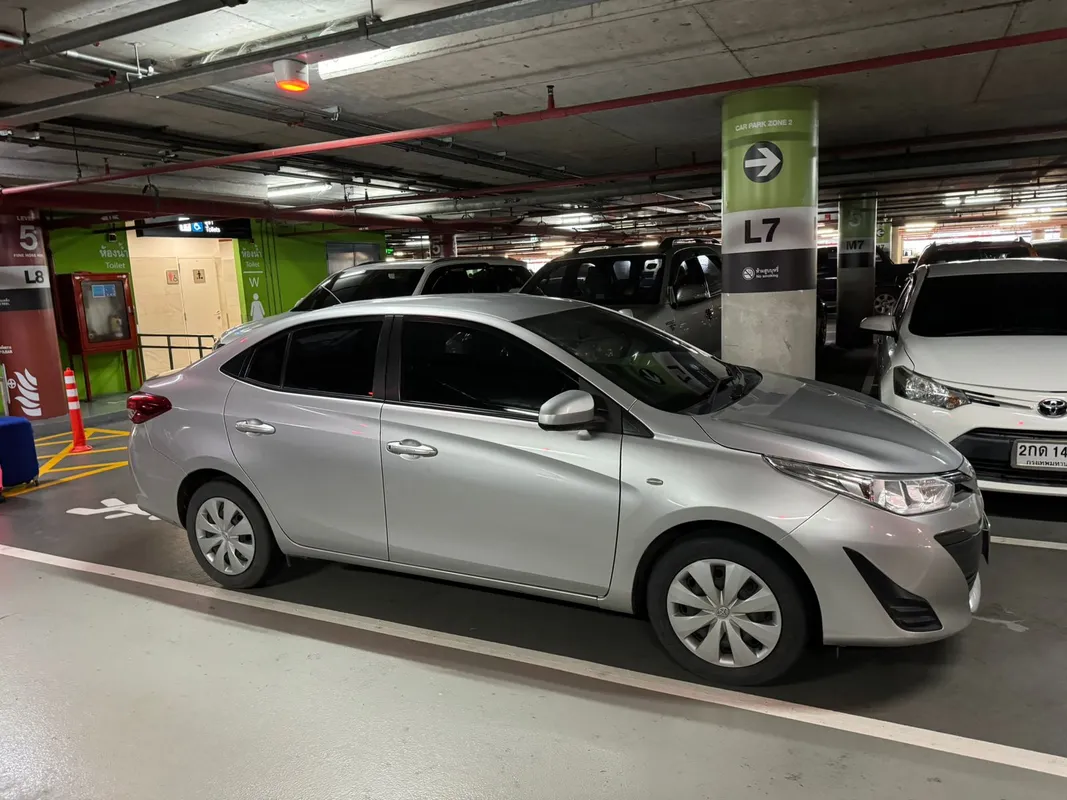

Nissan Note in Thailand
Everything's fine! Joey contacted me in advance and asked me to send a photo of my documents. He warned me that it was better to have an international license 👌🏻. He told me that I would be met at the airport with a sign. On the day of arrival I was sent a photo of the person who would meet me and the place of meeting. On arrival, the documents were drawn up, I paid the money for rent and deposit. The deposit was returned to me when I returned the car. Everything was smooth, efficient and no fuss! On the car: the car is clean, well-maintained, in good technical condition! They put a big bottle of water in the car (nice!). Thank you guys! ❤️🤗👍🏻

Toyota Yaris Ativ in Thailand
everything was great, maybe only one point I can note that the guy who handed the car to me at the airport did not speak English at all 😁 but this is a nuance, everything else is just great, fast, clear, no additional costs and problems) thank you very much!


Toyota Yaris Ativ in Thailand
It went fine. But it was a bit stressful at first to find a new car, as the client had renewed his car. And they charged 1000 baht for an incomplete tank, even though there was obviously not more than 500 missing

Toyota Yaris Ativ in Thailand
I had a good experience with this rental company. Everything was smooth and cars are in good condition. Will surely come back to rent again. Thank you! :)
Nissan Note in Thailand
Everything went great! Thank you for the great management!

Toyota Fortuner in Thailand
It went well. We liked everything.
Articles on Bangkok and trips around the region
We've put together a set of guides for travellers preparing the trip: a walkthrough of Bangkok's toll roads with routes and pricing, a Khao Yai guide with waterfalls, parking and the bicycle hire points inside the park itself, a weekend itinerary for Ayutthaya covering temples and parking, a Hua Hin overview with beach car parks and the Hua Hin Hills vineyards, and a separate piece on short weekend escapes from the capital.
What to know before collection in Bangkok
Take the car on day one or the last day of your trip — not in the middle. If you've flown in for a month and your hotel is in the centre, paying $25–35 a day for hotel parking makes no sense. Pick up the car the day you leave Bangkok, and drop it back when you return to the capital.
Confirm two things with the owner: whether the car has an EasyPass tag and how to top it up, and which fuel grade it takes (most Thai compacts run on Gasohol 91). Speed cameras at the Bangkok approaches and on the M-7 operate around the clock; the fines arrive on the owner's phone, and they'll pass them on after the rental.
The most common request we get in Bangkok is hotel collection or airport drop-off before a flight. Most owners do it for $5–15 depending on the district. Just ask at booking — almost always someone is ready to make it work.
Below — the average daily rental price in Bangkok by month.
- January
- February
- March
- April
- May
- June
- July
- August
- September
- October
- November
- December
- Jan
- Feb
- Mar
- Apr
- May
- Jun
- Jul
- Aug
- Sep
- Oct
- Nov
- Dec

-
A car for leaving the city, not in it
The BTS, MRT and Grab cover the central spine from Sathorn to Chatuchak quickly and cheaply. A car comes into its own the moment you want to leave town — for the beaches of Hua Hin, the hills of Khao Yai, the temples of Ayutthaya or the bridge in Kanchanaburi.
-
Two airports, two different starts
Suvarnabhumi (BKK) is the main international hub, convenient for direct flights from Europe. Don Mueang (DMK) is the older airport, now used by low-cost and domestic operators. Cars are available at both. Note: the cross-town drive between BKK and DMK takes well over an hour — factor it in.
-
Toll roads — EasyPass or small change
The M-7 to Pattaya and the elevated motorways around the city operate on entry-point payment. Confirm at pickup whether the car has an EasyPass tag and how to top it up. If not, keep 5–10 baht coins and small notes handy. The booths don't take cards.
Where to drive from Bangkok
East — Pattaya, Koh Samet and beyond
The M-7 toll motorway takes you east. About two hours and $3 to Pattaya. From Pattaya, 30 km onwards to Ban Phe pier and the boat for Koh Samet — leave the car at the pier car park (around $5 a day), and continue on the boat. Past Pattaya you can carry on to Rayong, Chanthaburi with its durian orchards, and on towards the Cambodian border.
The pattern we recommend most often: take the car for 5–7 days and do the full circuit Bangkok — Pattaya — Koh Samet — Rayong — Chanthaburi — back. You see the whole eastern coast without ever swapping vehicles between stops.
West — Khao Yai, Ayutthaya, Kanchanaburi
West of Bangkok lies a different Thailand: hills and history. Khao Yai national park is three hours up the toll motorway — vineyards, cave temples and waterfalls. Ayutthaya is an hour and a half away: the former capital razed by the Burmese, with its ruined Buddhist stupas. Kanchanaburi is three hours, with the bridge over the River Kwai and the Erawan waterfall.
South — Hua Hin and Prachuap Khiri Khan
200 kilometres straight south, around two and a half hours by motorway. Hua Hin is the old royal resort: long beaches and night markets. Beyond it lies Prachuap Khiri Khan with its crescent-shaped bay, and Ban Krut, which the locals consider one of the best beaches on the mainland.
What we tell guests heading south: there's no point flying. By car you'll arrive faster than flight plus transfer — Suvarnabhumi to Hua Hin is two and a half to three hours behind the wheel, while flying plus the drive from the local airport ends up taking longer.
Got questions?
How to get to Bangkok