


Pickup


Return
🎁 Use code WELCOME3 during checkout to get a discount on your first booking with us. Enjoy! ☀️

Car hire in Madrid is a special case: you barely need a car inside the city, but outside it the car opens up half of Castile. The Madrid metro covers the centre in twenty minutes flat. The hire car earns its keep on day trips — Toledo, Segovia, Ávila, Cuenca, El Escorial, Aranjuez — each a full day with its own appeal.
Madrid–Barajas (MAD) is Spain's largest airport: four terminals, around 46 million passengers a year, 12–14 km from the centre. Most customers pick the car up on arrival.
A couple landed at MAD T4 at 11pm and walked straight to the off-airport shuttle stand. Five minutes later they had keys, no overnight in a Barajas hotel. Worth the 10-minute ride for the price difference.
Within 200 km of Madrid you have six UNESCO sites. With a car, a week covers half of them. The metro is for the city; the hire car is for everything beyond the M-30.
City driver or day-trip driver
Inside Madrid a car is more of a nuisance than a help. Twelve metro lines, buses everywhere, taxis and Bolt widely available. And Madrid 360, the strictest low-emission zone in the country: from 2026 it covers the full M-30 perimeter (Real Decreto 1052/2022), all 21 districts inside that ring. Cameras run 24/7. Non-compliant entry costs €200, halved to €100 within 20 days.
Hire cars are nearly all cleared — Euro 6 with a DGT sticker (ECO or C), so they enter without issue. Foreign-plated cars need a separate permit on the city website. Inside the centre the speed limit has been 30 km/h since 2018.
A traveller drove a friend's Belgian-plated car in for a long weekend, didn't read up on the permit, and picked up three Madrid 360 fines on Gran Vía in two days. A local hire car with the DGT sticker is the cleaner option.
The car comes into its own once you cross the M-30. Toledo, Segovia, Ávila, Cuenca, El Escorial, Aranjuez — each a full day with its own appeal. If you have four days in Madrid, the car only needs to come out on the day you leave town.

Toyota Corolla Sedan in Spain
We were satisfied with the service: the employee who delivered the car to the airport and subsequently received it, flexible conditions of return, the ability to pay in cash, no hidden fees; and the car: fuel consumption is not high, holds the road well, the car was clean, no odors, the trunk is roomy. We will definitely recommend you


Toyota C-HR in Spain
everything was fine.
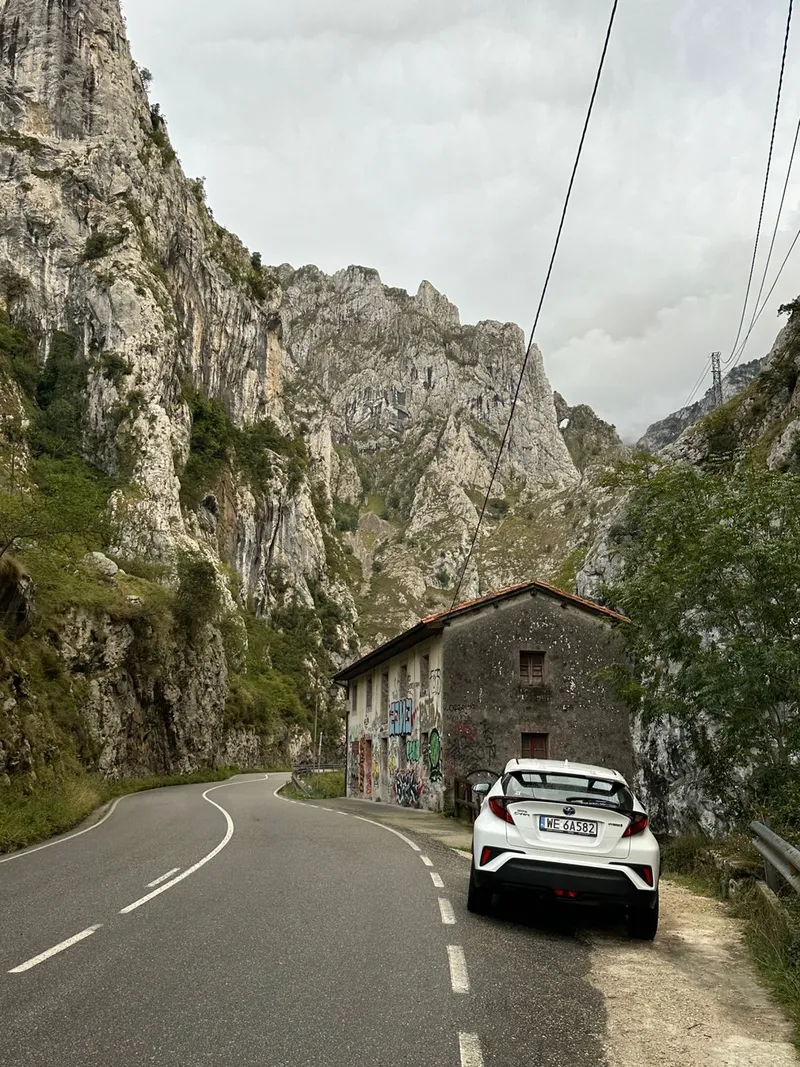
Toyota Corolla Sedan in Spain
Everything is perfect, fast, clear! The car is in excellent condition. All along the way I was consulted on any questions that arose. Special thanks for the opportunity to pay by Russian card and cash. 🙏
Honda HR-V in Spain
Actually rented a Toyota Yaris cross. Picked up in Barcelona, returned in Madrid. The car was clean.

Citroen C4 Grand Picasso in Spain
it's all good.

Toyota Corolla in Spain
Everything was great! The driver was punctual and accurate on time. The car fully met expectations. Thank you!
LEZ, SER parking, tolls
Madrid 360 / ZBE is the country's strictest low-emission zone. From 2026 it covers the full M-30 perimeter, 24/7. Cameras at the M-30 entries, on Gran Vía and around Puerta del Sol fine automatically. Hire cars with a DGT sticker (ECO or C) pass without issue. Foreign cars need a permit. Fine €200, halved to €100 within 20 days.
SER — Madrid's parking system — isn't the Zona Azul you'll know from other cities. Blue lines are paid for everyone; green lines are paid with resident priority; red lines are residents-only. EVs with the Distintivo 0 sticker often park free on green and blue. Payment runs through the Telpark or EMT app.
A guest parked on a green line outside a bar in Malasaña, opened Telpark too late and got a €40 ticket. The session has to be live before you walk away — the app, not the meter, is the contract.
Tolls. Only the AP-6 to Segovia is paid (€10–15 round trip). All other radial day-trip motorways — A-1 to Burgos, A-2 to Aranjuez, A-3 to Cuenca, A-4 to Toledo and Córdoba — are free. Inside the city, the speed limit has been 30 km/h on most streets since 2018; the Gran Vía and Puerta del Sol cameras are the most active in Spain.
Rates in Madrid vary throughout the year depending on the season and the rental length.
- January
- February
- March
- April
- May
- June
- July
- August
- September
- October
- November
- December
- Jan
- Feb
- Mar
- Apr
- May
- Jun
- Jul
- Aug
- Sep
- Oct
- Nov
- Dec
 How expensive is renting a car in Madrid: average daily rates for a one-week car rental, across all car classes.
Why book with us

-
Every car carries a DGT sticker
Entry inside the M-30 and Madrid 360 without fines or extra registration.
-
Clear pickup at MAD
You know up front which terminal and counter, and whether it's P1, P2 or a shuttle.
-
Deposit and insurance visible before booking
No upsell at the desk.
Parking, fines, fuel
SER in brief
Blue. Paid for everyone. Green. Paid with resident priority; EVs with the 0 sticker often free. Red. Residents only, towed quickly. Payment runs through Telpark or the EMT app — kerbside meters are being phased out. Overnight in central garages (Plaza España, Atocha) runs €15–30 a day.
Speed and fines
Centre limit since 2018: 30 km/h on most streets. M-30 and M-40 ring roads at 70–90 km/h. Cameras are unforgiving, fines €100–600, 50% discount within 20 days. Drink-drive limit 0.05% (0.03% for new drivers); Spain is moving towards 0.02%.
A guest came back to a freshly clamped car on Calle de Atocha — green line, sticker expired by twenty minutes. Set a phone timer when you start a Telpark session, even more important than the parking sensor.
Fuel
Petrol in Madrid runs €1.55–1.80/L for 95-octane. Most expensive on the M-30 and the central streets; cheapest at discount stations like Ballenoil or Repsol Red. Before dropping the car at MAD, refuel near Calle Jerez or Camino del Cuartel — about 5 km from the airport. On the ring itself and at the airport, fuel is noticeably more expensive.
Frequent Questions
Madrid 360 is Spain's strictest low emission zone. From 2026 it covers the full M-30 perimeter (Real Decreto 1052/2022) and runs 24/7. Hire cars with a DGT sticker (ECO or C) enter without issue. The fine for non-compliant entry is €200, halved to €100 if paid within 20 days.
Probably not. Twelve metro lines, buses everywhere, taxis and Bolt cover the city. Most customers take the car specifically for day trips — Toledo, Segovia, Ávila, Cuenca, Escorial, Aranjuez. Inside Madrid a car is more nuisance: SER parking, the 30 km/h limit, dense traffic.
SER (Servicio Estacionamiento Regulado) is Madrid's own system. Blue lines are paid for everyone; green lines are paid with residents-priority; red lines are residents-only. EVs with the Distintivo 0 sticker often park free on blue and green. Payment runs through Telpark or the EMT app.
Adolfo Suárez Madrid–Barajas has four terminals. Most international chain counters sit in T1 and T4 in arrivals, with cars in the adjacent garage. T2 and T3 have a smaller selection. Local brokers often operate off-airport with a 5–10 minute shuttle.
Yes — €10–15 round trip. The free alternative is the A-6, slower by about 30 minutes. The other radial day-trip motorways (A-1, A-2, A-3, A-4) are toll-free. Card payment is accepted at the AP-6 booths.
Yes. 70 km and 50 minutes on the toll-free A-42. Allow 6–8 hours on the ground for the Old Town, the cathedral, the Alcázar and lunch. Parking at the entry (Paseo de Recaredo, Aparcamiento Catedral) is paid; cars don't go inside the Old Town.
Yes, with an early start. Segovia at 87 km and 1 hour, Ávila at 110 km and 1h 15min. Morning Segovia (the aqueduct, the Alcázar), 70 km and 50 minutes across to Ávila, afternoon for the walls. Back in Madrid for dinner.
Yes if you have a clear day. 165 km and 1h 50min on the toll-free A-3. The "hanging houses" above the gorge are one of inland Spain's most unusual sights. A day trip works but feels rushed: the evening lighting and early-morning quiet are the best part.
El Escorial: 50 km and 50 minutes on the A-6 (free). Aranjuez: 50 km and 45 minutes on the A-4 (free). Combining them in a single day doesn't work — both ask for 4–5 hours on the ground, in opposite directions.
ZITY is Madrid's car-share service: around 800 Renault Zoe EVs from Renault and Ferrovial, running since 2016. Fully electric, they enter Madrid 360 without restriction and park free on blue and green SER lines. A useful alternative to a traditional rental for short city moves.
Since 2018, 30 km/h on most central streets. Main avenues run at 50; the M-30 and M-40 ring roads at 70–90. Cameras on Gran Vía, around Puerta del Sol and along the M-30 are the most active in Spain. Fines from €100; 50% discount within 20 days.
Underground garages like Plaza España, Atocha and Plaza Mayor run €15–30 a day. On-street (where you find a free blue or green line) is cheaper but capped on hours and pay-by-app only via Telpark/EMT. For overnight, garages usually win.
Yes — even Bluetooth ones. The fine is €200 plus three points on the licence. Use the car's hands-free system or the speakers; a single in-ear used as the car's hands-free is the only practical workaround.
Not at the airport itself — fuel runs 15–25 cents/L more expensive there. Use discount stations outside the M-40, like Ballenoil or Repsol Red. Stations near Calle Jerez or Camino del Cuartel sit roughly 5 km from MAD. Refuel about 10 minutes before drop-off.
Yes — one-way Madrid–Barcelona is standard with most chains, around €100–250 depending on season. Madrid–Valencia €80–150. Book ahead — high-season prices and availability move quickly. Cars cannot be taken to the islands.
For the city itself — yes: an EV with the 0 sticker enters Madrid 360 without limits and often parks free on SER. For day trips, plan range carefully — Cuenca at 165 km one way usually means a charging stop. The fast-charging network across Castile is growing.